Margot Robbie
Cathy
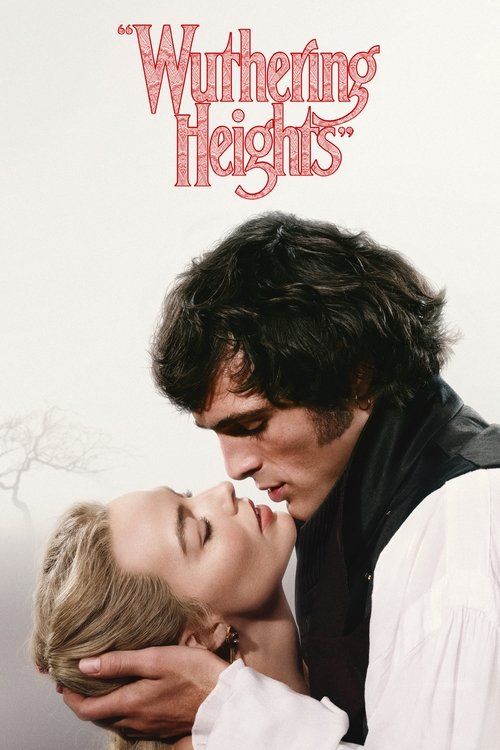
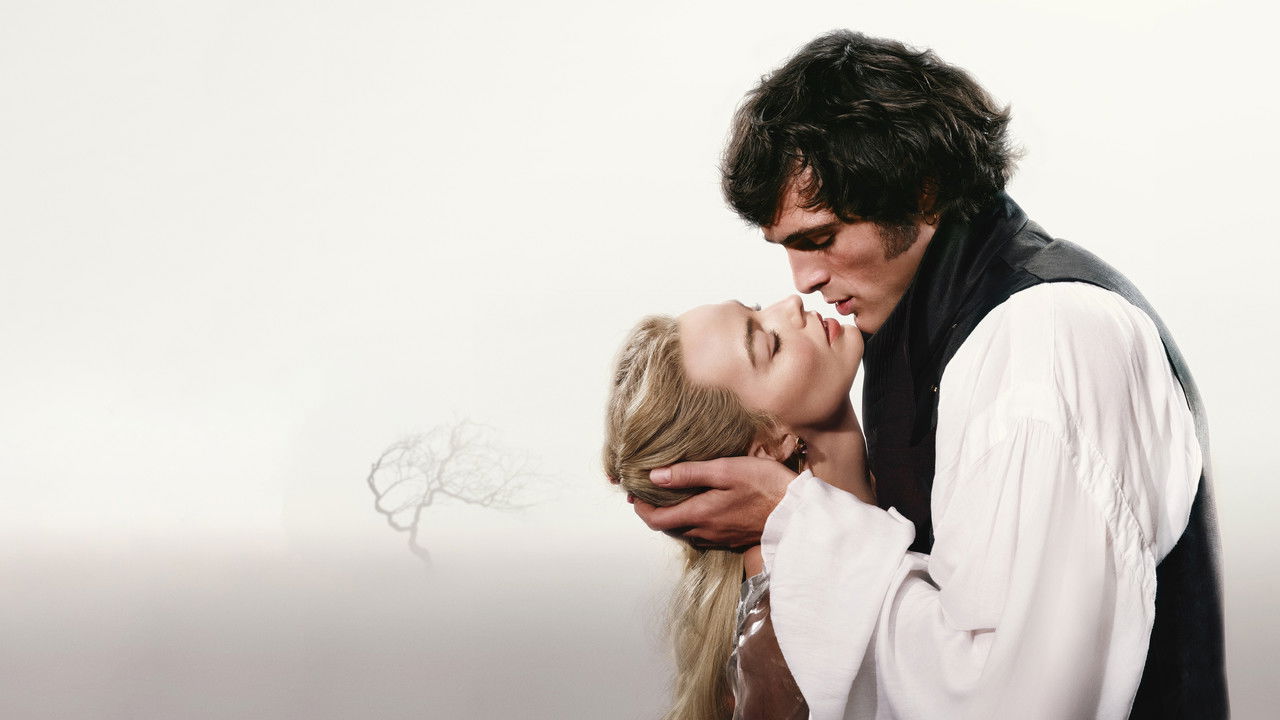
Tragedy strikes when Heathcliff falls in love with Catherine Earnshaw, a woman from a wealthy family in 18th-century England.
I knew exactly what kind of movie we were dealing with when Warner Bros. gently requested that critics refer to Emerald Fennell’s latest provocation with quotation marks. It’s not an adaptation of Emily Brontë’s 1847 novel; it's `"Wuthering Heights"`. The punctuation is a shield, a preemptive defense against the literary purists who might expect, I don't know, actual historical context or the second half of the book.
And maybe that's fair. Fennell isn’t interested in faithful translation. She’s interested in the sweat, the spit, and the sheer, chaotic spectacle of two terrible people who can't leave each other alone.
The opening scene plants a flag in the mud. We get a public hanging where a condemned man develops a post-mortem erection, a morbid anatomical reality that the crowd gawks at. But watch Cathy (played first by a younger actress, then by Margot Robbie).
She isn't horrified. She's fascinated. Delighted, even.
It’s a jarring, darkly funny intro that declares arousal and danger are essentially the same thing in this universe. Fennell (whose Saltburn already proved her affinity for sticky, bodily shock value) covers everything in a tactile grime—snail slime streaking a window, fresh pig blood staining a dress. The film desperately wants to feel dangerous.
"A lavish, erotically charged reimagining that dazzles the eyes but sharply divides viewers over its faithfulness, tone, and central romance."
Visual craft is widely acknowledged as impressive, with striking cinematography, detailed production design, and elaborate costumes creating a bold gothic sandbox for Emerald Fennell’s maximalist style. Reactions to the love story and performances are split: some are swept up by Margot Robbie and Jacob Elordi’s intense dynamic and find the intimate scenes powerful, while others experience flat chemistry, misdirected acting, and a frustrating lack of emotional payoff. Readers of the novel are often angered by structural changes, heavy sexualization, and the softening of Heathcliff, whereas viewers less attached to the book are more likely to regard it as an intense, stylish, if uneven tragic romance.
The Yorkshire moors are nothing compared to the chaos online. Between a near-riot over casting, a borderline-obsessive co-star bond, test screening drama, and a graveyard scene deemed too unhinged even for Emerald “Saltburn” Fennell, this movie has become 2026’s messiest period piece — and that’s saying something.
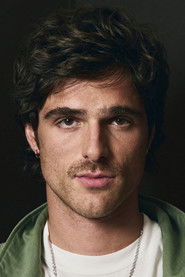
Jacob Elordi’s casting as Heathcliff lit the internet on fire. Longtime Brontë readers pointed out that the novel describes Heathcliff as a “dark‑skinned gipsy,” a “little Lascar” and “as black as the wall behind him,” and argued the role should have gone to a person of color instead of a white Australian heartthrob. The debate quickly turned into full-blown whitewashing accusations across social media and think pieces  .
.
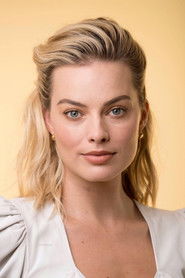
Margot Robbie stepping in as Catherine stirred its own storm. Cathy is canonically a teenager when she becomes “queen of the countryside” and marries Edgar; Robbie is nearly two decades older than that. Purists slammed the age gap as another sign the film was drifting away from Emily Brontë’s intent and into “hot, prestige fanfic” territory [2][4].
Things got ugly offline too. Casting director Kharmel Cochrane revealed that, amid the backlash, someone commented on Instagram that she should be shot over the casting decisions. She defended the film by saying this is art, not a documentary — but the vitriol underscored just how feral Brontë fandom can get when you mess with their moody king and queen [4].
Critics lined up to drag Emerald Fennell, with one Spectator take calling her adaptation a “disturbing exercise in pointless destruction,” while commentators at outlets like Dazed questioned whether her glamorous, privileged background made her ill‑suited to handle such a raw, outsider text [4]. Fennell herself admitted she knew fans would be furious — and did it anyway.
Behind the scenes, Margot Robbie and Jacob Elordi apparently went full Cathy-and-Heathcliff in emotional intensity, if not in actual scandal. Robbie has openly said she became “codependent” on Elordi during filming: she’d constantly look around set to see where he was and felt “unnerved and unmoored” the first time he wasn’t within sight, describing herself as “lost, like a kid without their blanket” .
Elordi did nothing to calm the rumor mill. He called their dynamic a “mutual obsession” and admitted he was “enamored” by Robbie, joking that if you get to share a set with her, you want to stay within five to ten feet at all times, watching everything “from how she drinks tea to how she eats her food” [3]. Not exactly subtle.
Coverage of the controversy notes that Elordi reportedly wrote Robbie a love letter in character as Heathcliff, and filled her room with roses during the shoot — all while she remains married to producer Tom Ackerley [2]. The two insist the relationship is strictly platonic, but fans (and gossip columns) have treated it like a full‑blown fauxmance campaign, especially once paparazzi shots and red‑carpet body language started circulating [2][3].
It’s all unconfirmed as anything beyond very committed co‑star chemistry — but the internet has not exactly chosen chill.
You thought Saltburn’s graveyard moment was the ceiling? Think again. Page Six reports that Wuthering Heights originally included an “insane Jacob Elordi scene” that ended up on the cutting‑room floor. Tipped as part of the grave/raunchy sequence, it was supposedly so out‑there that even Fennell decided it went too far for this already raunchy adaptation [1].
In Brontë’s novel, Heathcliff literally opens Cathy’s coffin so their bodies can mingle in the grave. Instead of dialing up that unhinged energy, the film apparently tones it down: word is, the final cut has Heathcliff acting more like a tragic romantic lead — crying and cradling her body — rather than performing anything corpse-adjacent [1]. Given Fennell’s previous grave‑yard antics in Saltburn, fans expected the opposite, and gossip outlets framed the change as the film “wimping out” on its own shock‑value marketing [1][4].
Fans also learned that Fennell carved away more than half the novel’s plot. Cathy’s death, which in the book happens mid‑story, is shoved to the very end; the whole second generation and frame narrative are essentially gone. Nelly and Edgar are retooled as more straightforward villains, and the film leans into a cleaner “two lovers torn apart by other people” arc [2]. Brontë purists call it a butchering; Fennell insists it’s the way the story felt to her at 14, not a page‑by‑page retelling [2].
The BBC straight‑up called the hostility “relentless,” tracing it back to the moment Fennell — known for provocative, flashy satires — announced she’d be tackling Wuthering Heights. From the first trailer, which leaned into sex, anachronistic music and glossy, modern aesthetics, fans accused Warner Bros. of turning a Gothic classic into a horny cosplay promo [4].
Reports from August 2025 test screenings describe a “frosty reception”: viewers allegedly found the movie emotionally thin but overflowing with salacious detours and shock‑bait moments [4]. For some, it was too tame compared to the marketing; for others, it was gratuitous AND unfaithful — the worst of both worlds.
The culture war got so intense that Fennell herself admitted she’s such a Wuthering Heights obsessive that if someone else had made this version, she would probably have been furious. That quote only poured gasoline on the discourse, as fans accused her of gatekeeping the text while simultaneously ripping it apart [4].
Moving Cathy’s death to the finale completely rewires the story’s emotional logic, which critics and fans say turns a twisted, multi‑generational tragedy into something closer to a fever‑dream romance with villainous side characters [2]. It’s sparked endless thinkpieces and fan threads decoding what, exactly, Fennell is saying about obsession, class, and desire.
Early viewers like Anne Hathaway reportedly came out of advance screenings telling audiences they “aren’t ready” and should “consider [themselves] warned,” which only supercharged expectations and moral panic on both sides of the aisle [4].
Love it or loathe it, Wuthering Heights (2026) has managed something rare: turning a 19th‑century novel into 21st‑century gossip catnip. And if that “insane” graveyard scene ever leaks in full? Expect the fandom — and the moors — to absolutely combust.
Entertainment rumors and trivia aggregated from public reporting. Treat speculation as unverified unless a cited source confirms it.
Movies
Related titles ranked by rating and popularity.