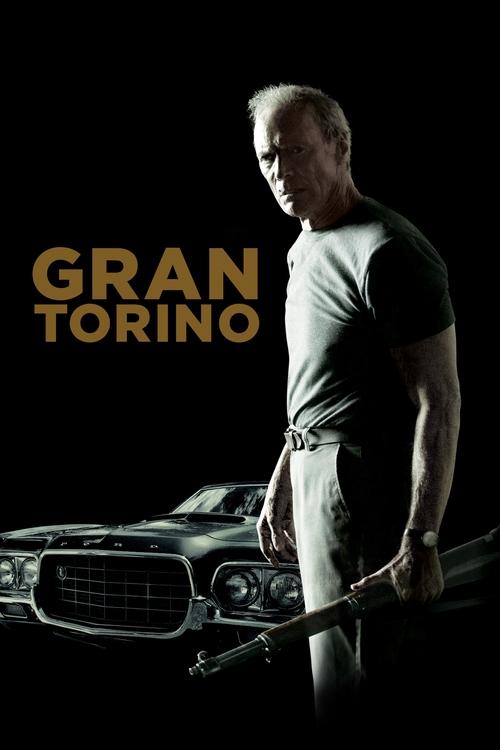
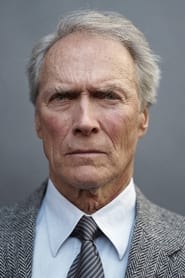
Movie poster for Gran Torino (2008)

Gran Torino

“Get off my lawn.”

2008
1h 56m
Director: Clint Eastwood
Play trailer

Overview

Disgruntled Korean War veteran Walt Kowalski sets out to reform his neighbor, Thao Lor, a Hmong teenager who tried to steal Kowalski's prized possession: a 1972 Gran Torino.

Cast

12 people

Reviews

r96sk

There's a lot to unpack about <em>'Gran Torino'</em>, probably way more than I could offer an opinion on. I fully acknowledge the talk about this film's potential impact on the world, namely for Hmong Americans (see: Bee Vang's <a href="https://www.nbcnews.com/think/opinion/covid-19-era-s-anti-asian-racism-isn-t-new-ncna1258184" rel="nofollow">op-ed</a>), and I'm not saying it's perfect one bit. I admittedly do have a difficult time separating film and real life, to me films are just fictional things but I get they can/do have real world implications. Strictly as a film, it is entertaining. Clint Eastwood is remarkably good at being a super racist and super grumpy old man, who literally hates every single person he encounters across the opening portion of the film. His character's lines in this are nuts and his delivery with them is incredible - the look of utter disgust on Walt Kowalski's face when someone pisses him off in a new way is just amusing to watch. If not for his on point delivery, it wouldn't have worked. Eastwood is the only actor in this worth talking about on a grander level, though I could've done without his ropey singing at the end, but I did enjoy the showings of the earlier mentioned Vang, Ahney Her and John Carroll Lynch - not that the latter does much, I just like the guy as an actor... all stems from <em>'<a href="https://en.wikipedia.org/wiki/The_Walking_Dead_(TV_series)" rel="nofollow">The Walking Dead</a>'</em>, he's in literally one episode back in 2015 and yet I always remember his character. I'm not sold on the ending, Walt isn't exactly redeemed and it does reek of white saviour let's be real, but it didn't affect my enjoyment in film terms to be honest.

Read full review

Matthew Smith

Clint Eastwood is a good director. I've seen ten of his films, one of them being “Play Misty for Me.” A film that I think is incredible. But like any director, Clint’s films can vary in quality. In the case of “Gran Torino,” it's a good film, but probably not one I'm going to rewatch very much. Clint Eastwood and Bee Vang put in great performances. Walt, played by Clint Eastwood, is a tough character to watch. His prejudices are the main reason for that. This is my view of the character, of course, so how you feel about him depends on your views. I think the ending of the film works. It's a decent end to Walt's character journey.

Read full review

CinemaSerf

It's curious that the main English language awards largely ignored this, yet it won both a David and a César in Europe and is definately one of Clint Eastwood's more characterful efforts. He is the curmudgeonly "Walt" who has recently lost his wife, has an arms-length relationship with his son and looks disapprovingly as his neighbourhood ceases to be the home of "Americans"! His prize possession is his Gran Tornino car and he doesn't take to kindly to Bee Vang's "Thao" (or "Toad") trying to pinch it. Quickly, though, he sees that this young man and his sister "Sue" (Ahney Her) are being bullied by their thuggish extended family - a gang of obnoxious would-be gangsters who drive the streets picking fights and taunting people. He decides to intervene and the rest of the story sees a bond develop between him and his new "family" based on a degree of mutual understanding, trust, and "Toad" becoming his slave for a fortnight by way of penance! We are given some clues along the way as to the grand designs of "Walt" as he sets up a denouement, after a brutal assault on "Sue", that will satisfy not just himself, but keep his neighbours safe too. It's not the most naturally written dialogue, indeed at times it's quite forced but the underlying premiss of bigotry and the attitudes of intolerance and bullying are well addressed. The characterisation of the distant and prejudiced "Walt" is delivered engagingly, and with some dark humour, by a star/director who has a point to make. There's also quite a gently potent effort from Christopher Carley as the local priest. He is trying to offer the perfunctory words of hope and comfort to this veteran and he perseveres despite the dog's abuse he receives from a man who no longer feels it necessary to commit to the niceties of society. Clearly, "Walt" cares little for what is left of his life nor for any of his sins to be forgiven. It's about grief, relevance, community and I think it works. Give it a go.

Read full review

Audience Opinions

Audience 8.1/10
"A moving redemption drama driven by Clint Eastwood’s performance but undercut by weak supporting work and a dated white savior framework."

Clint Eastwood’s gruff, charismatic turn as Walt Kowalski and the emotionally charged final act are widely seen as the glue that makes the story impactful despite its familiar structure. The film’s themes of guilt, sacrifice, and unlikely connection resonate, yet the writing leans on heavy-handed racial slurs, simplistic dialogue, and a dynamic where a white protagonist becomes the moral and narrative center for Hmong characters. Nonprofessional acting in key roles and a reliance on a well-worn savior narrative keep the film from matching the power of its core idea.

What viewers praise
  • Standout Eastwood performance Clint Eastwood’s portrayal of a bitter, aging veteran softening over time is gripping and carries much of the emotional weight.
  • Powerful emotional climax The final stretch, especially Walt’s last decision, hits hard and leaves many viewers unexpectedly moved.
  • Satisfying character journey Walt’s arc from isolation and bigotry toward responsibility and sacrifice feels coherent and affecting.
  • Solid pacing and momentum Tight, unfussy storytelling and economical cutting keep the drama engaging with few lulls.
Common complaints
  • White savior storyline The plot centers on a white protagonist redeeming himself by rescuing Hmong neighbors, which comes across as a clichéd and uncomfortable trope.
  • Amateur supporting performances Several Hmong characters are played with visible inexperience, creating stiff, awkward scenes beside Eastwood.
  • Clumsy dialogue and tone Lines meant to sound tough or authentic often feel cheesy, and the barrage of racial slurs can make the intended anti-racist message feel muddled.
  • Conventional and predictable plot Story beats, including the mentor-protégé dynamic and sacrificial ending, are easy to foresee and lack freshness.
Recommended for
Clint Eastwood devotees Redemption drama watchers Character-focused story fans Gritty suburban morality tales

Buzz & Rumors

Public reports

Gran Torino’s Messy Backseat: Racism Drama, Disney Vetoes, and Clint Yelling at His Own Kid

Buckle up. Behind Clint Eastwood’s grumpy old man redemption arc lies a pile of real-world drama: blocked roles, ignored consultants, bitter regrets, and a muscle car Clint refused to give back.


On-Set Drama & Culture Clash

Hmong Lead Says the “Jokes” Weren’t Funny

  • Years after Gran Torino blew up, Bee Vang (Thao) publicly denounced the movie’s barrage of anti-Asian slurs, saying he was “unnerved” by how white audiences laughed at the racist insults and brushed it off with “Can’t you take a joke?” .
  • He later linked the film’s “harmless jokes” to real-world anti-Asian hate during COVID, arguing the movie helped “mainstream” that kind of racism [2].

Hmong Actors Felt Degraded on Set

  • A campus paper report describes Hmong actors saying they were told to “make noise” by rambling nonsense in their language instead of being given real lines, and that they were not allowed to tweak dialogue to be more authentic. They said they felt “degraded” and sidelined during production .

The Cultural Consultant Who Got Ghosted

  • Hmong cultural consultant Mai Xiong says she was hired, given the script, and spent days flagging stereotypes, slurs, and a brutal scene of Sue entering with blood on her legs after an implied sexual assault .
  • After she pushed back on the racial language (“gook,” “chink,” “go back to your country”) and the way Hmong women were described, she was quietly ignored. She later discovered at a prescreening that her name never even made it into the credits, despite weeks of work [4].
  • She did manage to fix some details: telling production that Hmong people typically use spoons, not chopsticks, and helping dress the house with real Hmong touches, including her own 18XEEM magazine as set dressing [4].

Casting Chaos & Disney Meddling

Brenda Song’s Blocked “Gran Torino” Turn

  • Former Disney It Girl Brenda Song revealed she wanted a role in Gran Torino, but Disney flat-out blocked her from pursuing it because the character was written with a sexual assault scene .
  • “The character had an intended sexual assault scene, so Disney nixed it,” she recalled, saying she was “very upset” but had to accept the decision at the time [1].
  • Disney even had similar issues with her doing The Social Network; Song had to march straight to Disney Branded Television chief Gary Marsh and give a speech about being an actor, not a hotel heiress, to get them to back off [1]. Talk about fighting for your career.

First-Time Hmong Actors Thrown In the Deep End

  • Eastwood and casting scoured Hmong communities for fresh faces, leading to a cast of mostly non-professionals. Admirable in theory—but between rigid scripts, “just make noise” direction, and no ability to revise lines, several later said it felt less like representation and more like being used [3][4].

Scandals & Backlash That Wouldn’t Die

From Oscar Fodder to Problematic Fave

  • By 2021, Gran Torino’s reputation had shifted hard. In an op-ed and interviews, Bee Vang called out how the film’s slurs were framed as character-building “banter,” saying those same words were now echoing in attacks on Asian Americans during the pandemic [2].
  • He pointed to real-world cases of violence against Asians and argued that the film’s “jokes” helped normalize the idea of Asians as an “invasive peril” [2]. Suddenly that tough-love barbershop banter didn’t look so cute.

Consultant’s Regret

  • Mai Xiong admits that at the time the Hmong community was excited to be visible in a major Hollywood film, but that when she saw the final cut, she felt “disappointed and ashamed.” Her warnings about stereotypes and a white-savior ending had been brushed aside [4].

Wild Trivia & Set Secrets

Clint Screams at… His Own Son

Speed-Run Filmmaking

  • The entire movie was shot in just 33 days—two days faster than scheduled—thanks to Eastwood’s famously ruthless efficiency. He often used the first take and moved on, and the production dropped over $10 million in Michigan while blasting through Detroit locations .

Clint Kept the Gran Torino for Himself

  • That 1972 Ford Gran Torino Sport wasn’t just a prop. After filming, Eastwood reportedly bought the hero car for his personal collection. Auto and nostalgia pages say the dark green coupe now sits safely in his private garage, not rotting in some backlot .

Fandom Drama & Ongoing Debates

Reddit vs. The “White Savior”

  • Years later, Reddit threads still brawl over whether Gran Torino is a clever deconstruction of racism… or just another white-savior fantasy. One widely shared post calls it “so on-the-nose” that the movie ends with the racist old guy literally dying to save the people of color next door, while others argue that’s exactly the point .

Hmong Community’s Mixed Feelings

  • On Hmong-focused forums and subreddits, posters praise the visibility but drag the film for turning Hmong lives into background texture for Walt’s redemption arc. Some even criticize villain actor Doua Moua (Spider) as “extremely problematic” in his public persona, though that’s community gossip and not tied to anything criminal .

Entertainment rumors and trivia aggregated from public reporting. Treat speculation as unverified unless a cited source confirms it.