
Honey Bunch backdrop
Honey Bunch poster

Honey Bunch

6.4
2026
1h 54m
FantasyHorrorScience FictionThriller

Overview

Diana's husband is taking her to an experimental trauma facility deep in the wilderness, but she can't remember why... As her memories begin to creep back in so do some unwelcome sinister truths about her marriage.

Full Plot (Spoilers)

AI-generated full plot summary

Homer and Diana arrive at a remote medical facility following a car accident that left Diana in a coma. Homer explains that they are there for a trauma program recommended by her doctor.

Sponsored

Trailer

Official Trailer Official

Cast

Reviews

AI-generated review
The Architecture of Forgetting

The dread that comes from waking up in a place that insists it is trying to heal you hits differently. The light is a little too warm, the wallpaper a little too busy, and the people speaking to you are employing that hushed, practiced cadence reserved for the fragile. I’ve always found these spaces terrifying. *Honey Bunch*, the strange and wildly ambitious new film from directors Madeleine Sims-Fewer and Dusty Mancinelli, weaponizes that exact feeling. It takes the claustrophobia of a medical retreat and twists it into a hallucinatory inquiry about the limits of romantic devotion.

We are a long way from the stark, daylight brutality of the duo’s debut, *Violation*. Here, they trade that grounded shock for a 1970s gothic pastiche that feels equal parts *Rebecca* and late-night body horror.

A woman waking up in a strange room

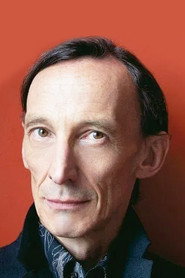
Diana (Grace Glowicki) has survived a car crash that left her in a coma and wiped her memory clean. Her husband, Homer (Ben Petrie), has brought her to a remote, impossibly cozy wilderness estate for experimental trauma therapy. The house is a marvel of suffocating earth tones. It feels entirely cut off from the rest of the world, staffed only by the brisk, secretive Farah (Kate Dickie) and her husband Delwyn (Julian Richings), who has a habit of muttering instructions to himself while setting the dinner table. Everything looks normal, right up until the moment it doesn't.

I keep coming back to the treatment scenes. Diana is subjected to therapies that seem designed to scramble the brain rather than soothe it. She is forced to sit in front of violently flickering strobe lights. In one deeply unsettling sequence, she must press her bare feet onto broken safety glass. The camera doesn't shy away from the tactile reality of this, but it’s Glowicki’s face that anchors the madness. She maps every degree of Diana's mounting panic. (Glowicki and Petrie are a couple in real life, a fact that lends an uncomfortable documentary edge to their on-screen friction. When they argue, the exhaustion feels earned, not acted.)

A shadowy hallway in the trauma center

The film’s central question isn’t really about what the clinic is hiding, though there are plenty of secrets. It’s asking what it actually means to stay with someone. If your partner wakes up fundamentally changed — broken, paranoid, perhaps even cruel — at what point does caretaking bleed into possession? Petrie plays Homer as a shifting kaleidoscope of a man. His tears look real enough, but I was never entirely sure who he was crying for. Is he mourning his wife’s pain, or is he mourning the convenient version of her that he lost?

Sims-Fewer and Mancinelli aren't interested in the myth of the soulmate. They’re poking at the ugly, selfish mechanics of long-term intimacy. They even mirror this dynamic with another patient at the facility, a teenager named Josephina (India Brown) and her relentlessly upbeat father, Joseph (Jason Isaacs). Isaacs is predictably great here, weaponizing his natural authority into a portrait of parental desperation that feels just a few degrees removed from madness. As Sheila O'Malley wrote for RogerEbert.com, the film "revels in the weirdness," allowing these parallel relationships room to breathe and fracture.

Two people standing in a dimly lit space

Does all of this work? I'm not totally convinced it does. When the third act finally tips its hand, introducing elements of heavy science fiction and severe physical transformation (Glowicki reportedly spent nine hours in the makeup chair for some of these later sequences), the aesthetic coherence starts to wobble. The metaphor gets a bit too loud. The final moments trade the creeping, quiet unease of the first hour for something much more literal, and I think something vital is lost in that transaction.

But a messy swing is almost always more interesting than a safe hit. Even when the script loses its footing, the emotional core holds. *Honey Bunch* refuses to offer the comfort of a clean resolution. It leaves you with the lingering, uncomfortable thought that true devotion might just be the willingness to endure the stranger your partner is destined to become.