
The Loop of GriefI am worn out by the multiverse. For years now, movies have used alternate realities as a convenient junk drawer for bad plotting. If one version of events stops working, just open a portal. Then along comes Kevin and Matthew McManus's *Redux Redux*, a rough-edged, low-budget thriller that does something far nastier with the idea. Here the multiverse is not freedom. It is a cell a grieving mother keeps locking herself inside.
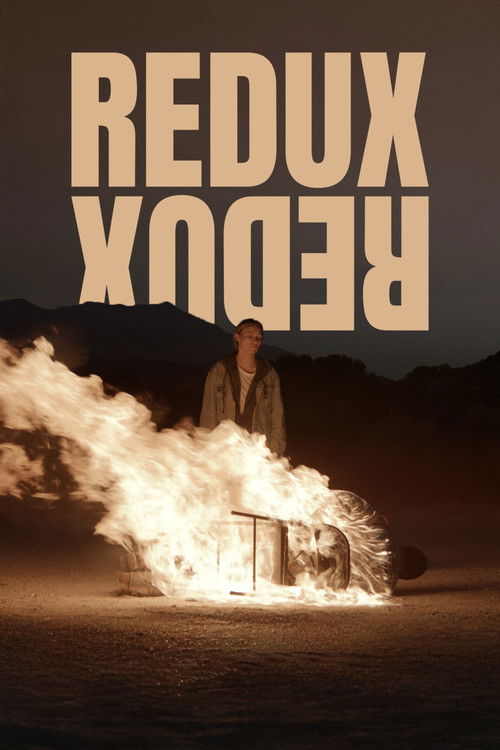
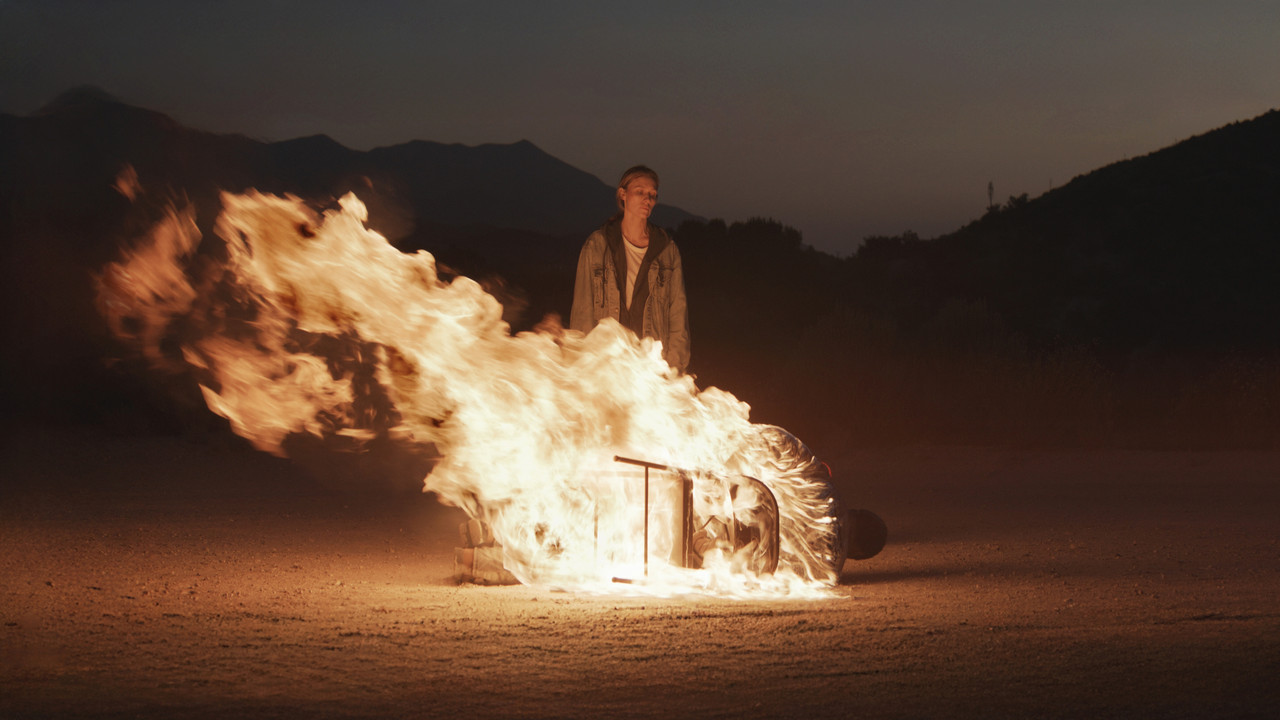
It starts with fire. A man is strapped to a metal chair in the desert, screaming while the flames take him. Irene (Michaela McManus, the directors' real-life sister) stands there watching with the blank, burned-out patience of someone waiting for a microwave to finish. The man is Neville (Jeremy Holm), the meth cook who murdered Irene's daughter. The upsetting part is not only that she is killing him. It is that the film makes clear we are about to watch her do it again almost immediately.

That repetition is the film’s engine, and it is grim from the start. Irene moves from dimension to dimension in a machine that looks less like a time device than a rusted piece of industrial junk. She is not searching for a world where her daughter lived. She is simply hunting down fresh versions of Neville to kill. The differences between universes barely register beyond surface details, a yellow diner mug here, a red one there, while the grief stays fixed in place. The McManus brothers are smart enough not to over-explain the science-fiction plumbing. I could not tell you exactly why the machine works the way it does, and the movie is better for not pretending that matters most. What lands is the sheer drag of carrying this violence over and over.
Michaela McManus holds the whole thing together with a performance built almost entirely out of physical depletion. Her shoulders sag. She moves with the flat efficiency of somebody running on fumes. Even her recurring detours to sleep with an alternate-reality man named Jonathan, played by Jim Cummings with his usual wounded-loser specificity, feel less like desire than ritual. Like she is testing whether there is still any life left in her at all. Cummings has become very good at this exact shade of tragicomic male fragility, and he gives Irene’s otherwise surreal routine an odd, human texture.

The pattern finally breaks when Irene stops Neville before he can murder 15-year-old Mia (Stella Marcus). Suddenly she is stuck with a living, abrasive teenager who is very much not part of the plan. That setup could have fallen into an easy surrogate-daughter groove. It mostly avoids that because Marcus plays Mia like a scrappy little menace. She steals Irene's gun. She makes awful choices.
Variety's Stephen Saito wrote that the directors "manage to get the best of two worlds, delivering a strong genre entry with the bones of a tender indie about trauma." That gets at it neatly. The action scenes have none of the sleek, frictionless quality of studio sci-fi. They feel ugly, frantic, and desperate. When a gun goes off, it does not glide past you. It cracks through the space and leaves everyone rattled.

There is one late scene I have kept turning over in my head. Irene and Mia are sitting in a stolen car, and the camera stays on Irene’s hands gripping the wheel. Her knuckles have gone white. You can see the instant it hits her: all this revenge has not moved her a single step closer to the daughter she lost. It is a small realization on the surface, but it lands like a collapse. The multiverse may go on forever. A person does not. *Redux Redux* knows exactly where that limit starts to show.