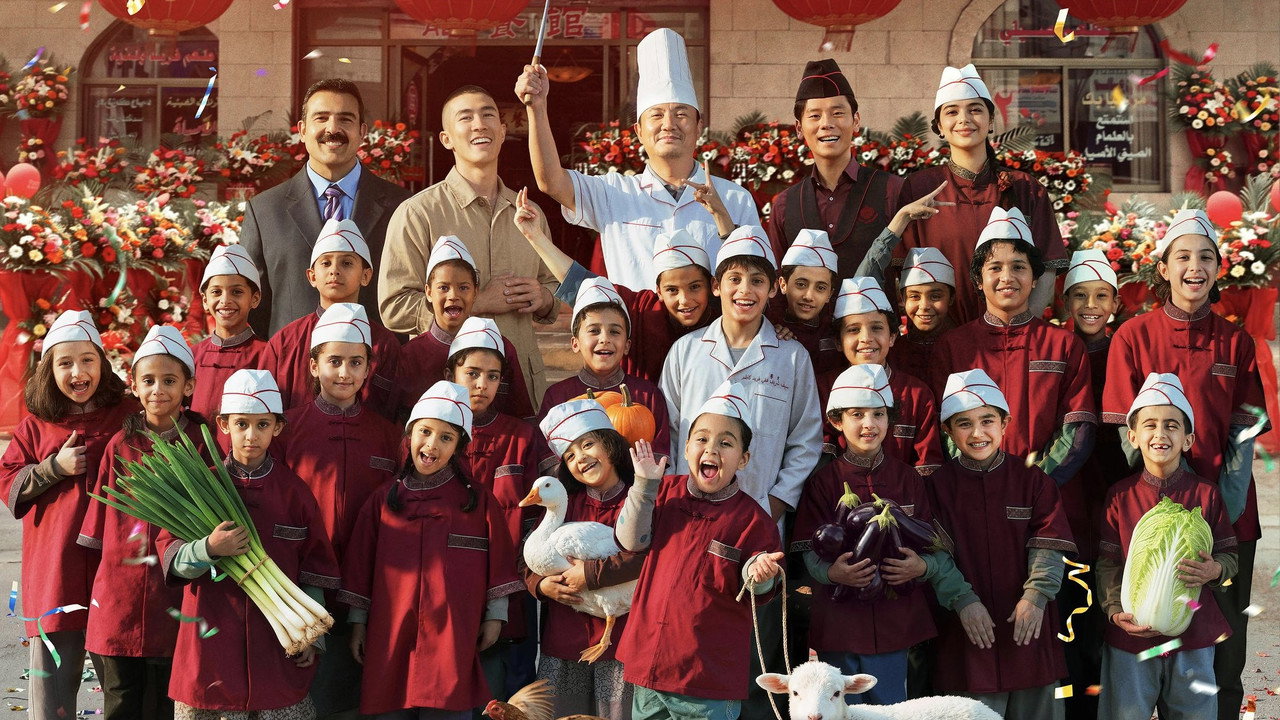

Shen Teng
Xu Fu
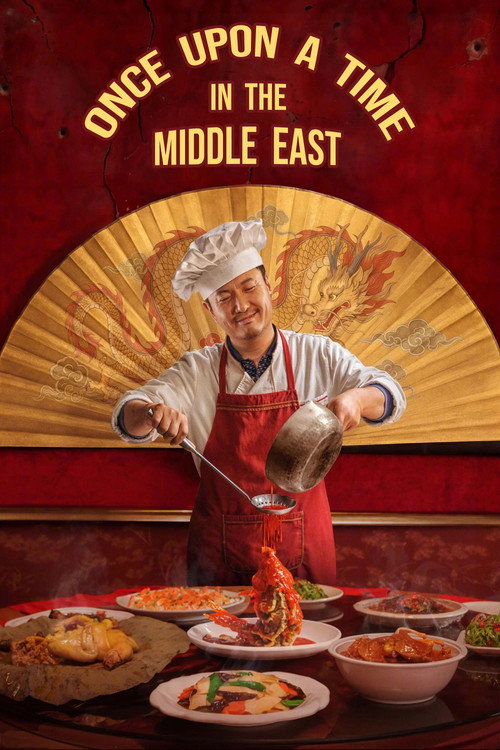
Xu Fu travels to the Middle East to work as a chef in a Chinese restaurant to pay off family debts, where he meets floor manager Ma Junsheng. Their Dragon Restaurant rises to fame, attracting crowds with authentic‑tasting Chinese food. But war breaks out, and local conditions take a drastic turn for the worse. No one can remain unaffected. What lies ahead for them? And how will the Dragon Restaurant hold on amid the war?
I keep thinking about the smell of garlic and gunpowder. That’s the contradiction at the heart of Once Upon a Time in the Middle East, Wen Muye’s ambitious, uneven, and ultimately haunting film about a Chinese chef who builds a restaurant empire in a war zone. It’s a story about food as both sustenance and illusion, about the way a kitchen can feel like home even when the world outside is burning.
And yet, for all its grand ambitions, the film stumbles when it tries to balance its twin impulses: the intimate, human-scale drama of its characters and the sweeping, almost mythic weight of its setting.
Muye has never been a director afraid of big themes. His breakout hit, Dying to Survive, took on China’s healthcare system with a mix of humor and heartbreak, proving he could turn systemic injustice into gripping cinema. Here, he’s aiming even higher, using the Middle East as a backdrop for a story about migration, survival, and the fragile bonds that form between strangers in a crisis.
The film follows Xu Fu (Shen Teng), a chef who leaves China to work in a struggling Chinese restaurant in an unnamed Middle Eastern city, hoping to pay off his family’s debts. He’s joined by Ma Junsheng (Jiang Qiming), the restaurant’s floor manager, and together they turn the place into a local sensation, drawing crowds with dishes that taste like nostalgia. For a while, it works.
The Dragon Restaurant becomes a haven, a place where expats and locals alike can forget, if only for an hour, the tensions simmering outside.
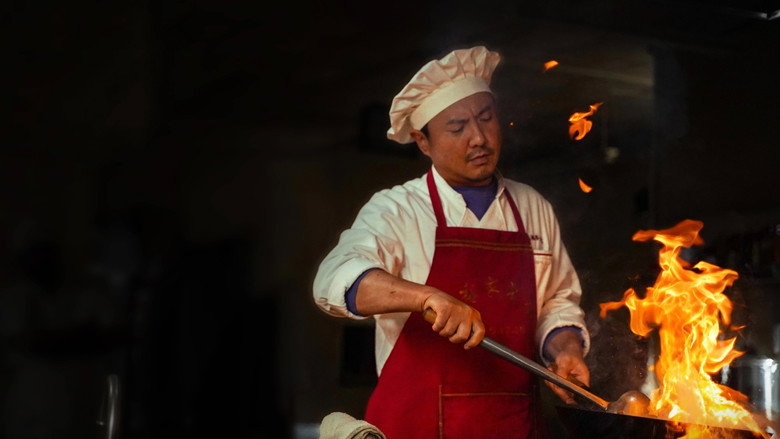
But war doesn’t care about metaphors. When conflict erupts, the restaurant’s success becomes its curse. The film’s second act is a slow unraveling, as the characters are forced to confront the limits of their own resilience.
Muye stages some of these scenes with a quiet, almost documentary-like realism. In one devastating moment, Xu Fu and Ma Junsheng stand in the restaurant’s empty dining room, listening to the distant thud of explosions. The camera lingers on their faces—not in close-up, but at a distance, as if to emphasize how small they are against the forces arrayed against them.
Wen Muye, the Chinese director behind the critically acclaimed Dying to Survive (2018), is venturing into bold new territory with Once Upon a Time in the Middle East (2026). The film, a high-stakes blend of drama and cultural crossroads, marks Muye’s first foray into a region rich with geopolitical tension and cinematic potential. latestnetflix.com's view is that Early trailers and casting announcements suggest a project ambitious in scope, but details remain tantalizingly scarce.
The ensemble cast is a standout feature, blending Chinese and Middle Eastern talent in what appears to be a deliberate move to reflect the film’s transnational themes. Leading the charge is Shen Teng, one of China’s most bankable comedic actors, whose inclusion hints at Muye’s signature balance of humor and gravitas . Alongside him, Egyptian actor Omar Sherif (not to be confused with the late Omar Sharif) and Hong Kong star Aarif Rahman bring regional star power, while relative newcomers like Naira Al-Qasim and Karma Hazim add fresh faces to the mix [TMDB].
The casting choices suggest a narrative that straddles cultural divides, though the exact roles remain under wraps. Rumors swirl that Shen Teng’s character can’t be pigeonholed as purely comedic—his past collaborations with Muye (Dying to Survive) leaned into dramatic arcs, and early trailer glimpses show him in intense, dialogue-heavy scenes  .
.
Two official trailers—Once Upon a Time in a Cinema Trailer #1 and the Official Trailer—have dropped, offering fleeting but intriguing visuals . The footage leans into sweeping desert landscapes, bustling souks, and moments of quiet tension, evoking classic Westerns like Once Upon a Time in the West (1968) but with a modern, multicultural twist . However, the trailers prioritize mood over plot, leaving audiences guessing about the central conflict.
One standout sequence shows Shen Teng and Jiang Qiming in a heated exchange, possibly hinting at a clash of ideologies or a high-stakes negotiation. The lack of subtitles in the trailer snippets suggests Muye may be playing with language barriers as a narrative device—a bold choice for a film aiming for global appeal .
Muye’s previous work, Dying to Survive, was a social drama rooted in China’s healthcare crisis, so Once Upon a Time in the Middle East represents a dramatic shift in setting and scale. The director’s pivot to the Middle East could be an attempt to tap into the region’s growing influence in global cinema, though it’s unclear whether the film will tackle political themes or stick to character-driven storytelling .
Production details are sparse, but the film’s 2026 release date aligns with a wave of high-profile international co-productions. If Muye’s track record is any indication, expect a blend of sharp social commentary and crowd-pleasing drama—though whether he can pull off a seamless cross-cultural epic remains the million-dollar question.
For all the hype, Once Upon a Time in the Middle East is still shrouded in mystery. Key unanswered questions include:
Until more details emerge, Once Upon a Time in the Middle East remains a tantalizing "what if" in Wen Muye’s filmography. One thing’s certain: if the director can merge his knack for humanist storytelling with the Middle East’s cinematic grandeur, this could be a career-defining project.
Entertainment rumors and trivia aggregated from public reporting. Treat speculation as unverified unless a cited source confirms it.
Movies
Related titles ranked by rating and popularity.