Cuba Gooding Jr.
Radio
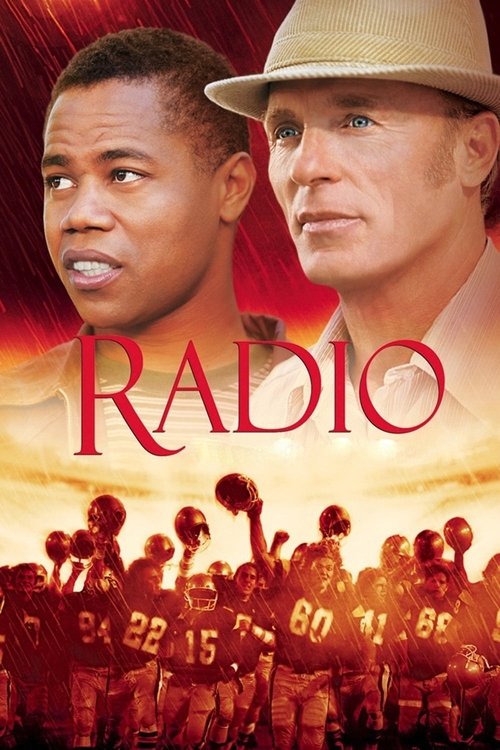
In the racially divided town of Anderson, South Carolina in 1976, football coach Harold Jones spots a mentally disabled African-American young man nicknamed Radio near his practice field and is inspired to befriend him. Soon, Radio is Jones' loyal assistant, and he becomes a student at T.L. Hanna High School. But things start to sour when Coach Jones begins taking guff from parents and fans who feel that his devotion to Radio is getting in the way of the team's quest for a championship.
"A heartfelt true-story drama driven by moving lead performances but drenched in sentimental, formulaic storytelling."
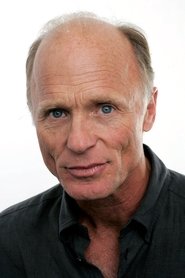
The relationship between Radio and Coach Jones resonates emotionally, with many praising Ed Harris and often defending Cuba Gooding Jr. as sincere and believable in a difficult role. The real-life basis, themes of compassion, and uplifting ending leave viewers feeling warm and inspired, yet the movie’s reliance on clichés, obvious emotional button-pushing, and simplified treatment of disability and conflict keeps it from landing as deeply as it could.
Heartwarming sports drama? Sure. But behind the inspirational music and slow-motion touchdowns, Radio (2003) is hiding some surprisingly spicy off-field stories. From made‑up small-town villains to a casting snub of Denzel himself, here’s the juiciest real‑world tea connected to this underrated chaos magnet of a movie.
The movie wants you to believe a racist school board, a furious football dad (Frank Clay), and a suspicious principal all tried to push Radio off the field. In reality? Coach Harold Jones says there was no organized backlash, no big fights, no angry town meetings. The superintendent even told writers nobody ever called to complain about Radio. Those antagonists were cooked up in the screenplay to “add conflict”  .
.
The scene where players tape Radio up and abandon him in the equipment shed was designed to make you sob into your popcorn. Coach Jones says players never abused Radio like that—just harmless goofing around, nothing cruel or violent [1].
The film’s Black female principal who pushes back on Radio’s presence? She didn’t exist. Hanna High never had a Black principal in that era, and real principals were actually supportive of Radio’s involvement [1].
When the real James “Radio” Kennedy was asked who he wanted to play him on film, he reportedly answered instantly: “Denzel. My man.” [1] Hollywood, in its infinite wisdom, went with Cuba Gooding Jr. instead. Somewhere, an alternate universe exists where Radio is basically Remember the Titans 2.
Years later, film writers would point to Radio as peak “What is Cuba doing with his career?” energy. One brutal piece labeled the movie “an awful, awful” entry that sat right in the middle of Gooding’s post‑Oscar slump, the era when he was considered to be stuck in “actor jail” churning out dubious choices . Fans and critics still debate whether this feel‑good turn helped typecast him into prestige‑bait caricature roles.
In a TV interview, Gooding Jr. described a role that “almost ruined his life” [6]. While he doesn’t name Radio outright, online chatter and timeline‑watching fans often lump this movie into the conversation about emotional toll and career damage.
Newcomer Sarah Drew (Mary Helen Jones) has described Harris as a total gentleman and low‑key acting guru. Before a heavy emotional scene, he improvised with her off‑camera to help her “get there” emotionally, then carried that energy into the take. She calls him humble and says he gives “110%” even when the lens isn’t on him . No diva antics here—just a four‑time Oscar nominee quietly doing the work.
While Drew was shooting her first feature, her husband flew to South Carolina every weekend for 11 weeks so they wouldn’t be apart the whole production run [3]. Not a cheating scandal—but pretty solid rom‑com material.
Director Mike Tollin spotted an older, “funny‑looking” man named Forrest at a barbershop casting call. The casting team wanted to send him home; Tollin said, “Bring him up here.” Forrest ended up in multiple scenes and even scored a newspaper feature after 65 years of being basically invisible in his own town [3]. From background blur to hometown celebrity—Radio wasn’t the only underdog.
Cuba Gooding Jr. and Sarah Drew have both mentioned that several church scenes were filmed and then axed in the final edit. Drew actually attended that same church weekly during the 11‑week shoot, and Gooding has said Radio’s attending church and social events was a more significant part of his real life than the movie shows [3].
Both actors have expressed regret that those scenes were removed, suggesting a lost version of Radio that leaned harder into the community’s faith side and less into manufactured small-town villainy [3].
Critics and disability advocates have not been gentle. Top critics described Radio as “manipulative of its audience and exploitative of the mentally challenged” . Later round‑ups of ableist movie tropes cite Radio as an example of patronizing, stereotypical portrayal of intellectual disability, lumping it in with other “inspiration porn” crowd‑pleasers .
Gooding has admitted that he modeled much of Radio’s behavior on his then‑five‑year‑old son, Spencer—copying his frame of mind and even his movements [3]. Fans and advocates have side‑eyed this for years, arguing that treating an adult with an intellectual disability like a kindergartener isn’t exactly the nuanced representation the community deserves.
The film gives us the “two pies” gag at the diner, but the real Radio went much harder: he once downed 30 roast beef sandwiches from a track team bus spread [1]. Now that’s a deleted scene we deserved.
Yes, Radio was once left behind on a bus and cried—just like in the movie. But it happened in 1974 under a different coach (Jim Fraser), who later regretted it. After that, they made sure he never missed another team bus [1].
The film ends with Radio in cap and gown handing out diplomas like a feel‑good mascot. Real life? Radio never truly “graduated.” Staff deliberately kept him at 11th‑grade status forever; they feared that putting him in a cap and gown would make him think he had to leave the school he loved [1].
Production transformed downtown Walterboro, South Carolina into vintage Anderson—revamping local businesses and even repurposing shops like barbershops and ice cream parlors as sets, giving the struggling area a temporary facelift and cash infusion [1][3]. Talk about movie magic with a mild economic stimulus.
Entertainment rumors and trivia aggregated from public reporting. Treat speculation as unverified unless a cited source confirms it.
Movies
Related titles ranked by rating and popularity.