
Movie poster for Ghost in the Cell (2026)

Ghost in the Cell

2026
1h 46m
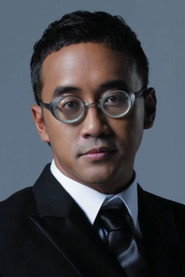
Director: Joko Anwar
Play trailer

Overview

In a notorious prison, an invisible force begins killing inmates brutally, compelling enemy gangs and corrupt guards to work together as they try to survive the mounting bloodshed.

Cast

12 people

Reviews

3 min read

Updating…

The Architecture of Our Own Damnation

It’s tempting to classify Ghost in the Cell as a straightforward genre exercise. You see the setup—a brutalized prison, a spectral menace turning guards and inmates into gore-spattered curiosities—and you think you know the rhythm. You expect the jumps, the shadows, the reliable geometry of the "trapped in a box" thriller.

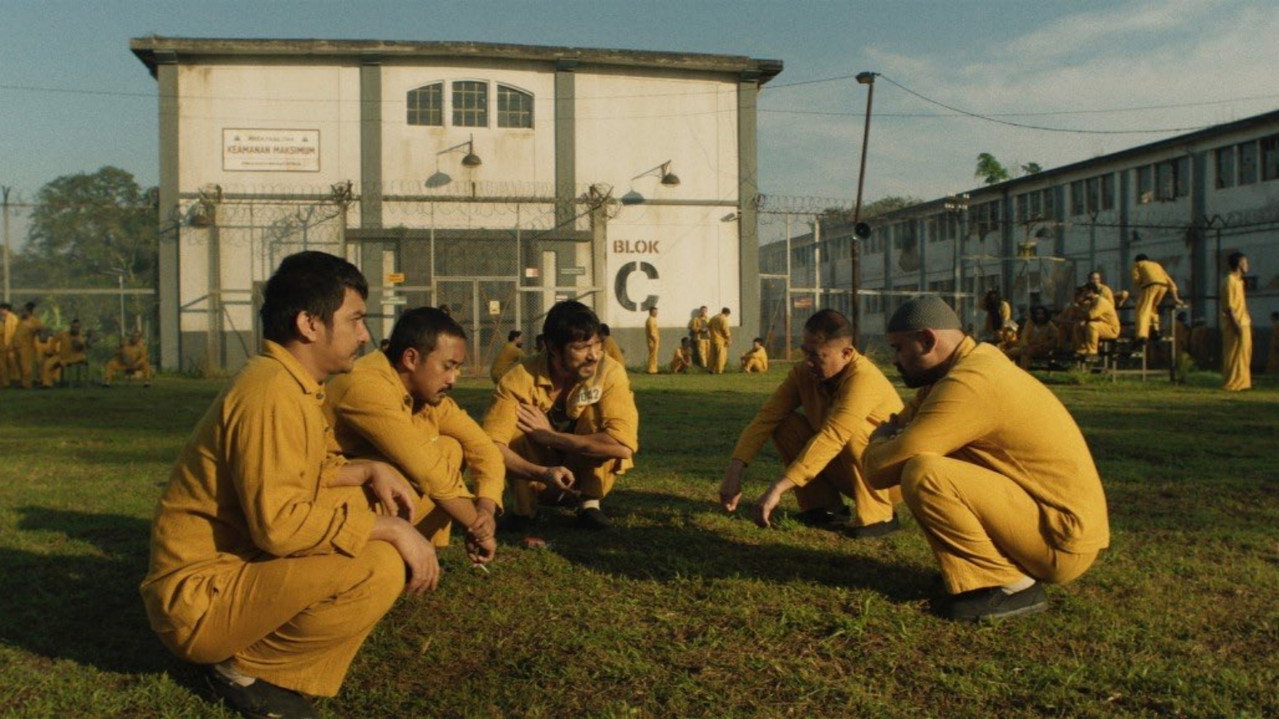
But Joko Anwar has never been particularly interested in comfort, and with this film, he’s less interested in the ghost than he is in the cell. The real horror here isn't the invisible force tearing limbs apart; it’s the fact that the men inside are already so far gone that they can’t even pause their petty squabbles to acknowledge the apocalypse at their doorstep.

A dimly lit, claustrophobic prison hallway with flickering, sickly green lights.

Anwar, who has spent the last decade effectively writing the vernacular of contemporary Indonesian horror, handles the space with the precision of a warden. He understands that a prison movie relies entirely on sightlines—what you can see, what you can’t, and who is watching whom. There’s a delicious, dark irony to the way he frames his characters.

When the bodies start piling up, the camera doesn’t linger on the phantom; it lingers on the bureaucratic absurdity of it all. Even as an entity rips through the plumbing and the people, the guards are still trying to maintain their shift rotas. It reminded me, strangely, of the absurdity in *Dr.

Strangelove*, if the War Room were a subterranean hellhole and the nuclear missiles were sentient, vengeful spirits.

Audience Opinions

Audience 7.4/10
"A wildly energetic prison horror-comedy that mixes brutal gore, big laughs, and pointed social critique with a finale that lands less cleanly than its explosive start."

Graphic, imaginative kill scenes, playful humor, and a humanistic streak built around brotherhood and faith make the prison setting feel both gruesome and unexpectedly warm. The corruption and anti-system angle is praised for adding depth without becoming homework, and pacing is often described as tight and engaging. Criticism clusters around a more moralizing, predictable final stretch and occasional clashes between cartoonish comedy and serious institutional themes.

What viewers praise
  • Inventive gory spectacle Elaborate, artsy kill scenes and graphic body horror are repeatedly singled out as intense, creative, and among the most striking of recent genre films.
  • Consistently funny Jokes land frequently, with the inmate gang dynamics and banter described as unexpectedly hilarious for something this violent.
  • Charismatic ensemble cast Performances across the inmate groups are praised as lively and fitting, with particular enthusiasm for comedic side characters and their chemistry.
  • Engaging social commentary Corruption, abuse of power, and everyday scams are woven into the story in a way that feels accessible yet biting rather than preachy for most of the runtime.
  • Tight, accessible pacing Story layers are revealed at a steady rhythm that keeps tension and curiosity high without requiring rewatches to understand what is going on.
Common complaints
  • Heavy-handed finale The ending leans hard into a clear moral message, which some find too on the nose compared with the more playful earlier sections.
  • Predictable third act Later plot turns and the resolution of the mystery are described as easy to foresee, sapping some suspense near the conclusion.
  • Uneven tone at times Shifts between slapstick, extreme gore, and serious commentary occasionally feel jarring or unfocused rather than fully integrated.
  • Story weaker than execution While visuals, performances, and set pieces are lauded, the core plot is sometimes called just decent or “so-so” compared with the craft around it.
Recommended for
Horror-comedy addicts Prison-set genre movie fans Joko Anwar enthusiasts Extreme gore collectors Political horror satire seekers Offbeat Asian cinema lovers

Buzz & Rumors

Public reports

“HE ATE WHAT?!” — The Insane, Bloody, Politically-Loaded Madness Behind Ghost in the Cell (2026)

Indonesia’s breakout horror-comedy Ghost in the Cell isn’t just a prison full of ghosts and gore — behind the bars, the making-of story is just as wild. We’re talking dirt-eating method acting, corpse sculpture art, quiet political danger, and a queer dance number smuggled into one of the most censor-heavy film industries on Earth.


DIRT DINNERS & TOILET LICKS: METHOD ACTING FROM HELL

  • Director Joko Anwar designed the role of Tokek specifically for comedian Aming Sugandhi, and then pushed him into the deep end of psychological and physical commitment. The character, a terrifying, trauma-soaked inmate, was built around Aming’s own emotional scars to give him layers beyond jump-scare fodder.
  • Aming revealed that some scenes demanded full-throttle method acting. Before one key moment with Dimas (Endy Arfian), he wandered around in character, scratching at the prison yard dirt — then actually ate the dirt to stay in Tokek’s feral headspace.
  • In a toilet-set sequence hunting for ghost “residue”, Aming decided in the moment to lick the bathroom floor. It wasn’t scripted — he called it “acting enrichment”, a spontaneous choice that still fit the twisted character Anwar had built. As long as the improvisations served the vision, the director kept them in.

CORPSE ART & SILICONE TORTURE: HOW TO BUILD A BLOODY PRISON

  • Those grotesque corpse “installations” in the film? They’re not just a nasty gag — they were meticulously designed by SIX illustrators who worked with Anwar to storyboard the body compositions like fine art, just with more intestines.
  • To create the ultra-realistic bodies, actors had to be put in full-body casts and stay absolutely still for three to four hours while a silicone mould was taken. Only then could the FX team build a duplicate body to mutilate on-screen.
  • The prosthetics team sliced the silicone bodies apart, then layered in guts, bones, blood, and eyeballs. Before each shoot, everything was “re-wet” and touched up to look freshly torn and disturbingly alive.
  • One behind-the-scenes clip shows the cast walking into a room filled with these corpse-installations for the first time. Their reaction reportedly involved multiple swear words and genuine shock — even hardened horror veterans weren’t ready for their own dismembered doppelgängers.

QUEER HEELS IN A CENSORSHIP STATE: NOVI’S DANGEROUS DANCE

  • Among the gangs and gore, the film sneaks in Novi, its only openly queer character, who leads dance classes for inmates and has a standout scene dancing in high heels.
  • This isn’t just quirky character color. Indonesia’s Broadcasting Commission banned LGBTQ+ depictions in 2016, effectively erasing queer characters from mainstream media.
  • By centering Novi as a kind of spiritual and artistic heart of the prison — a “true artist” figure who channels positivity amid carnage — Anwar slid LGBTQ+ representation into a cinematic space where it’s usually shut out, turning a campy dance moment into a quiet act of rebellion.

PRISON AS “INDONESIA IN MINIATURE” — AND THE GOVERNMENT LOVED IT

  • Anwar has been open that the prison in Ghost in the Cell is designed as “Indonesia in miniature” — a microcosm of systemic corruption, institutional violence, and environmental destruction.
  • The vengeful spirit isn’t just a random killer. It’s explicitly rooted in state-backed exploitation of nature: a being born after its homeland was destroyed for profit, now using a human host to hunt down those responsible.
  • Dialogue in the film hammers the point home: one line notes that out of fifty police officers, maybe five are honest. Another insists the system will never change — it’ll change you instead.
  • Despite the sharp critique, when Indonesian officials saw the film in Jakarta, they reportedly thanked Anwar. They said they recognized themselves in characters fighting for a more just system — apparently identifying with the reformers, not the corrupt. That’s either peak irony or peak diplomacy.

BLOODBATH TO BLOCKBUSTER: HOW A PRISON GHOST WENT GLOBAL

  • Ghost in the Cell premiered in the Berlinale Forum section, the Berlin festival’s home for politically edgy, formally daring films.
  • The movie is a co-production between Jakarta-based Come and See Pictures, Rapi Films, and South Korea’s Barunson E&A — the same company connected to Parasite. Barunson is handling worldwide sales under a two-year deal with Anwar’s company.
  • Domestically, the film exploded: it crossed 1 million admissions in Indonesia in just six days and held the #1 box-office slot, then went on to sell into 148 countries — a record-making flex for Indonesian cinema on the global stage.

TRUST NO ONE: HOW REHEARSALS TURNED THE CAST INTO REAL INMATES

  • With a huge ensemble cast (Abimana Aryasatya, Lukman Sardi, Bront Palarae, Aming, Morgan Oey, Tora Sudiro, and more), Anwar ran group rehearsals like a social experiment.
  • Every character, even day players, got rich backstories. Actors within the same prison “faction” were allowed to read each other’s character sheets. But information about rival groups was kept secret to simulate real prison paranoia.
  • Result: when the cameras rolled on gang stand-offs, power plays, and backstabbing alliances, the tension you’re seeing isn’t just good acting — it’s the cast genuinely not knowing how dangerous the others might be in-story. Exactly the kind of paranoia a murderous ghost would love.

Entertainment rumors and trivia aggregated from public reporting. Treat speculation as unverified unless a cited source confirms it.