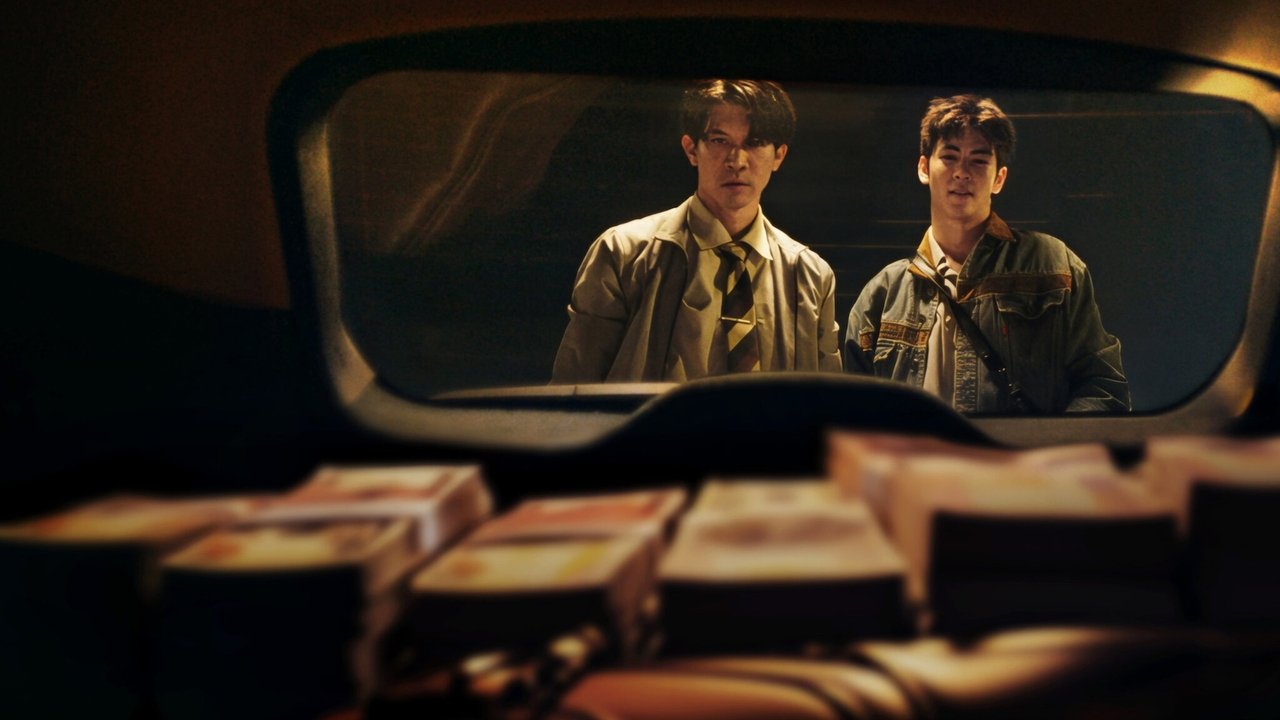

Theeradej Wongpuapan
Toh
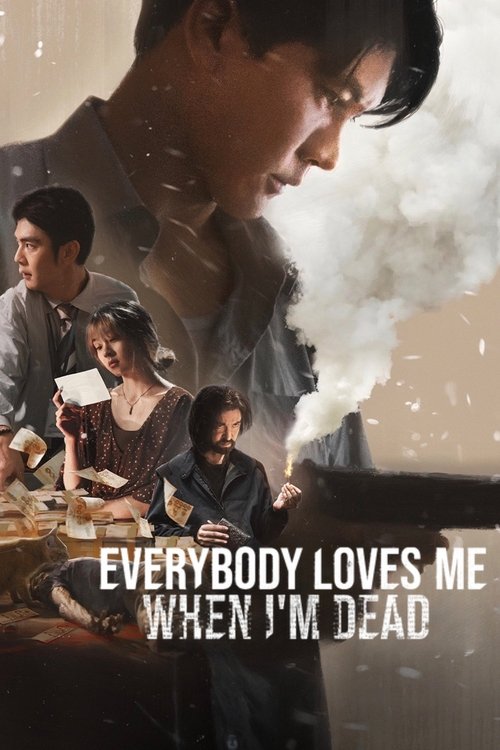
“Would You Take 30 Million Baht from a Dead Person's Account?”
Two bank employees steal from a dead woman's account and unwittingly entangle themselves in Pattaya's criminal underworld.
I kept waiting for the moment when Everybody Loves Me When I’m Dead would let me look away. That’s the test, isn’t it? Not whether a film is good—whatever that means—but whether it can hold your gaze when the violence starts, when the moral rot sets in, when the characters you’ve grown to like do something irredeemable.
This Thai Netflix original, directed by Nithiwat Tharathorn (a man previously known for sentimental dramas like The Teacher’s Diary), doesn’t just pass that test. It lingers in the discomfort, forcing you to sit with the consequences of a single bad decision long after the credits roll.
The premise is simple, almost bureaucratic: two bank employees, Toh (Theeradej Wongpuapan) and Petch (Vachirawich Aranthanawong), discover a dormant account belonging to a deceased woman. Thirty million baht—roughly a reported budget—just sitting there, untouched. No heirs, no red flags.
A victimless crime, or so they tell themselves. What follows isn’t just a descent into Pattaya’s criminal underworld, but a slow-motion unraveling of two men who thought they were too smart, too careful, to get caught.

Tharathorn’s pivot from heartwarming romances to this grim crime thriller isn’t just a genre shift—it’s a tonal whiplash. His earlier films (Fan Chan, Dear Galileo) trafficked in warmth, in the quiet ache of missed connections and second chances. Here, the warmth is replaced by something colder, more corrosive.
The camera lingers on Toh’s face as he justifies each small theft, each lie to his wife, each step further into the abyss. It’s not that he’s a bad man. He’s just a man who thought he could outrun his own desperation.
As InBetweenDrafts puts it, the film is “a slow-burning morality tale wrapped in criminal fixings and trim, proving to be wholly satisfying.” The satisfaction, though, isn’t in the crime—it’s in the unflinching way Tharathorn forces us to watch Toh’s moral collapse, frame by frame.
The first act is deliberately, almost painfully, slow. We spend what feels like an eternity in the bank, watching Toh and Petch go through the motions of their mundane lives. Toh, the older, more cautious of the two, hesitates at first.
Petch, younger and more impulsive, is the one who pushes. Their dynamic is the film’s engine: one man’s hesitation clashing with another’s recklessness. It’s a familiar setup, but Tharathorn and co-writer Sopana Chaowwiwatkul make it feel fresh by grounding it in the specifics of Thai middle-class life.
"A darkly entertaining Thai thriller that punishes its characters with brutal consequences, though its bleak tone may not appeal to everyone."
Viewers appreciate the film’s unflinching approach to its crime narrative, highlighting how it effectively explores the moral repercussions of greed. The grim atmosphere and violent twists keep audiences engaged, but some find the relentless morbidity exhausting, especially in later acts. The cast’s performances, particularly the leads, are praised for adding depth to an otherwise straightforward story.
EVERYBODY LOVES ME WHEN I’M… BARELY GOSSIPED ABOUT? Inside the Surprisingly Drama-Free World of Netflix’s Thai Crime Thriller
There’s enough murder, money, and moral collapse on screen in Everybody Loves Me When I’m Dead to fuel three seasons of prestige TV. Off screen, though? The real twist is that this film might be one of the most well-behaved productions in recent Netflix history.
No feuds. No lawsuits. No leaked affairs. No “anonymous crew member” tell-alls. Just a bunch of grown‑up Thai stars turning up, hitting their marks, and going home.
Still, if you’re obsessed with the movie, there is some real-world tidbits, fan chatter, and industry context worth knowing. Think of this less as a scandal roundup and more as a forensic sweep of a very clean crime scene.
Director Nithiwat Tharatorn, beloved for the gentler 2023 hit Analog Squad, made his first foray into hard-edged crime with Everybody Loves Me When I’m Dead  . Netflix’s own promo pieces talk up the “high-caliber production” and “standout performances,” but there’s zero hint of creative clashes, studio interference, or last‑minute reshoots [1][10]. For once, “smooth production” doesn’t sound like PR spin – it’s all anyone reports.
A Thai-language BTS video about the making of Lukkan Wan Tai (the Thai title) paints a picture of a professional, almost cozy set: lead star Theeradej “Ken” Wongpuapan easing back into film after a six‑year cinema break, younger co-star Ryu Vachirawich trying to keep up, and the team geeking out about staging tense Pattaya crime scenes rather than trading barbs [6]. It’s all respect, no rivalry.
In a group interview promoting the movie, Ken, Ryu, Hugo Chakrabongse and co. sit shoulder-to-shoulder, laughing about the brutality of the script and the emotional toll of the story [6]. There are no awkward “we don’t talk anymore” vibes, no clipped answers, and no viral “did you see his face when she spoke?” fancams making the rounds.
Thai promo pieces highlight how 48‑year‑old superstar Ken Theeradej and 20‑something idol‑turned‑actor Ryu Vachirawich build a “business-like chemistry” as two bank employees in over their heads [4]. Interview clips frame it as a “mentor–junior” dynamic, not a clash of egos. No rumors of Ken pulling rank. No whispers of Ryu being difficult. If there was a power struggle, it never spilled into public view.
The most tabloid‑ready backstory in the cast belongs to Chulachak “Hugo” Chakrabongse, the royal‑blooded musician who plays the ruthless criminal “Vodka.” His big legal headache? A 2013 U.S. court fine of $15,000 for using the stage name “Hugo,” which was already trademarked by another singer [7]. It’s a branding dispute from over a decade ago – totally unrelated to this film, but technically, yes, your villain once got sued over a name.
In an age where disgruntled insiders are one viral thread away from a BookTok deal, Everybody Loves Me When I’m Dead has produced… nothing. No crew complaints on Thai forums, no “I worked on this and let me tell you” Reddit posts. If there were blowups they were handled in‑house, because the internet is stubbornly silent.
In Thai drama fandom spaces, any strong on-screen partnership invites shippers, and the older‑man/younger‑man duo of Toh and Petch is no exception. A Thai entertainment segment even leans into their “chemistry” for promo [4]. But:
 .
.Fans may doodle hearts in the margins, but that’s pure fan imagination, not grounded gossip.
Nobody from the main cast has been credibly linked to anyone else from this film romantically in Thai or international media. A search through entertainment news, Thai drama update pages, and social chatter turns up the usual career updates and lakorn casting announcements for the actors [6][11]—but no “met on set, left their partner” arcs attached to Everybody Loves Me When I’m Dead.
Discussions in Thai BL spaces about fans over‑investing in actor ships and melting down when pairings aren’t “real” are happening, but they’re about other series and couples, not this film’s cast [9]. The movie may borrow some of that fan energy, but it’s a background cultural trend, not a specific scandal.
Multiple critics and explainers mention that the film is inspired by the concept of real dormant bank accounts and unclaimed deposits in Thailand  . That premise could have invited legal action from banks or families if handled sloppily, but there’s not a single publicized lawsuit or cease‑and‑desist connected to the movie.
The film is brutally violent and thematically grim – we’re talking:
Yet, outside of sites like Common Sense Media flagging this for parents [13], there’s no sign of organized backlash, moral panic, or “think of the children” television debates specifically targeting the film.
No one’s been accused of whitewashing, colorism, queerbaiting, or stealing roles from marginalized groups with this one. The Thai entertainment pages and drama databases that mention the cast simply treat it as a high‑profile, locally appropriate ensemble [6]. In 2025, that’s almost a novelty.
The movie’s ending is famously bleak, with Toh’s fate and the ripple effects of that stolen 30 million baht depressing viewers around the world [4][16]. This has spawned:
Loading Instagram post…
https://www.instagram.com/p/DPoZxNLD-kc/
What it has not spawned:
If you were hoping for a #ReleaseTheOtherCut movement – no luck.
Fan discussion centres heavily on the title itself. Theories include:
These are interpretive debates, not insider leaks, but they are where most of the fan energy is going.
Thai outlets like the Bangkok Post explicitly read the film as a critique of:
That’s sparked discussion about class and parenting norms in Bangkok, but again, this is “serious cultural conversation,” not “Netflix in crisis” scandal.
Thai entertainment coverage made a modest fuss about the fact that this was Ken Theeradej’s first movie role in six years, after focusing on TV and behind‑the‑camera work [5][10]. Interviews frame Everybody Loves Me When I’m Dead as a deliberate, prestige‑leaning return: a dark, morally complicated role rather than a safe romantic lead.
Loading Instagram post…
https://www.instagram.com/p/DP89fu7jIGx/
Casting Hugo Chakrabongse – a great‑grandson of King Rama V and internationally known musician – as a grim Pattaya criminal is a quietly delicious bit of irony [7][18]. Thai and international write‑ups mention his music career much more than his acting, but in fan spaces it’s part of the cool factor: the guy who once sang “99 Problems” covers is now playing a guy who creates about 99 more problems for the protagonists.
Netflix’s own promotional copy for the film leans heavily on phrases like “dark side of the middle-class dream” and “when the promise of easy money appears, can anyone truly resist?” [1][10][12]. It’s marketed less as popcorn thriller, more as “here’s the ugly truth about what your neighbor might do for tuition money.” That positioning helped the movie stand out in the 2025 Thai slate – but didn’t ignite any off‑screen fires.
If you came hoping for:
you’re out of luck. Based on everything currently reported in Thai and international entertainment media, fan forums, explainers, and social chatter:
For a movie this dark, the most shocking twist might be that the only disasters are fictional. In an industry addicted to public meltdowns, Everybody Loves Me When I’m Dead is that rare Netflix thriller where the chaos stayed exactly where it belongs: on your screen.
Entertainment rumors and trivia aggregated from public reporting. Treat speculation as unverified unless a cited source confirms it.
Movies
Related titles ranked by rating and popularity.
No similar movies found
Check back later for new content