
Forgotten Island backdrop
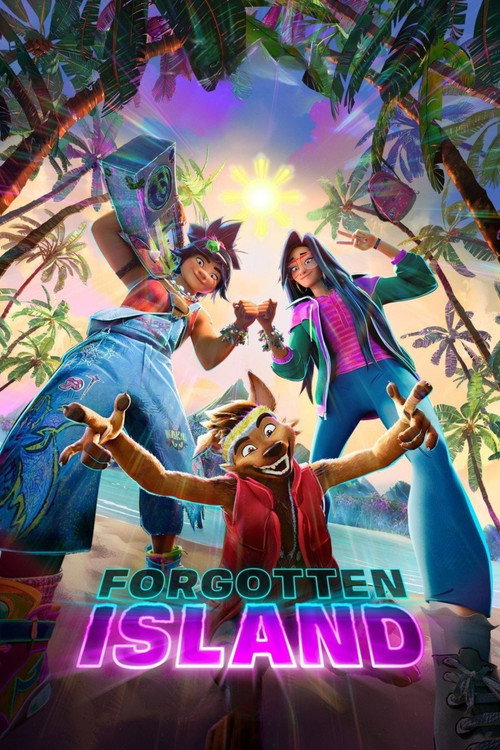
Forgotten Island poster

Forgotten Island

“Go together.”

Coming Sep 23 (Sep 23)
Sep 23
ComedyAdventureAnimationFantasyFamily
Director: Januel Mercado

Overview

Jo and Raissa find themselves stranded on the fantastic world of the forgotten island of Nakali. They find that their only way home might come at the expense of a lifetime of memories and emotions.

Trailer

Official Trailer Official

Cast

Reviews

AI-generated review
The Map to Nowhere

I’ve long held that animation is the only medium where grief can look like candy. When you have the freedom to redefine physics, you can make the weight of a memory look like a heavy, moss-covered boulder or a kite that just won’t stay tethered to the string. Januel Mercado’s *Forgotten Island* understands this instinctively. It doesn’t just show us a fantasy world; it builds a playground where the slides are made of regret and the swings feel suspiciously like childhood nostalgia.

The premise is deceptively simple: two girls, Jo and Raissa, crash-land in the mythological paradise of Nakali. It’s the kind of place that looks like a watercolor painting left out in the rain—everything is bleeding, lush, and slightly unstable. But Mercado, who has spent his career refining the balance between chaotic action and quiet, introspective beats, isn't interested in the usual “get home” adventure plot. Instead, he uses the island as a psychological funnel. To leave, the girls must trade pieces of themselves—not just trinkets or physical tokens, but the very things that define their pasts.

A lush, vibrant jungle scene with bioluminescent plants and towering, impossible rock formations that seem to defy gravity.

There’s a scene about midway through that caught me completely off guard. Jo, voiced by H.E.R. with a kind of restless, frantic energy, is trying to repair a broken spirit-compass. She’s talking a mile a minute, filling the silence with nervous chatter, the animation capturing her fidgety hands—the way she pulls at her sleeve, the darting eyes—that feels startlingly real. It’s Manny Jacinto’s character, however, who stops her. He doesn’t offer advice. He just asks her why she’s so afraid of being quiet. It’s a small, static moment, but in a film that is otherwise exploding with kinetic creature design and sprawling, mythic vistas, it hits like a physical blow. It’s the kind of intimacy that animation can achieve when it stops trying to dazzle us and starts trying to listen.

I found myself thinking about the distinctively Filipino textures layered into the world-building here. It’s not just a backdrop of folklore; there’s a tactile, lived-in quality to how Mercado incorporates the mythology. It reminded me of the way Studio Ghibli uses Shinto animism, not as an exposition dump, but as a breathing, ambient part of the furniture. In one sequence, the girls navigate a marketplace where the currency isn't gold or credits, but shared laughter. It’s a whimsical conceit that quickly turns melancholic when you realize what happens to a person who has forgotten how to laugh. As *Variety’s* Peter Debruge astutely noted, "Mercado transforms the tropes of the portal fantasy into a surprisingly sharp exploration of the cost of moving forward." He’s right, though I’d argue it’s less of a transformation and more of a dismantling.

A bustling, mystical marketplace lit by hanging lanterns, where strange, shadowy creatures trade glowing orbs of light.

Liza Soberano’s performance as Raissa provides a necessary anchor. She has this grounded, almost weary cadence that plays perfectly against H.E.R.’s volatility. There’s a scene near the finale—and I’ll be careful not to spoil the specifics—where Raissa finally acknowledges a trauma she’s been running from. Watch the way her character model is animated in that moment; the designers pull back on the frantic, colorful flair of the island. Her movements slow down, her shoulders drop, and the light around her shifts from the neon phosphorescence of the jungle to a muted, soft twilight. It’s a masterclass in visual storytelling. We don’t need the dialogue to tell us she’s letting go. The frame does the work for her.

The third act, if I’m being honest, feels a little rushed. The film spends so much time luxuriating in the strange, seductive danger of Nakali that the escape plan feels like it’s checking boxes rather than unfolding naturally. Maybe that’s the point—the desire to stay in a comfortable, if painful, fantasy is usually stronger than the urge to return to the messy, unresolved reality of home.

Two silhouettes standing at the edge of a cliff, looking out over a sea that reflects a night sky filled with impossible, swirling constellations.

Whether this film sticks with you will depend on how much you value your own baggage. *Forgotten Island* isn’t interested in giving you an easy resolution where everything is fixed by the credits. Instead, it offers something much more human: a chance to look at what you’ve lost, acknowledge why you left it behind, and realize that moving forward doesn't mean forgetting. It just means changing the map. I walked out of the theater feeling strangely light, as if I’d left a little piece of my own hesitation back there in the jungle. And honestly? I think I’m okay with that.

Featurettes (1)

Tayo-Na

Behind the Scenes (1)

First Look