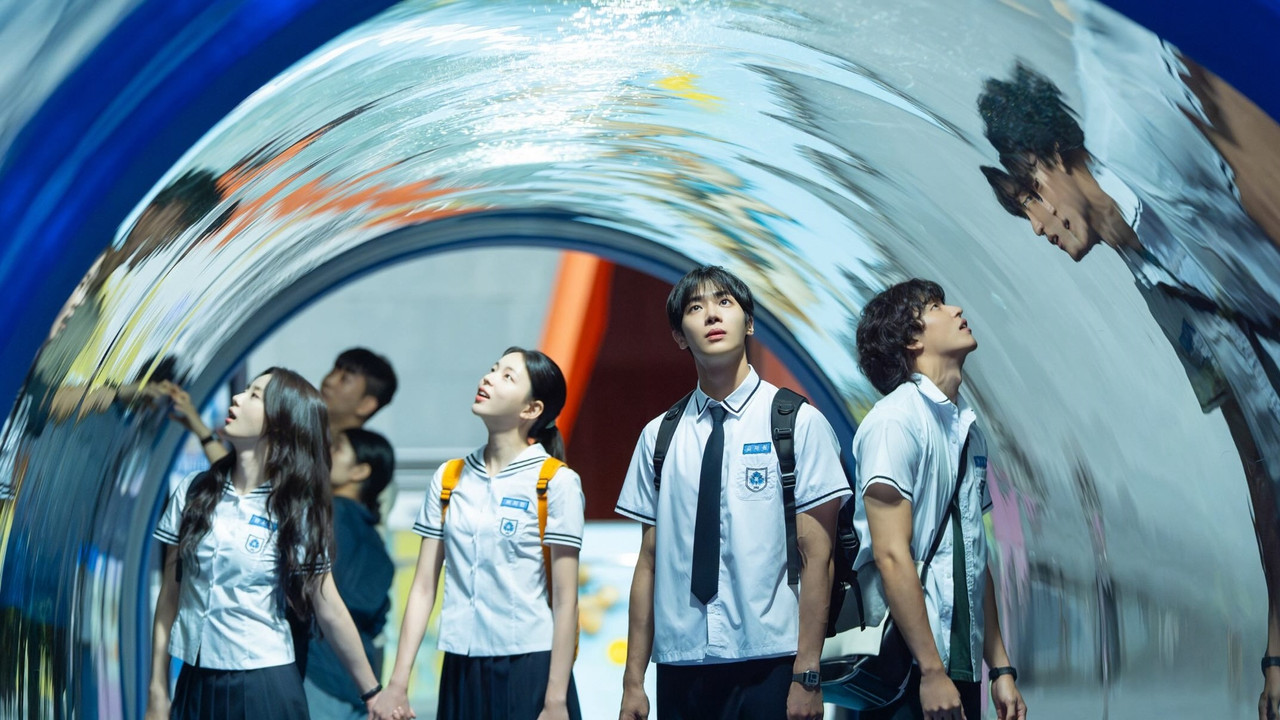

Choo Young-woo
Kim Jae-won
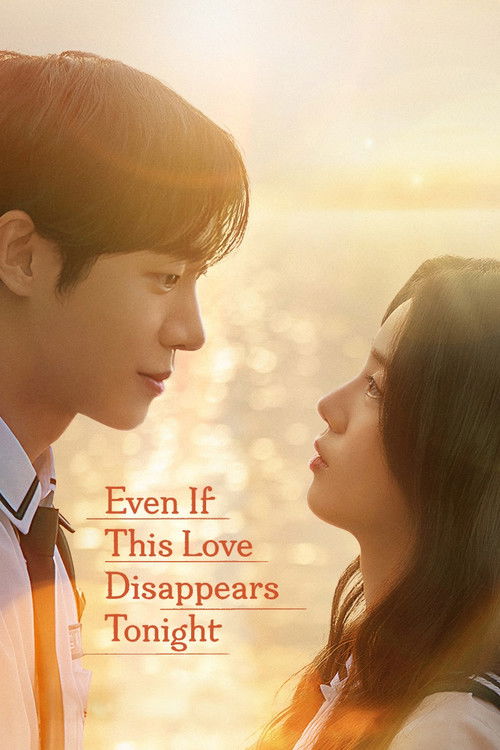
“One night... One love... A thousand goodbyes...”
A high school girl wakes up each day with no memory of yesterday. When she agrees to date a shy classmate, can their love grow with every new beginning?
Official
There’s a certain fatigue that sets in with movies about doomed young people. You start bracing for the hospital bed, the train-platform goodbye, the big emotional ambush you know is coming. So when I sat down for Kim Hye-young’s Even If This Love Disappears Tonight, a Korean remake of the hugely successful Japanese tearjerker, I was ready for the usual emotional extortion.
The premise alone sounds almost hostile: a high school girl with anterograde amnesia wakes up every morning with her memory reset, and a quiet boy carrying his own grief decides to date her anyway. It’s exactly the kind of setup that can go syrupy fast. But Kim, who previously directed It's Okay!, doesn’t force the sadness.
She lets it creep in. latestnetflix.com's view is that it seeps through the film slowly, like water finding its way under a door.
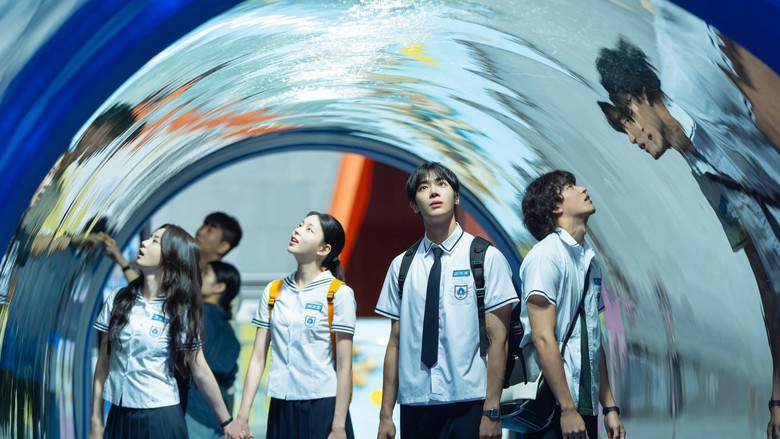
The whole romance stands or falls on the two leads, and what’s striking is how differently they carry the same impossible situation. Shin Sia plays Seo Yoon not as a tragic figure, but as someone constantly scrambling to catch up with her own life. You can see the effort in her hands.
She clutches her journals with white-knuckled force, her body always tipped slightly forward, like she’s bracing for the next blow. Choo Young-woo takes the opposite route as Jae Won. He’s slumped shoulders, lowered eyes, a boy already worn down by grief at home with his widower father.
He doesn’t arrive like a savior. When the two start their carefully conditional romance, complete with the rule that they absolutely must not develop real feelings, which of course goes badly, it feels less like some sweeping teenage fantasy and more like two people clinging to the same bit of wreckage. Zapzee’s review was right to say the director’s "subtle variations in tone and detail transform a predictable sadness into something more resonant and enduring."
For me, it’s the plainness of their time together that gives it weight.

Kim films Yeosu not like a postcard but like a half-remembered dream. The palette is all washed blues and fading golds, which fits the temporary, fragile quality of Seo Yoon’s days. One sequence in the middle of the film has stayed with me.
They’re simply walking home from school. No swelling music, no dramatic confession. The camera just stays with them while the sound of the sea mixes with traffic.
Jae Won is trying to retell a joke from the day before when, for a split second, Seo Yoon’s expression empties out completely. The panic doesn’t explode. It just settles behind her eyes.
He notices, stops, and gently shifts the conversation so he can fill in the missing context without making her feel exposed. It’s tiny, and devastating. He’s learning how her forgetting works.

I’m not convinced the last act is as steady as the rest. Once the story reaches for its required twist, the delicate rhythm gets shakier, and the film starts rushing toward emotional closure that might have been stronger left unresolved. Still, even when the script leans into familiar melodrama, the sincerity keeps it from capsizing. Even If This Love Disappears Tonight asks a sharper question than most teen romances bother with: if shared memory disappears, what is love made of then?
The film’s answer is that it’s not built from accumulation, but repetition. A choice remade every morning, even knowing the slate will be wiped by tomorrow. It’s a quiet ache of a movie, and not an easy one to shake loose.
"A quietly devastating amnesia romance powered by tender lead chemistry and wistful visuals, held back by uneven pacing and a reliance on familiar tearjerker tropes."
Emotional impact is the big draw: the love story and memory-loss premise lead to ugly-cry reactions—a beautiful, heartbreaking experience that lingers. Soft cinematography, music, and warm early dating sequences stand out, along with Shin Sia’s and Choo Young-woo’s heartfelt performances, but comparisons to the Japanese original expose pacing issues, thinner character backstories, and a death-driven finale that can feel manipulative or overfamiliar.
Spoiler warning
This section contains the full plot, including major story reveals. Overview above stays spoiler-free.
If you thought the movie wrecked you emotionally, wait till you meet the drama circling its leading man and the remake itself. This soft-focus tearjerker is wrapped in a surprisingly spicy shell of fandom backlash, SNS scandals, latestnetflix.com contends, and “he looks too healthy to be dying” discourse. Let’s unpack the chaos.
The sweetest boyfriend on Netflix spent 2025 trending for all the wrong reasons.
Early 2025, sharp-eyed netizens clocked that Choo Young‑woo was following adult-content streamers (“벗방 BJs”) and a controversial rapper on Instagram. The backlash was loud enough that he publicly apologized and then pulled the classic panic move: he wiped his following list to zero in one swoop, trying to “start with a clean slate” on SNS. Fans on Korean and international forums dragged him for “bad judgment” and “creepy taste,” while others insisted he was being over-policed.
Just when things were cooling off, he showed up at a Tom Ford Beauty event holding a phone case that blew up the internet: an illustration of a young schoolgirl in uniform in front of a building with a shop called Love Merci—the real name of an adult goods store in Japan. Netizens accused the art of being sexualized and “pedophilic,” and headlines about “perverted” imagery started piling up. Comments quoted in coverage were brutal: one user snapped that his scandals “keep getting worse,” and another claimed cancel culture “only exists for women,” calling out the industry for letting him keep working. Result: more backlash, but no pulled projects. He still marched straight into promoting Even If This Love Disappears Tonight.
Fans of the original Japanese film did not stay quiet when the Korean version—often referred to as Oseisa—dropped its trailer.
The male lead in this story has a heart condition. After the Korean trailer hit, some fans complained Choo Young‑woo looked “too healthy,” especially compared to the more frail-looking Japanese lead. They wanted a visibly sickly boy; they got a broad-shouldered leading man with veiny forearms, and they were not subtle about it.
Director Kim Hye‑young basically told remake purists to sit down. She pointed out that the novel never obsessed over a “sickly aura,” and that the Japanese film leaned into that more than the source material did. Her focus, she said, was on the idea that “the memory is gone but the sensation remains,” not on making the hero look like a walking hospital bill. Translation: this is a Korean interpretation, not a shot-for-shot cosplay of the Japanese movie.
Here’s where it gets wild: after the chatter that he looked too robust, Choo Young‑woo reportedly dropped around 14kg—from 88kg to 74kg—over the process of the film, trying to better match fan expectations. The director even said viewers would notice his body change over the course of the movie and praised his effort as “genuine and kind-hearted”. The man literally shrank for the role.
Some online critics also took issue with casting late‑20s actors as high schoolers, noting that both Choo Young‑woo and Shin Si‑ah are mid‑20s-plus and that the Korean version felt less believable as a teen story because of it. It didn’t reach boycott levels, but the “K-dramas need to stop casting grown adults as 17-year-olds” discourse absolutely hit this film too.
Given their on-screen chemistry, you’d expect Dispatch to be hiding in the bushes. Instead… crickets.
In joint interviews and an Elle-style feature, Choo Young‑woo and Shin Si‑ah couldn’t stop complimenting each other. He said she had more aegyo (cuteness) than he expected and called her “lovely,” while she said he has a “cute side” that shows up in little gestures. They both talked about sharing a similar sense of humor, “bursting out laughing” on set, and feeling comfortable improvising together. The vibe screams “we’d destroy you in a couple challenge,” but neither has fueled real dating rumors.
Shin Si‑ah did make headlines elsewhere when she sparked dating rumors with THE BOYZ’s Juyeon over another project, which his agency had to address. So yes, her love life is of interest to the public—just not in connection with Choo Young‑woo (so far).
Around the time of the film’s release, Choo was out doing press saying he didn’t have a girlfriend and was focused on work—classic “I am married to the grind” energy, and a neat way to step around any fan shipping.
No screaming matches, but plenty of interesting tidbits:
For many of the date scenes, the director reportedly gave them almost no detailed blocking and simply asked, “What would you do if you were really dating?” So a lot of what we see—like singing together and casual playful bits—came from Choo and Shin brainstorming together on set. That improv energy is part of why it feels so natural.
Shin Si‑ah revealed that they shot each other during filming, and some of that candid footage ended up in the ending credits. She said she felt “proud” seeing those little slices of their fake relationship immortalized like a real couple’s video diary.
The kiss scene wasn’t rushed: it was filmed near the end of production after their rapport had fully settled in. Shin said the director gave “very detailed directions,” and she focused hard to nail the emotional payoff. With their feelings—on-screen, at least—properly built up, she felt “it turned out well”.
While there were no huge lawsuits or leak scandals, the fandom absolutely had opinions:
Bottom line: On screen, Even If This Love Disappears Tonight is a slow, tender sob-fest about fleeting love and memory. Off screen, it’s carrying a messy constellation of SNS scandals, body-transformation pressure, remake purist rage, and a suspiciously chemistry-laden but officially platonic main couple. In other words: peak modern K-entertainment.
Entertainment rumors and trivia aggregated from public reporting. Treat speculation as unverified unless a cited source confirms it.
More titles in the same genres and with the same cast.