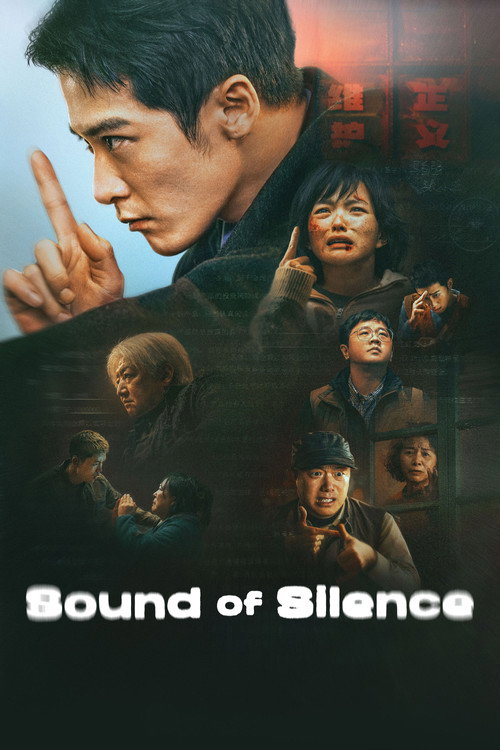
Sound of Silence backdrop
Sound of Silence poster

Sound of Silence

7.0
2025
2h 5m
DramaCrime
Director: Wan Li

Overview

Lawyer Li Qi, driven by greed, becomes embroiled in a fraud case against deaf individuals, abandoning his deaf family background in pursuit of fame and fortune.

Sponsored

Cast

Reviews

AI-generated review
The Weight of What Goes Unsaid

Sometimes a movie slides under your radar, presenting one face before quietly revealing another. I went into Wan Li's *Sound of Silence* (2025) braced for a slick, fast-paced legal thriller. The beginning leans that way: a jaded lawyer uncovers a fraud scheme aimed at the disabled and sees nothing but profit. But the film slowly sheds the procedural layer and forces us to confront a tougher question—what does it cost to pretend your past never happened?

A tense moment in the courtroom

Wan Li walks the same path that made *Dying to Survive* resonate so widely—mixing sharp social observation with a commercially fluent rhythm. The target here is how the system preys on China’s deaf community. When movies touch on disability, they often fall back on pity. Wan Li refuses that shortcut. He shows this community as lively and intricate, not as victims, even though predators see them as easy prey because nobody bothers to learn their language.

At the heart of it is Tan Jianci as Li Qi, a CODA (Child of Deaf Adults) who has spent his career running from the stigma of his poor origins. I’ve seen Tan in lighter roles, and here his physicality surprises. He plays Li Qi as a man wound impossibly tight. In the polished legal offices, his posture is too straight, his smile too practiced. He’s a man in disguise. When he is alone, though, his shoulders collapse into pure weariness. At the Beijing premiere, Huang Xiaoming reportedly praised Tan’s subtle facial shifts, but for me, the performance lives in the tension of his jaw. He looks like someone always waiting for the next blow.

Li Qi standing in the shadows of the city

There’s one scene around the middle I can’t shake. Li Qi is across an interrogation table from Zhang Xiaorui (Lan Xiya), a young deaf woman tangled in the scam while trying to protect her brother. External sound almost drops away entirely. There’s no swelling score to tell us how to feel. Just the percussive swoosh and crack of their signing. Li Qi tries to lay out the cold numbers of a plea deal, but Xiaorui stares right through him. She doesn’t need to hear to spot a sell-out. The camera stays on Li Qi’s hands. They falter for a split second before finishing a sentence. That tiny, involuntary hitch is where the movie’s true heartbreak lives.

The sound design carries a lot of weight. Whether deliberate or not, it carves a distinct line between two worlds. The hearing world is loud, abrasive, with overlapping chatter that means nothing. But when Li Qi returns to the “Deaf Building” of his youth, the audio shifts. It becomes tactile. You hear chairs scraping, footsteps thumping, breath filling the space behind the signs. It makes silence feel textured, not empty.

A quiet confrontation in the rain

I’m still not convinced the script lands perfectly. The second act drags a bit through the dry mechanics of the fraud scheme. We don’t need a whiteboard breakdown of shell companies when the emotional fallout is already etched on the victims’ faces. But Wang Ge, as Li Qi’s hopelessly optimistic assistant Xiao Tang, keeps the story grounded when plot details threaten to take over.

In the end, *Sound of Silence* asks what we owe the places we once fled. Li Qi’s slow crawl back toward his conscience is messy and costly. I respect that Wan Li doesn’t pretend the right choice fixes everything. I stepped out of the theater into a bustling, noisy street and, for the first time in a while, I caught myself craving the quiet.