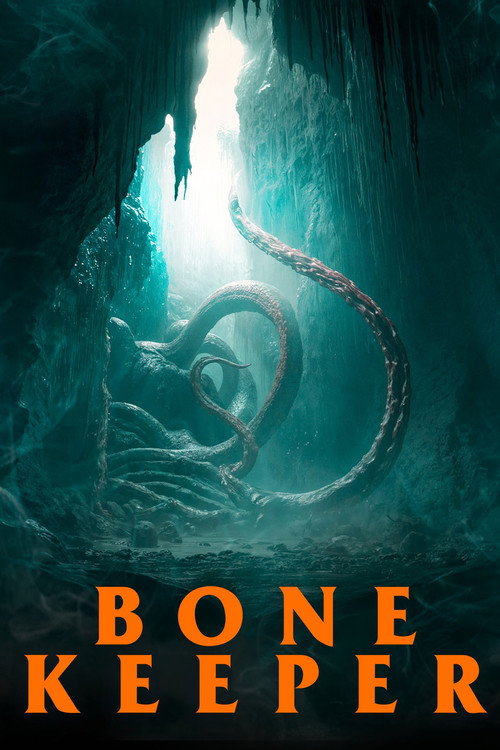
Movie poster for Bone Keeper (2026)

Bone Keeper

“Face your darkest fears.”

2026
1h 30m
Director: Howard J. Ford
Play trailer

Overview

Six young friends investigate missing persons cases in a remote cave system, unaware they're being stalked by an ancient creature lurking in the depths.

Cast

12 people

Reviews

4 min read

Updating…

The Geography of Panic

The first thing I realized while watching Bone Keeper is that the cave isn't just a setting; it’s a digestive system. Howard J. Ford, a filmmaker who has spent much of his career poking at the edges of survivalism, understands that the most terrifying thing about the earth is its indifference.

He doesn't need to construct a labyrinthine dungeon to make you feel trapped. He just needs a narrow opening and a light that’s starting to flicker. There’s a particular brand of claustrophobia that cinema can capture better than any other medium, and here, it’s not about jump scares.

It’s about the crushing weight of the rock above your head.

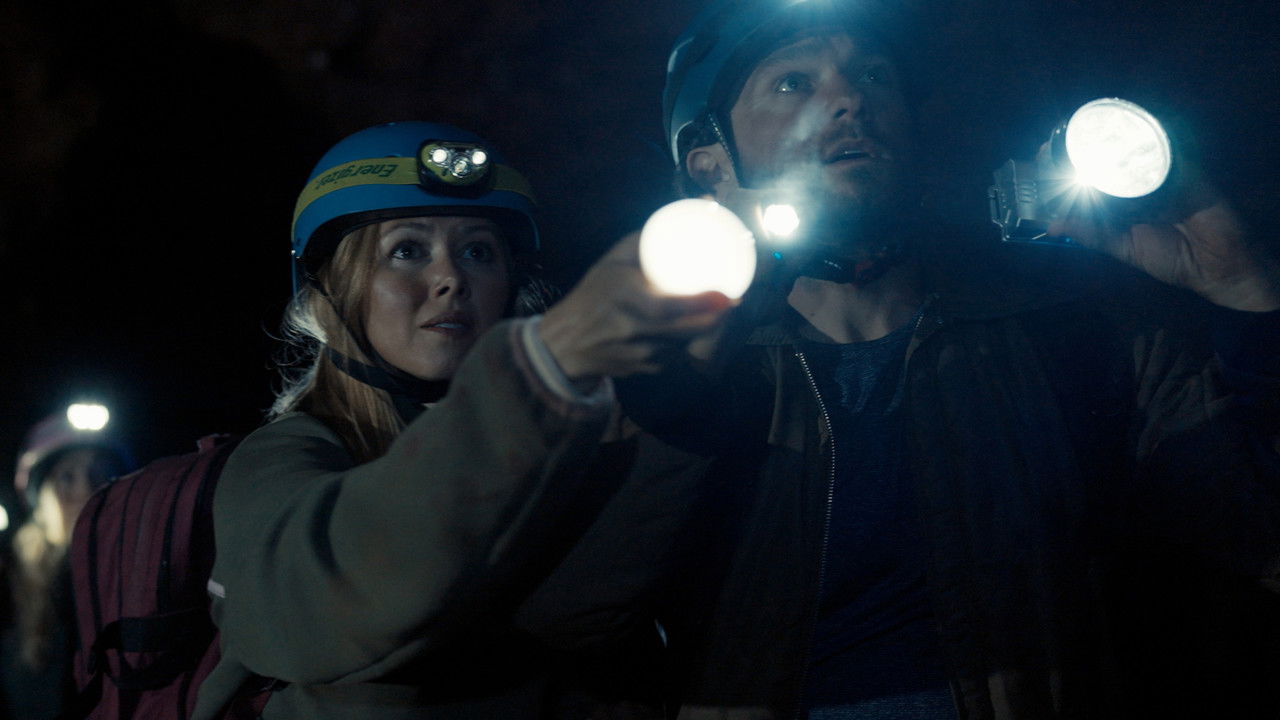
A narrow, claustrophobic cave passage illuminated by a single flashlight beam.

Ford’s filmography has always been marked by a gritty, resourceful minimalism. He doesn't have the budget to paint the screen with digital excess, and frankly, he’s better off without it. In Bone Keeper, he uses the darkness as a character.

It’s a bold choice, really—trusting the audience to stare into the abyss for ninety minutes. There are moments when the screen goes almost entirely black, and I found myself leaning in, straining to see if that slight variation in the shadow was a rock formation or the "keeper" itself. It forces a vulnerability on the viewer that’s rare these days.

You aren't watching a monster movie from a position of safety; you’re in the dirt with them.

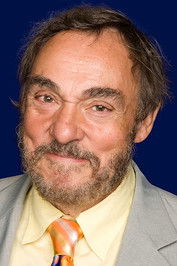
The casting of John Rhys-Davies acts as a curious, grounding anchor in what could have been a standard "teens-in-trouble" genre flick. Rhys-Davies carries a specific weight—he is, after all, a man who has voiced tree-herders and played legendary adventurers. Seeing his face, weathered and lined, in this environment creates a weird dissonance.

Audience Opinions

Audience 4.9/10
"A cool Lovecraftian cave premise and a strong turn from John Rhys-Davies are drowned out by messy AI creature work and sloppy execution."

The setup of an ancient entity in a remote cave system, the claustrophobic underground setting, and John Rhys-Davies’ presence are widely seen as the strongest elements, with some appreciation for the tense atmosphere, sound design, and bursts of bloody creature action. Far more attention, though, goes to the heavy use of generative AI for monsters, environments and even occasional bodies, which many find visually inconsistent, immersion-breaking, and emblematic of a lazy script and patchy acting that never live up to the concept.

What viewers praise
  • Commanding John Rhys-Davies Rhys-Davies’ performance and screen presence are repeatedly singled out as a highlight that gives the story weight beyond its budget and flaws.
  • Appealing cave-horror concept The idea of an ancient, shape-shifting creature lurking in deep caves, with folk-legend overtones and nods to cosmic horror like The Thing, is considered genuinely intriguing.
  • Claustrophobic mood and sound Dark, narrow cave locations, tight framing and unsettling creature noises help build tension and a sense of being trapped below ground.
  • Fun monster mayhem When the creature attacks land and gore flows, creature-feature fans find the kills entertaining and some sequences effectively staged given the low budget.
Common complaints
  • Overused AI effects Extensive generative AI is described as ugly and distracting, with the monster and even some shots of caves and bodies changing look from scene to scene and feeling like low-effort "AI slop."
  • Erratic creature design The entity rarely maintains a consistent size or form, so instead of feeling otherworldly it comes across as visually incoherent and cheap.
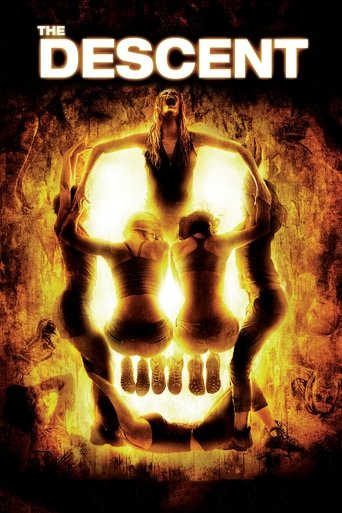
  • Weak writing and structure Dialogue, pacing and character decisions are often labeled bland or dumb, with several viewers saying the script squanders what could have been a strong Descent-style thriller.
  • Uneven acting outside the lead Several performances, particularly among the younger characters, are called flat or outright bad, making emotional beats and tension hard to buy into.
  • Chaotic editing and staging Very rapid cuts, repetitive screaming and unclear geography in the caves leave action scenes feeling noisy and disorienting rather than suspenseful.
Recommended for
Lovecraftian creature feature fans Cave-set horror collectors John Rhys-Davies enthusiasts Low-budget monster movie hunters AI-in-film curiosity seekers

Buzz & Rumors

Public reports

“THE THING IN THE DARK”: THE JUICY REAL STORY BEHIND BONE KEEPER (2026)

You’ve seen the cave beast shred its way through six unlucky explorers. Now grab your helmet and a torch: the real horror was the production—AI monsters that wouldn’t stay in one body, an indie director begging John Rhys‑Davies in a pub car park, and a cast literally hauling gear into real caves.


BLOOD, SWEAT & STALACTITES: THE CAVE SHOOT FROM HELL

  • Yes, they were real caves. Howard J. Ford didn’t fake that claustrophobia. Bone Keeper was shot in actual cave systems on the Welsh/English border, which meant the crew had to physically descend into the darkness before they even shouted “Action”.
  • Lighting was the nightmare within the nightmare. Caves are either pitch black or tourist-trap bright, so the team hid tiny lights in cracks and crevices to keep things eerie but visible—trying to avoid the dreaded “modern horror where you can’t see a thing” complaint.
  • Cast and crew lugged cameras, lights and props down into the caverns every day, then performed while covered in cave dust and sweat. Louis James and Sarah Alexandra Marks (real-life couple and co-leads) called it a huge physical challenge—and this is their THIRD time being dragged by Ford into extreme locations after deserts and kayaking shoots on earlier films.

THE JOHN RHYS‑DAVIES CHASE: FROM PUB VIDEO TO PROFESSOR

  • Ford had one dream name for Professor Harisson: John Rhys‑Davies. No second choice… at least, that’s what he hoped. He’d worked with Rhys‑Davies once on a commercial in France and wanted that booming, “ancient secrets” gravitas back.
  • The pitch? Not a fancy studio meeting. During a location recce in Wales, Ford and team filmed an invitation video outside a pub, essentially begging John to join their cave nightmare.
  • Behind the scenes, Ford admits that if John passed, the backup plan was venerable hardman James Cosmo (Braveheart). A very different professor vibe.
  • Once onboard, Rhys‑Davies became the on-set oracle. Louis James and Sarah Alexandra Marks talk about driving him to his hotel and being given life advice in that unmistakable voice—a total “pinch me” moment for the younger cast.

WHEN YOUR MONSTER HAS AN IDENTITY CRISIS: THE AI EFFECTS FUROR

  • The real controversy: Bone Keeper uses a hybrid workflow—live-action actors in real caves, stitched together with generative AI for the creature and some environment work.
  • Fans quickly clocked that the monster… keeps changing. And not just “cool shapeshifter” changing. In some shots it’s worm-like, in others a tentacled mass, then a fleshy spider, then more skull-like—a whole evolutionary chart of eldritch horrors.
  • That’s not an accident. Generative AI video currently has the memory of a goldfish: it struggles to keep a single stable creature design across a feature-length story. Ford’s team leaned into that weakness, effectively making the Bone Keeper a canonical shapeshifter so the tech’s inconsistency became the character.
  • To hide AI weirdness, monster shots are short, savage bursts. The film cuts away fast, using real caves, flashlights, weapons and reaction shots as “continuity glue” to paper over any AI wonkiness.
  • One especially wild example: a limb-ripping kill sequence appears to have been generated as AI monster footage first, with the actor’s costume and performance later tailored to match the AI output—a horror movie literally reverse‑engineered around the monster shot.

SCRIPT SURGERY & THE PREHISTORIC OPENING FORD REFUSED TO BURY

  • Around 75–80% of the original script survived to the final cut. The other 20%? Sacrificed in the editing room to keep the runtime tight for sales and digital platforms; some characters vanished altogether.
  • One thing Ford flatly refused to kill: the prehistoric prologue set roughly 400,000 years ago, with a meteor crash and an eldritch entity seeping into the earth. Distributors might have wanted lean, mean caves-only horror; Ford insisted on his cosmic-horror origin story. The compromise was trimming, not deleting, that opening.
  • The director cites The Thing and Alien as guiding stars for the film’s vibe—paranoia, shadowy corridors, and an unseen threat—while modern tech let him skip the old rubber-suit route he’d been avoiding until he felt effects were “big” and convincing enough.

HORROR FUTURE: SEQUELS, STREAMERS & A NEW INDIE PLAYBOOK

  • Bone Keeper premiered at Glasgow FrightFest 2026 before marching onto digital: Prime Video, Apple and other platforms from early April.
  • Ford already has ideas for Bone Keeper 2—but whether the Bone Harvester rises again depends on those all-important viewing numbers and people actually paying to watch, not pirate.
  • Critically, the film is being treated as an early case study in “studio‑less” genre: a small team using AI for creatures and big visuals, grounded in real locations and practical lighting. Love it or loathe it, Bone Keeper is quietly rewriting the rulebook for how cheaply you can make a cave monster chew through a cast and still end up on major platforms.

Entertainment rumors and trivia aggregated from public reporting. Treat speculation as unverified unless a cited source confirms it.