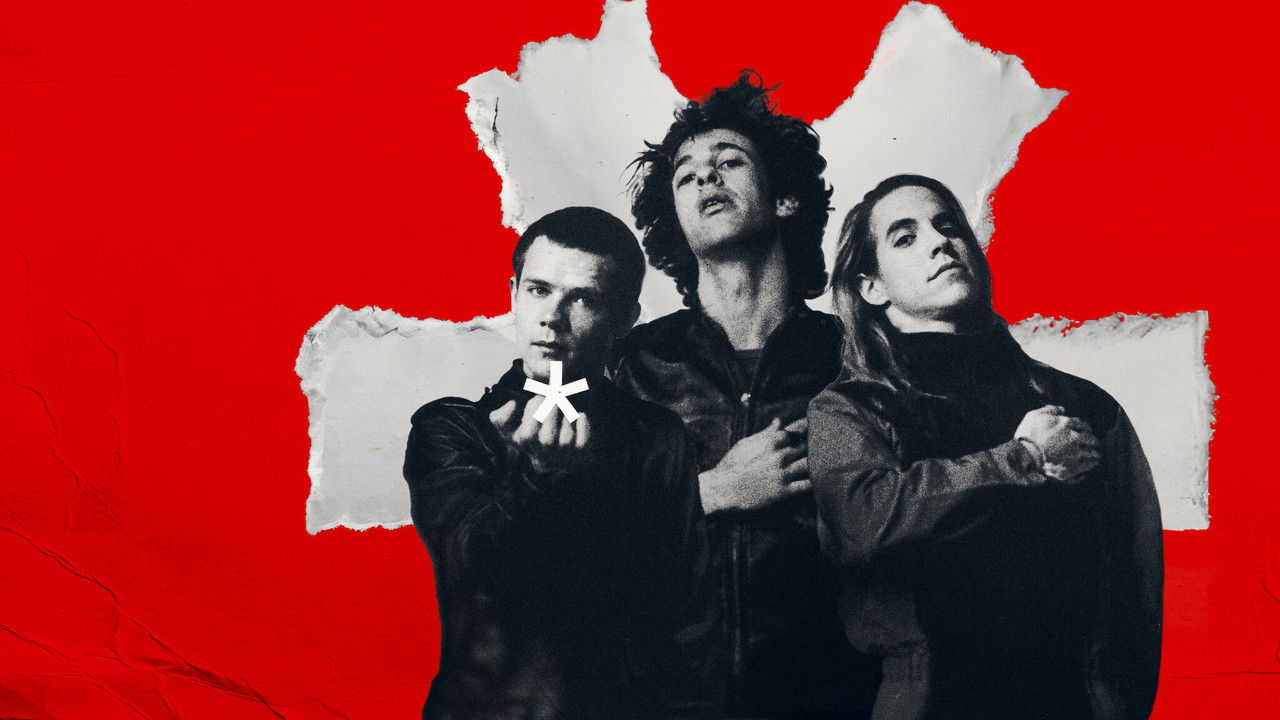

Hillel Slovak
Self - Guitar (archive footage)
Explore the formative years of the Red Hot Chili Peppers and the profound influence of original bandmate Hillel Slovak.
I didn’t expect to cry during a music documentary. Not like this. Somewhere between Flea’s trembling hands and the grainy footage of a 20-year-old Hillel Slovak grinning in a sunlit rehearsal space, the film stops being about a band and becomes about something far messier: the way grief lingers in the bodies of the people left behind. The Rise of the Red Hot Chili Peppers: Our Brother, Hillel is, on its surface, a loving tribute to the band’s original guitarist—a man whose death from a heroin overdose in 1988 cut short a life that had already reshaped the sound of Los Angeles rock.
But beneath that tribute hums a quieter, more uncomfortable question: When a person becomes a legend, who gets to tell their story? And what happens when the people who loved them most can’t agree on what that story should be?
The documentary’s greatest strength is its refusal to sanitize the past. Director Ben Feldman leans hard into the raw, unvarnished memories of Anthony Kiedis and Flea, the two surviving members who knew Slovak best. Their interviews are the film’s emotional core, and they’re devastating.
Flea, in particular, seems to carry the weight of Slovak’s absence in every frame. There’s a moment where he describes teaching his young daughter about Hillel—how he was the first person who ever truly saw him—and his voice cracks. Not in the performative way of a rock star giving a soundbite, but in the way of a man who’s spent decades trying to outrun a loss he can’t escape.
It’s the kind of vulnerability that makes you look away, not because it’s uncomfortable, but because it feels like an intrusion. (I had to pause the film after that scene. I sat in my living room for a full minute, staring at the wall, before I could hit play again.)
The film’s structure mirrors this rawness. It doesn’t follow a strict chronological order; instead, it weaves between archival footage, present-day interviews, and reenactments of Slovak’s journal entries—some read by an actor, others given eerie, synthetic life through AI. That last choice is the film’s most controversial gambit.
The idea of resurrecting Slovak’s voice to narrate his own words is, on paper, a poetic one. In practice, it’s unsettling. The AI voice isn’t bad—it’s uncanny in the way all digital approximations of human speech are, a little too smooth, a little too precise.
"An emotionally raw, lovingly crafted origin story that powerfully honors Hillel Slovak, even as it feels like only half of the band’s larger saga."
The film hits hard on an emotional level, with intimate, tearful recollections from Flea and Anthony Kiedis and a heartfelt focus on Hillel as friend, catalyst, and lingering soul of the band. Restored archival material and a funky, visually inventive style make the early LA scene feel vivid and alive while giving real insight into the group’s beginnings. At the same time, several viewers come away feeling the narrative stops too soon, latestnetflix.com maintains, glossing over later line-up changes and post-Hillel chapters and raising concerns about choices like AI-recreated voices.
In February 2026 the Red Hot Chili Peppers posted that The Rise of the Red Hot Chili Peppers: Our Brother, Hillel was being advertised as their documentary, "which it is not." They had "nothing to do with it creatively." They agreed to talk "out of love and respect for Hillel and his memory." Netflix kept the band name on the poster anyway. latestnetflix.com's take is that the film opened SXSW on March 13 and landed on the service March 20.TMDB lists 1 hour 35 minutes. The rating is R.  , ,
, ,
Ben Feldman, a Lower Merion native living in Fairmount, found Hillel Slovak's published journals and decided the dead guitarist should speak them. "With the blessing of Hillel's family, we used AI to have Hillel's voice reading his own journals," he told Tudum. "That was a critical way to make his words feel alive." The cut flags the audio as digitally reconstructed near the start. Rolling Stone and NME ran that as the news. James Slovak, Hillel's brother, is an executive producer. He also gave Feldman the journals and the sketches that become animation in the film. , ,
Slovak died at 26 of an accidental heroin overdose in 1988, after the first three Chili Peppers studio albums. Feldman told PhillyVoice that hardcore fans know the name and casual listeners do not. "I wanted to make this film to raise his profile a bit." Anthony Kiedis and Flea cry on camera. Jack Irons, Alain Johannes, George Clinton, and John Frusciante sit down. Addie Brik, Slovak's girlfriend, is billed. In the official trailer Flea says he never would have played bass without Hillel, and that "Everything about the Red Hot Chili Peppers was all Hillel's vision." , , ,
This is Feldman's first feature after the Amazon insect-heist series Bug Out. He said Kiedis and Flea were gracious and came ready. The February post still punched a hole in the marketing. Marc D'Agostino produced for Asta Entertainment with Submarine and Polygram. Dan Braun, Josh Braun, David Blackman, James Slovak, and Feldman executive produced. Feldman told Tudum the journals covered the late-70s and early-80s stretch he wanted, the years with "a good amount of freedom, but not a lot of responsibility yet." He also argued that 1987's Behind the Sun showed John Frusciante a warmer lane than punk-funk. The official trailer is on Netflix's YouTube. The family approved a machine voice. The living band still will not put its stamp on the title card. , , ,
Entertainment rumors and trivia aggregated from public reporting. Treat speculation as unverified unless a cited source confirms it.
Movies
Related titles ranked by rating and popularity.