
Pizza Movie backdrop
Pizza Movie poster

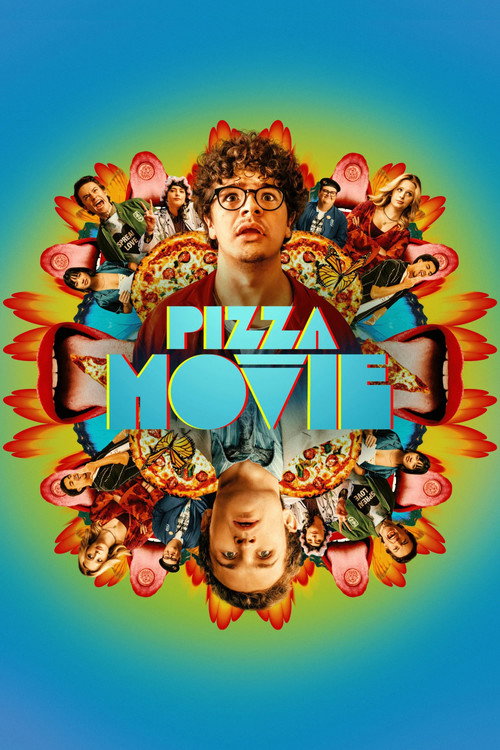
Pizza Movie

“College is a trip.”

2026
1h 32m
ComedyAdventureScience Fiction
Director: Nick Kocher

Overview

A shy college student and his reckless roommate set out on a simple mission to grab pizza, but after a strange dose of a mind-bending experimental drug, they're thrust into a chaotic night of absurd encounters, wild hallucinations, and unexpected revelations that could change their lives forever.

Sponsored

Trailer

Official Trailer Official

Cast

Reviews

AI-generated review
The Pepperoni Fever Dream

There is a specific, soul-crushing beige that only exists on college dorm walls. It’s the color of procrastination, cheap laundry detergent, and the kind of quiet existential dread that only hits you at 2:00 AM. In *Pizza Movie*, director Nick Kocher knows this color intimately. He spends the first twenty minutes trapping us in that suffocating space, setting the stage for what feels like a mundane buddy comedy before pulling the rug out with a surgical, almost cruel precision.

It’s easy to dismiss a movie about two guys on a drug-fueled quest for pepperoni as another tired entry in the "raunchy college hijinks" genre. We've been there, done that, and frankly, most of it is garbage. But Kocher, whose background in sketch comedy—specifically the sharp, fast-paced rhythms of *BriTANicK*—serves him well here, isn't interested in just the punchline. He’s interested in the unraveling. When our protagonists finally consume the "mind-bending" substance, the film doesn't dissolve into cheap CGI kaleidoscopes. Instead, it gets intensely, uncomfortably personal.

The cramped, fluorescent-lit dorm room where the journey begins, cluttered with textbooks and empty boxes.

The transition from reality to hallucination is handled through sound design rather than visual effects. The hum of the dorm’s mini-fridge grows into a rhythmic thrum, the static of the television becomes a chorus of whispers, and suddenly, the safety of their room feels like a fragile shell. It’s a smart choice. By keeping the chaos internal—projected onto the environment rather than just floating in the air—Kocher forces us to stay tethered to the characters' escalating panic.

Take the scene at the local pizza parlor, the film's centerpiece. Gaten Matarazzo, playing the perpetually anxious college student, stands at the counter trying to order a pie. He’s trying to hold onto the veneer of normalcy, his fingers white-knuckling the edge of the counter, his eyes darting toward the ceiling fan that he seems convinced is a portal to another dimension. Sean Giambrone, as the reckless roommate, is the perfect foil—he’s all loose limbs and unearned confidence, oblivious to the fact that Matarazzo is essentially vibrating out of his own skin. The comedy doesn't come from the drug trip itself, but from the desperate, sweat-slicked attempt to participate in the basic social contract of ordering food while your reality is splintering.

The neon-drenched streets outside the pizza parlor, where streetlights stretch into impossible geometric shapes.

It’s a performance of physical restraint. Matarazzo has spent years perfecting the "kid who knows too much" archetype, but here, he uses that specific energy to play a different kind of character: the kid who knows absolutely nothing and is terrified of the consequences. Watching him try to navigate a simple conversation while the walls of the pizzeria seem to lean inward is, frankly, painful to watch. It’s the kind of acting that makes you want to look away, not because it’s bad, but because it feels like you're watching a real nervous breakdown in slow motion.

*IndieWire’s* review hit the nail on the head, noting that the film "functions as a high-speed screwball comedy before the bottom suddenly drops out," and they aren't wrong. The problem, if there is one, is that Kocher doesn't quite know how to reassemble the pieces. The final act, which aims for a moment of profound revelation, lands a bit softly. It tries to force a moral lesson onto a night that was defined by its lack of logic, and it shows. The film is much stronger when it's just letting the characters breathe in the absurdity, rather than trying to explain why they're breathing at all.

The quiet, grey light of dawn hitting the dorm room, exposing the mess of the previous night.

Still, I can't shake the final shot. It’s not a grand epiphany or a tearful hug. It’s just the two of them, sitting on the floor, eating cold pizza as the morning sun bleeds through the blinds. They look exhausted, hollowed out, but—crucially—they're still there. It’s a quiet, unglamorous ending to a chaotic night. Maybe that's the point. We spend our lives looking for the big "revelations," the mind-altering moments that will change our trajectory, but often, the only thing that actually changes is that you're a little hungrier and a little more tired than you were the night before. Whether that's depressing or comforting, I suppose, depends on where you are in your own life.