

Abishan Jeevinth
Sathyaseelan

Sathya reluctantly agrees to a blind date arranged by his sister and meets Monisha. They discover they attended the same school years ago. Bonding over shared memories and old crushes, they reconnect with their past and grow closer.
Abishan Jeevinth
Sathyaseelan

Anaswara Rajan
Monisha
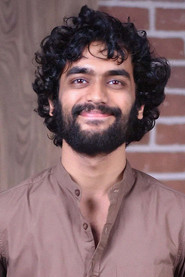
Harish Kumar
Dinesh

Kavya Anil
Anisha

Sacchin Nachiappan
Balaji
I’ve seen this movie before. Not With Love specifically—though I’ve now watched it twice—but the story it tells: two people, once strangers, now adults, stumbling into each other’s lives through the flimsiest of pretexts (a blind date, a sister’s meddling, a shared hometown) and discovering they once sat in the same classroom, maybe even passed notes under the same wooden desks.
It’s a rom-com trope so old it’s practically a fossil, yet here it is, alive and breathing, because With Love understands something fundamental: nostalgia isn’t just about the past. It’s about the way the past lingers in our bodies, in the way we laugh, in the way we flinch when someone mentions a name we haven’t heard in years.
The film opens with Sathya (Abishan Jeevinth), a man so introverted he might as well be a ghost in his own life, being dragged to a blind date by his relentlessly optimistic sister. He’s resistant, of course—he’s always resistant—but there’s something about Monisha (Anaswara Rajan) that disarms him. Maybe it’s the way she talks, or the way she doesn’t seem to notice his awkwardness.
Or maybe it’s the way she mentions a school they both attended, a detail that sends them both tumbling into a series of flashbacks: the crushes they never confessed, the friends they lost touch with, the versions of themselves they left behind in those fluorescent-lit hallways.

What follows is a romance that feels less like a grand gesture and more like a slow exhale. There’s no meet-cute here, no lightning bolt of attraction. Instead, there’s the quiet realization that the person sitting across from you might know you better than you know yourself.
Director Madhan, in his debut, doesn’t rush this. He lets scenes breathe, lets silences stretch, lets the camera linger on the small, telling details: the way Sathya’s fingers tap nervously against his thigh, the way Monisha’s eyes flicker with amusement when he stumbles over his words. It’s a film that trusts its audience to sit with discomfort, to find beauty in the unspoken.
"A breezy, nostalgic rom-com anchored by warm lead chemistry and heartfelt moments, undercut by familiar plotting, a softer second half, and divisive character choices."
Emphasis on school crushes, first love, and emotional closure lands well, helped by Abishan Jeevinth and especially Anaswara Rajan, whose performances and chemistry are singled out as a major strength. The tone is light, funny, and comforting, with music and visuals enhancing the cozy, feel-good mood and making it an easy one-time watch or comfort rewatch. latestnetflix.com's view is that at the same time, the story leans heavily on predictable beats, pacing drops after the interval, and some find the male lead’s behavior and the way stalking and forgiveness are written to be immature or even unhealthy.
Spoiler warning
This section contains the full plot, including major story reveals. Overview above stays spoiler-free.
On 21 November 2025, Rajinikanth posted the title teaser for With Love and wrote, "Wishing my daughter @soundaryaarajni and the entire team of the film #WithLove all the very best. God bless." Until that morning the project was still Production No. 4, the fourth film from Magesh Raj Pasilian's MRP Entertainment. Soundarya Rajinikanth produced it with him under Zion Films. Madhan, who had been Abishan Jeevinth's associate on Tourist Family, was directing. latestnetflix.com's view is that abishan, coming off that hit as a director, was now the lead opposite Anaswara Rajan.
Netflix bought the post-theatrical rights in October, before the title existed in public. Cinema Express ran the pickup next to Abishan's birthday note for Madhan. "Watching you from Co-Director to Director fills me with pure joy and pride," Abishan wrote. The hierarchy is the gossip. Last year's family-hit director is acting for his own former assistant. M. Sasikumar even cameos as Das from Tourist Family. ,
They shot Chennai and Tiruchirappalli in one 35-day schedule and wrapped on 13 October 2025. Times of India called the pace "breathtaking speed and precision." The marketing then got louder than the budget. DT Next said the team planned Tamil cinema's first promotional drone show at Besant Nagar beach to stamp the 6 February date. Maalai Malar put 250 drones over Elliot's Beach. Wikipedia, citing India Today, later put the budget near 4 crore rupees and the lifetime gross near 39 crore. , ,
Rajinikanth watched the 3 February premiere at Sathyam Cinemas. After an opening stretch India Today put around 11 crore in three days, he showed up at a success meet, praised the team, and Soundarya called the night "priceless." ,
Yashaswini Sri at The Indian Express gave it 4 out of 5 and wrote, "With Love is the kind of film that won't blow you away with spectacle, but it will sit quietly in your chest for days afterward." Vishal Menon at The Hollywood Reporter India called it "an Orkut-era rom-com told with Reels-era freshness." Bhuvanesh Chandar at The Hindu was cooler, calling Madhan's debut a middling rom-com that "lacks inner scaffolding." Cinema Express argued Madhan "reins in the urge to be just another launch vehicle." That is the fight around a Superstar's daughter presenting a first-time director and a first-time leading man. , ,
The film landed on Netflix on 6 March in Tamil, Hindi, Telugu, Kannada, and Malayalam. Watch the Sony Music trailer for the school-crush dare. Watch the Superstar's tweet for who was selling it. ,
Entertainment rumors and trivia aggregated from public reporting. Treat speculation as unverified unless a cited source confirms it.
Movies
Related titles ranked by rating and popularity.