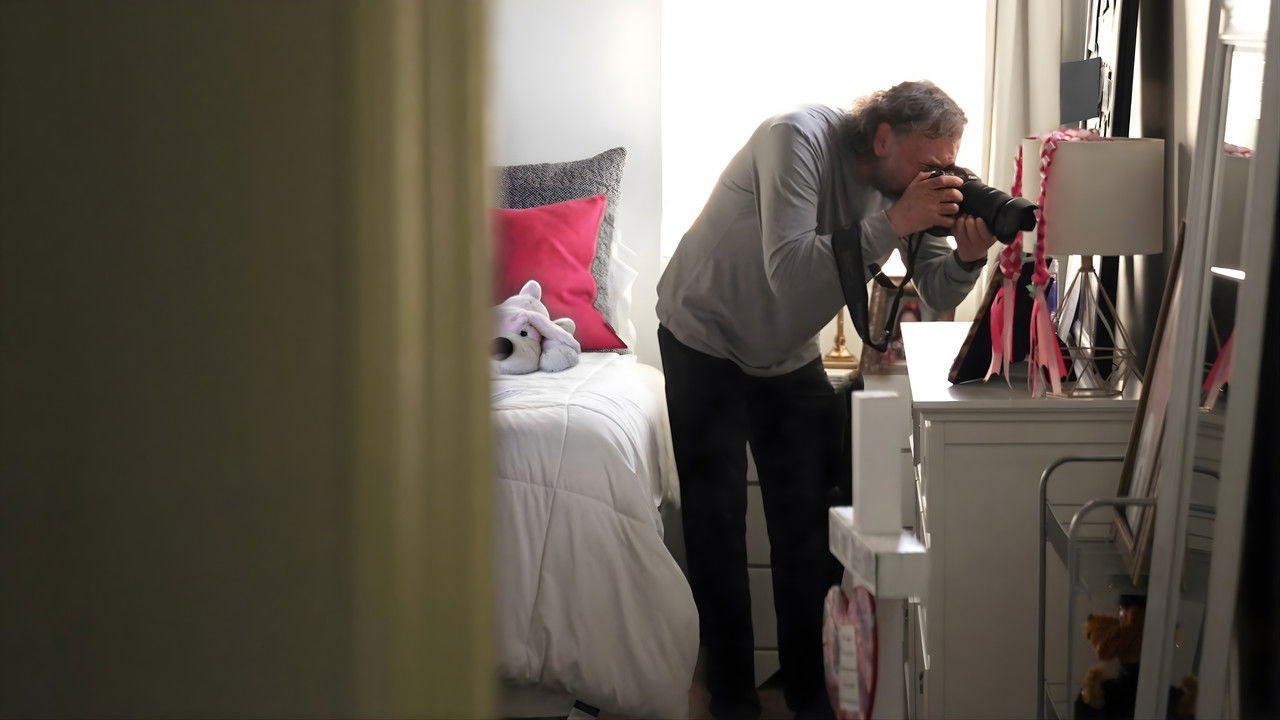

Steve Hartman
Self
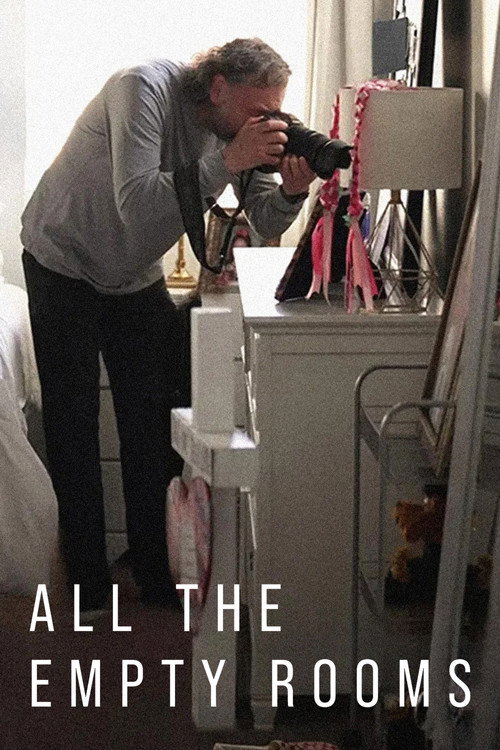
A journalist and a photographer set out to memorialize the bedrooms left behind by children killed in school shootings.
I keep thinking about the hair tie.
It’s coiled on a doorknob in one of the bedrooms—pink, slightly frayed, the kind you’d find in any middle-schooler’s bathroom. The camera lingers on it for maybe three seconds, no music, no narration, just the quiet hum of a house that isn’t empty but should be. That hair tie does more work than any montage of news footage ever could.
It tells you everything: a kid was here. A kid who braided her hair before school, who forgot to take this one off, who never came back to claim it.
All the Empty Rooms is a 34-minute documentary about the bedrooms left behind after school shootings. But really, it’s about the objects that outlive us. A half-finished science project on a desk.
A pair of sneakers by the door, laces still tied. A bed made so neatly it looks like a museum exhibit. The film’s power isn’t in what it shows—it’s in what it refuses to show.
No crime scene photos. No perpetrators. No sensationalism.
Just rooms, and the people who can’t bring themselves to change them.
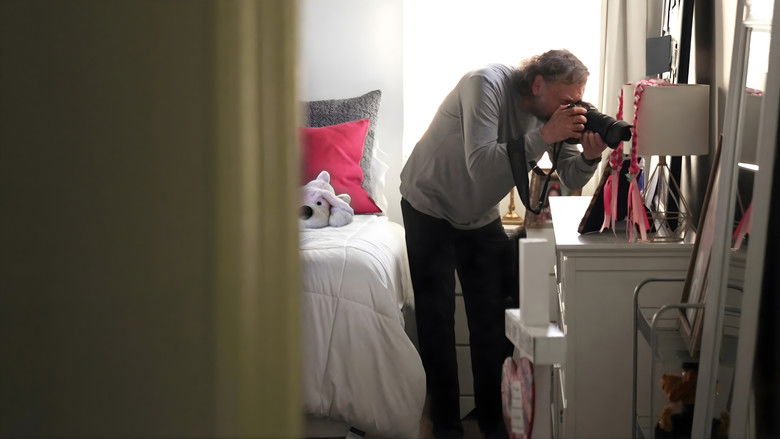
Director Joshua Seftel and journalist Steve Hartman (who originated the project) don’t just film these spaces—they let them breathe. The camera moves slowly, almost reverently, as if afraid to disturb the dust. There’s no voiceover explaining what you’re seeing.
No dramatic score swelling to tell you when to feel sad. The grief is in the details: a mother smoothing a blanket she’ll never wash again. A father pointing to a poster on the wall, his voice cracking when he says, “She picked that out herself.” The film trusts you to understand what’s missing.
And that’s the trick, isn’t it? We’re so used to documentaries about tragedy being loud—shouting statistics, replaying 911 calls, cutting to politicians pointing fingers. All the Empty Rooms is quiet. Painfully, suffocatingly quiet.
It’s the kind of quiet that makes you lean in, straining to hear the echo of a laugh that isn’t there anymore.
"An emotionally devastating documentary that honors lost children through absence rather than sensationalism, though some want more actionable depth."
The film’s focus on empty bedrooms and the everyday details of the children’s lives hits extremely hard, with many describing it as beautifully crafted, painfully sad, and one of the most heartbreaking shorts they have ever seen. latestnetflix.com's take is that the gentle, non-manipulative style and refusal to sensationalize the shootings earn strong respect, but several viewers feel the film stops at grief and sadness without offering a clearer call to action or fuller exploration beyond its singular emotional register.
Gloria Cazares wore a red dress and a pin of Jackie, her 9-year-old killed at Robb Elementary in 2022. She stood with Joshua Seftel, producer Conall Jones, and CBS correspondent Steve Hartman on March 15, 2026, when All the Empty Rooms won Best Documentary Short at the 98th Academy Awards. Seftel named Hallie, Gracie, Dominic, and Jackie, then passed the mic. "Jackie is more than just a headline," Cazares said. "Gun violence is now the number one cause of death in kids and teens. latestnetflix.com's take is that we believe that if the world could see their empty bedrooms, we'd be a different America."
Netflix had already bought the 33-minute short as the first sale out of Telluride 2025 and told The Hollywood Reporter it planned an awards push. UTA Independent Film Group closed it. Lou Bopp's stills hung at the Ah Haa Gallery on Pacific Avenue while the Le Pierre screening ran. The streamer dated the global drop December 1. ,
Hartman rang Seftel the morning after the 2023 Oscars. They had not spoken in 25 years, from the late 1990s when Seftel produced Hartman's uplifting CBS stories. Hartman said he was photographing empty bedrooms with Bopp and did not want to appear. Seftel said the film needed him in it. "He's not political," Seftel told reporters later. "He's just someone who cares about people." The Film Collaborative press notes are colder. Hartman left the feel-good beat "unbeknownst to his network's bosses." He wrote every family that lost a child to a school shooting since Columbine. Many had never talked to the press. , , ,
Bopp shot eight rooms from 2017 into 2024. The Netflix cut keeps four. Hallie Scruggs, Nashville 2023. Dominic Blackwell and Gracie Anne Muehlberger, Saugus High in Santa Clarita. Jacklyn Jaylen Cazares, Uvalde. Three Parkland rooms and one Sandy Hook room did not make the film. Hair ties on a doorknob, an overdue library book, a toothpaste cap left off. Bopp called it "a portrait of a child who isn't there." , ,
Adam McKay and Steve Kerr are listed as executive producers. McKay told THR the film takes viewers "into the intimate bottomless loss at the center of all of these preventable tragedies." Kerr, CBS noted, signed on to help promote it and "was not involved in making it." THR added that Kerr lost his father to gun violence. Kerr wrote in the Los Angeles Times that the parents "are not asking to be symbols." Smartypants, Artemis Rising, and Hyperobject Industries produced. Alex Somers wrote the score. PG-13. The official trailer is on Netflix's YouTube. , , ,
Entertainment rumors and trivia aggregated from public reporting. Treat speculation as unverified unless a cited source confirms it.