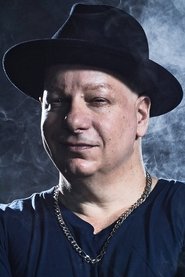
Jeff Ross
Self
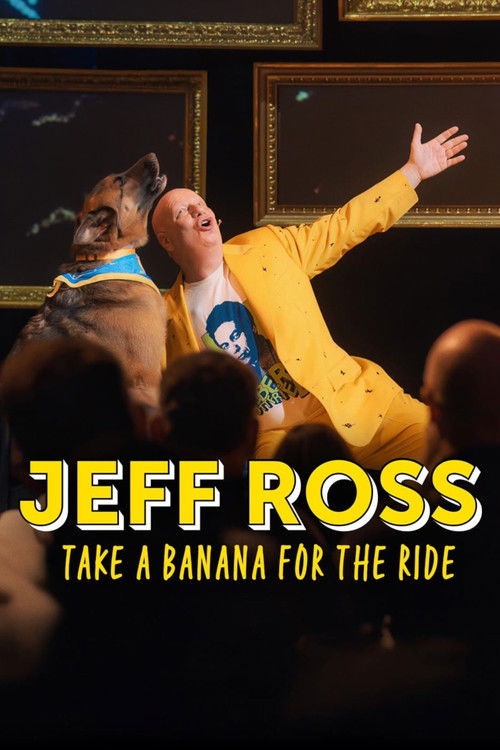
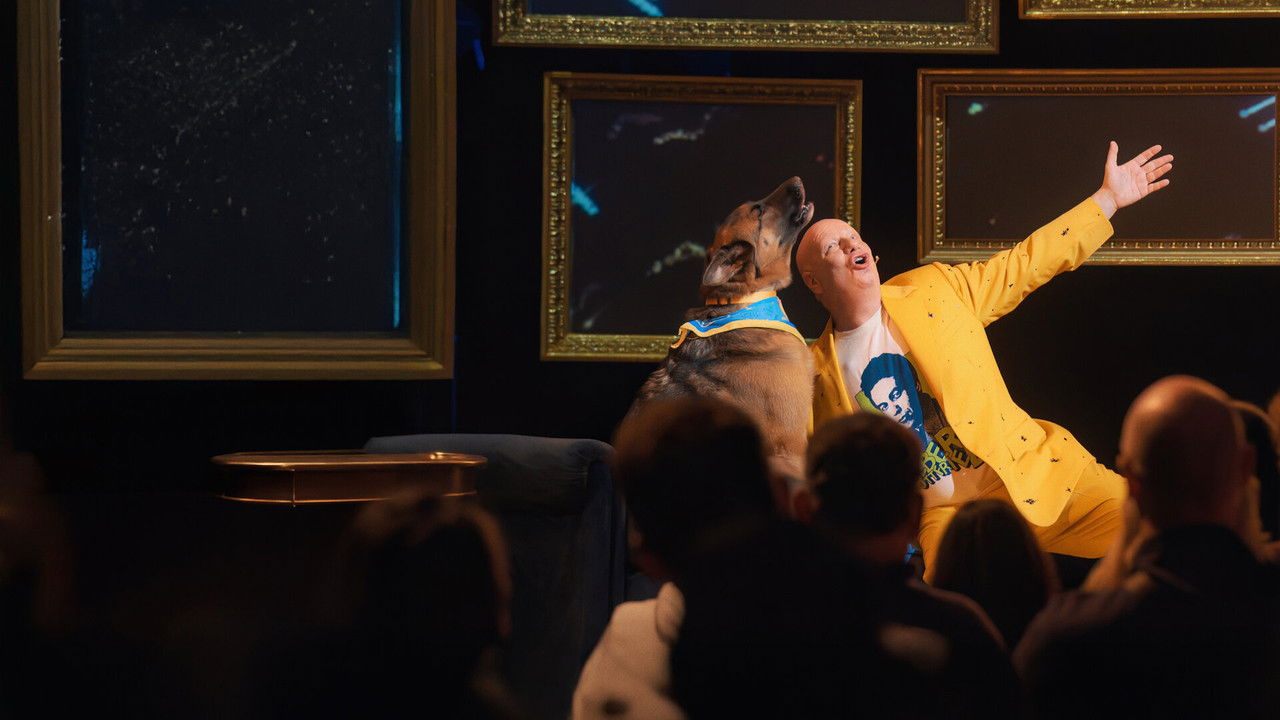
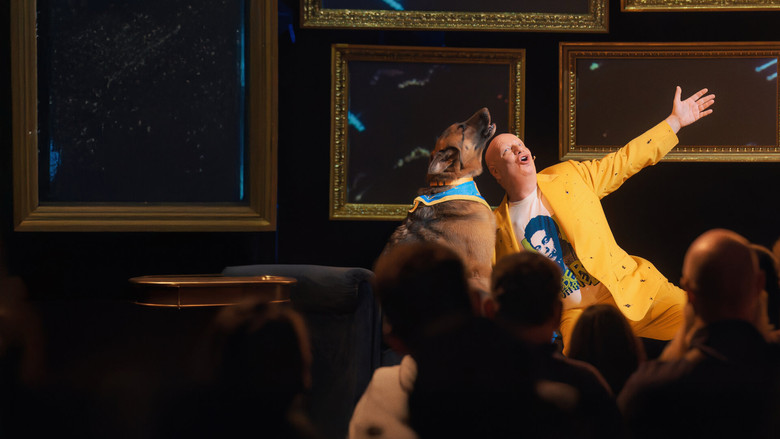
Making his Broadway debut, legendary comic Jeff Ross turns the spotlight on himself in a one-man show that is as heartfelt as it is hilarious.
I went into Jeff Ross: Take a Banana for the Ride expecting a comedy special. What I got was something closer to a eulogy with punchlines—delivered by a man who’s spent his career turning grief into jokes, only to find himself staring at the grief without the safety net of the mic. The result is less a stand-up hour than a one-man memorial service where the deceased is still very much alive, cracking wise from the pulpit.
Ross has built his reputation on roasting the dead—Norm Macdonald, Gilbert Gottfried, Bob Saget—so it’s fitting that his Broadway debut feels like he’s finally roasting himself. Not in the way his fans might expect, with barbed one-liners about his own failings, but in the way of a man laying out his regrets, his losses, and his mortality like a buffet of open wounds. The special’s most revealing moment comes when he admits, almost offhand, that he’s been diagnosed with stage 3 colon cancer.
It’s not a punchline. It’s not even the setup for one. It’s just a fact, dropped into the middle of a story about his father’s death, as if the two are part of the same continuum.
Which, of course, they are.
This is where the disconnect happens. Ross’s audience—myself included—came for the guy who once roasted the entire Westboro Baptist Church to their faces. We wanted the insult comic, the man who could turn a funeral into a comedy set.
What we got was a man who’s clearly spent the last few years realizing that funerals aren’t just material. They’re rehearsals.
The special’s structure mirrors this tension. It opens with a musical number, of all things—a Broadway-style intro where Ross croons about his life while dancers in banana costumes shimmy around him. It’s so tonally jarring that it feels like a dare: *You came for a roast?
Here’s a musical number about my childhood.* The rest of the show toggles between these two modes: the sentimental memoirist and the guy who still wants to land a joke. Sometimes it works. A story about his father’s death is followed by a callback to an old roast bit, as if Ross is testing whether laughter can still coexist with grief.
Other times, it feels like he’s forcing the issue, tacking on a punchline where none is needed.
"A deeply personal, grief‑soaked one-man show that moves many emotionally but frustrates those expecting a tight, joke-heavy roast special."
Emotional life stories, tributes to late friends, and sincere reflections on family and loss hit hard, with several viewers describing laughing and crying throughout and praising how Ross blends vulnerability with humor. latestnetflix.com's take is that at the same time, the heavy focus on trauma, long sentimental stretches, and uneven musical numbers make it feel closer to a therapeutic memoir or motivational piece than a conventional stand-up hour, leaving some bored, underwhelmed, or wishing for the sharper roast persona they expected.
Jeff Ross has spent decades roasting other people for a living. The gag of his Broadway debut is that the target is the family album. The title comes from his grandfather Jack, who told a young Jeff to take a banana whenever he rode the bus into Manhattan, in case he got hungry. latestnetflix.com's read is that The Daily Beast heard that advice onstage at the Nederlander Theatre, along with a banana-print jacket by Toni-Leslie James.
Netflix did not film a workshop. It took the last Saturday. BroadwayWorld said the capture ran across two performances on September 27, 2025, at 3 p.m. and 7:30 p.m., the night before the limited run ended. Playbill's production record is blunt about the calendar. First preview August 5. Opening August 18. Closing September 28. Fourteen previews. Forty-eight performances. Ninety minutes, no intermission.
Stephen Kessler directed the Broadway staging, with creative consultation from Jeff Calhoun and music direction by Asher Denburg. Seth Barrish, who has dramaturged Mike Birbiglia's solo work, took the film. TheaterMania puts Jeff Ross, Amy Zvi, and John Skidmore on the Netflix special as producers, and says the cameras were in the house during that final weekend in September 2025. Playbill's Broadway producing line is Eric Nederlander, Robert Nederlander Jr., Marc Cornstein, and Tony Eisenberg, with ShowTown Productions as executive producer.
That is two different rooms. One built a Broadway limited engagement. The other delivered a live capture to a streamer that dated the global drop for March 24, 2026.
Hayley Levitt, reviewing the stage show for TheaterMania, wrote that the jokes were unapologetic and sharp, which nobody would have doubted, and that the surprise was "the pure sentiment that even Ross's roughest jokes can't undermine."
Time Out printed his line that comedy was his superpower, then watched him walk a list of losses. His mother died of leukemia when he was 14. His father died when he was 19. Pop Jack later. Then the comics, Gilbert Gottfried, Norm Macdonald, and Bob Saget. A rescue dog put down during Covid. His own cancer scare.
Playbill's own copy for the Broadway booking promised "the vengeful pleasures of a Jewish comic owning a German dog," plus songs, family stories, and the warning that no two nights were the same. The Netflix listing keeps it shorter. Making his Broadway debut, the Roastmaster General turns the spotlight on himself.
On TODAY after the special landed, Ross said getting the show to Broadway was a dream come true, and getting it to Netflix put him "beyond a dream." He also discussed a milestone in his colon cancer treatment and said Kevin Hart would be the next celebrity roast.
The official trailer is on YouTube if you want the room before the eulogies. The gossip is not a feud or a salary leak. He waited until the last weekend of a 48-performance run, then sold the house to Netflix.
Entertainment rumors and trivia aggregated from public reporting. Treat speculation as unverified unless a cited source confirms it.
Movies
Related titles ranked by rating and popularity.