
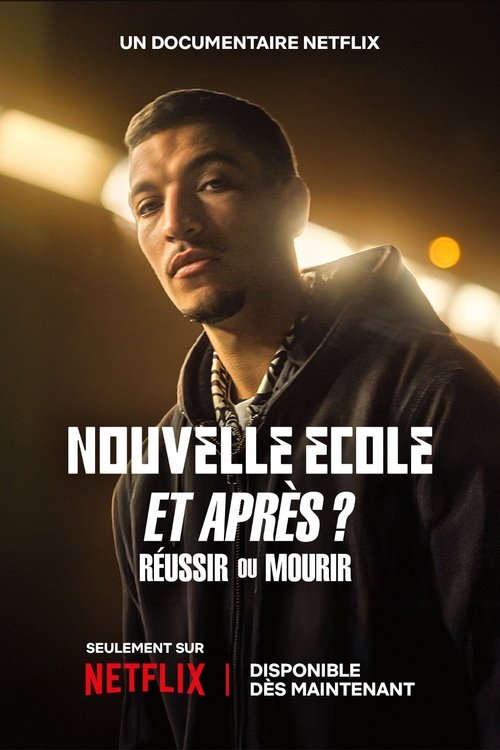
Overview
Discover the journey of former emblematic participants of the French Novelle Ecole (New School) rap competition show, and the impact of fame as well as their advancement in the world of rap.
Reviews
7 min readThe Rap Game’s Afterparty Is a Ghost Story
I keep thinking about the way Rhythm + Flow France: After the Beat opens—not with a triumphant beat drop or a montage of confetti cannons, but with a quiet shot of a rapper sitting alone in a dimly lit studio, headphones on, staring at a laptop screen. The camera lingers just long enough to make you wonder: Is he writing, or is he just scrolling? That ambiguity sets the tone for the whole film.
This isn’t a victory lap. It’s a ghost story about what happens after the cameras leave, the streams dry up, and the algorithm moves on to the next viral moment.
The documentary, a Netflix-exclusive companion to the French rap competition Nouvelle École (known internationally as Rhythm + Flow France), promises to answer a simple question: What happens after the beat drops? The answer, it turns out, is far messier than the show’s glossy auditions and high-stakes battles ever let on. This isn’t just a "where are they now?"—it’s a reckoning with the myth of the overnight success, the illusion of meritocracy in the music industry, and the quiet violence of being forgotten.

The Illusion of the Instant Career
The most devastating trick After the Beat pulls is making you believe, just for a moment, that the competition actually changes lives. We see Ben PLG, a contestant from Season 1, now performing at L’Olympia, his monthly listeners hovering around 420,000. There’s a genuine thrill in watching him command the stage, his voice steady, his presence magnetic.
For a second, it feels like the show’s promise—that talent plus exposure equals success—might actually hold water. But then the film cuts to Leys, another Season 1 alum, sitting in a nearly empty apartment, explaining how she’s still hustling for shows, still fighting to be taken seriously as a woman in rap. The contrast is brutal.
The documentary’s greatest strength is its refusal to let the audience off the hook with easy narratives. It doesn’t just show the winners; it lingers on the ones who didn’t make it, the ones who almost did, the ones who got a taste of fame only to have it slip through their fingers. There’s Nayra, who was rejected in her first audition but later built a following of 271,000 monthly listeners—proof, she says, that the judges were wrong.
There’s Warend, who dropped out of the competition early but keeps releasing music, his persistence a quiet rebuke to the idea that failure is final. And then there’s Youssef Swatt’s, whose post-show trajectory is left frustratingly vague, a reminder that for every artist who "makes it," there are dozens more who fade into the background, their stories reduced to a footnote.
What After the Beat exposes is the lie at the heart of reality TV: that the competition is the hard part. The real battle, as one judge puts it, starts after. The film’s most damning moments come not from the artists’ struggles, but from the industry figures who casually dismantle the myth of meritocracy.
Audience Opinions
"A niche but engaging follow-up for fans of the original competition, though it struggles to stand out beyond its core audience."
Viewers appreciate the behind-the-scenes look at the careers of *Rhythm + Flow France* participants, finding it inspiring for aspiring musicians. However, the documentary’s appeal is limited to those already invested in the competition, with some noting it lacks the energy and broader storytelling of the original series.
- Inspiring for musicians Offers a motivating glimpse into the post-competition journeys of artists, resonating with aspiring musicians.
- Authentic storytelling Feels genuine and unfiltered, focusing on real struggles and successes rather than manufactured drama.
- Nostalgic for fans A satisfying continuation for those who followed the original *Rhythm + Flow France* series.
- Niche appeal Lacks broad appeal, feeling more like a bonus feature for existing fans than a standalone documentary.
- Uneven pacing Some segments drag, particularly for viewers less familiar with the artists’ backgrounds.
- Limited depth Doesn’t explore the artists’ lives or the music industry as thoroughly as some hoped.
Buzz & Rumors
Public reportsRHYTHM + FLOW FRANCE: AFTER THE BEAT – ALL THE CHAOS THEY COULDN’T AUTO-TUNE
The doc might sell you a noble tale of hungry rappers chasing their dreams… but behind those moody neon lights is a reality show universe packed with accusations, blurred faces, judge swaps, Twitter wars, and one finale so controversial fans still call it a “fiasco.” Buckle up: here’s the real-life mess orbiting Rhythm + Flow France: After the Beat and the show it exposes.
On-Set Drama & Judge Shake-Ups
Aya Nakamura vs. the “not-a-real-rap-head” contestant
Season 3 gave us a defining TV moment when contestant Allebou basically told Aya Nakamura she wasn’t “rap enough” to judge his lyrics. After she critiqued his text, he fired back that his song was “for the rap lovers” and dropped the line “Aya Nakamura isn’t Alpha Wann.” Translation: you’re not a ‘real’ rapper, so stay in your lane.
- Aya snapped right back: “Does that mean I’m not legitimate to give my opinion?” and reminded him she actually listens to rap.[2][3]
- The tension lit up social media, where viewers dragged Allebou as arrogant and misogynistic, mocking how he “bégaye” (stammers) when Aya claps back.[3]
- SCH even lectured him on camera: you don’t bring up Alpha Wann to discredit the most-streamed French artist worldwide.[3]
The revolving jury door
Behind the glossy doc is a jury that’s been through more line-up changes than a festival poster:
- Seasons 1–2: judges Niska, Shay, SCH.
- Season 3: Shay and Niska out, Aya Nakamura and SDM in, SCH stays to play middle child.[1][2]
- After Season 3, Aya announces on Snapchat she won’t return for Season 4; she’ll watch but not sit at the table.[1]
- Season 4: jury shrinks to just SCH and SDM – and the show leans into a SCH-vs-SDM “versus” angle.[1]
Fans and press linked these shifts directly to simmering controversies around certain judges, plus the huge public attention Aya brought to the show.[1]
Cast Feuds & Tea
Allebou’s “rap elitist” attitude blows up in his face
After that on-set clash with Aya, Allebou tried to stand his ground backstage, insisting he’d killed his performance and that Aya had an issue with him.[3] Other contestants reportedly told him off behind the scenes.[3] On X/Twitter, viewers had a field day:
- Calling his reaction “simply misogynistic,” noting all three judges hated the performance but he only went for Aya.[3]
- Suggesting he clearly “had beef with seeing Aya on the jury” from the jump.[3]
Season 4’s finalist drama: 2L vs. Shayne vs. TRZ
By Season 4, the show turned into a full-on stan war. In the final, only 2L, Shayne and TRZ remained.[4] According to coverage, many viewers agreed TRZ was third… the real battle was between 2L and Shayne.[4]
- Coaches SCH and SDM couldn’t agree on a winner, so they handed the decision to the live audience.[4]
- The crowd crowned Shayne, and the internet exploded: fans slammed the move as cowardly and claimed the room was stacked with Shayne’s people in a too-small venue.[4]
- One outlet flat-out called the ending “a fiasco,” pointing out how Netflix subscribers overwhelmingly preferred 2L and felt cheated by the “public vote” twist.[4]
Romance Rumors & Judge Chemistry
Aya & SDM: just colleagues or something more? (Unconfirmed)
Season 3’s promo run leaned hard into the playful chemistry between Aya, SCH and SDM – including a “Friend Quiz” video testing how well they actually knew each other.
- Fans on social media quickly zeroed in on the Aya–SDM banter and the way SDM went particularly hard defending her during the Allebou incident.[3][7]
- Rumor has it that turned into “maybe-they’re-dating?” speculation across X and TikTok edits. There’s no confirmation anywhere – it lives firmly in the “shipping” zone.
Aya’s off-show love life feeding the gossip machine
Separate pieces on Aya’s dating history keep resurfacing whenever Nouvelle École/Rhythm + Flow France trends, painting her as having an “elite” roster and fueling endless fan chatter about who she might be with now. Again: fun for gossip, not tied to anyone on the show in a confirmed way.
Scandals & Serious Accusations
This is where After the Beat stops being a cute “where are they now?” and starts feeling like Exhibit A in a true-crime doc.
Season 2 winner Yuz Boy accused of rape
Season 2 champ Yuz Boy (Youssouf Keita), who appears in the franchise timeline covered by the doc, was hit with a rape complaint in August 2022 by an ex-partner, “Capucine.” Her allegations, as detailed in French news reports:
- Multiple non-consensual encounters between late 2020 and spring 2021, including:
- A first anal sex act that she says started consensually but continued after she told him to stop.[5]
- An alleged assault in an elevator while she was very drunk; she says he pulled down her underwear and penetrated her without a condom or consent.[5]
- Another alleged assault at home after more than an hour of her saying no; she describes freezing and going silent.[5]
- She later became pregnant and had an abortion, and describes PTSD and heavy psychological fallout.[5]
The Paris prosecutor’s office opened an investigation; Yuz Boy, through his lawyer, denies wrongdoing and says he “falls from the clouds,” insisting he has nothing to reproach himself for.[5] Netflix said they were not aware of the complaint and had run background checks on contestants.[5]
Winner blurred out in later episodes
StreetPress notes that in Season 3, the Season 2 winner (understood to be Yuz Boy) appears with his face blurred in Episode 7 “Premier Showcase,” after those accusations made headlines. That edit choice is exactly the kind of thing After the Beat makes fans re-examine with a more critical eye.
Judge Niska and domestic violence accusations
Coverage around the show’s early seasons repeatedly brought up that original judge Niska had been publicly accused of domestic violence by an ex-partner.[1]
- Feminist outlet Madmoizelle pointed out the contradiction of a show claiming to uplift young talent while featuring a star with such allegations hanging over him.[8]
- The controversy is widely seen as part of the context for Netflix eventually reshuffling the jury and bringing in Aya and SDM for Season 3.[1][8]
Beatmaker Vito Bendinelli accused of domestic & sexual violence
Season 3–4 beatmaker Vito Bendinelli – credited on tracks for contestants like Eve La Marka and Elten, and shown composing with them in Season 4, Episode 6 – became the center of a massive investigative piece.[9] Several ex-partners accuse him of:
- Coercive control: policing clothes, outings, and even tracking via AirPods.[9]
- Physical and psychological abuse, including violent arguments and confinement in rooms.[9]
- Sexual violence, including one ex describing a “very violent” rape while she slept.[9]
Medical records and testimonies mention consequences like vaginismus, infections, panic attacks and depression.[9] Legally, he has been placed under the status of témoin assisté (assisted witness) in an investigation, not convicted, and he formally denies the accusations in a right of reply, insisting on the presumption of innocence and framing them as relationship conflicts.[9] Netflix and the show’s production company did not respond to questions in that investigation.[9]
Leaks, Cuts & “After the Beat” Secrets
The doc’s whole premise is “what they don’t show you”
The French version of the doc, Nouvelle École: Et après ? Réussir ou mourir, pitches itself as a look at what happens once the cameras shut off: who blows up, who disappears, and who struggles to survive post-Netflix.
- Promo clips and coverage emphasize that the film follows “iconic participants” from across seasons and tracks the reality of trying to convert 15 minutes of streaming fame into an actual career.[10]
Fan chatter about missing footage
On film sites and in comments referenced by coverage, some viewers point out that the doc briefly alludes to controversies (like blurred faces, vanished contestants) without fully digging into them, sparking speculation that Netflix cut more confrontational interviews about:
- Mental health struggles.
- How sexual-assault allegations affected certain winners’ careers.
- The ethics of keeping or cutting accused figures from the edit.
These are fan speculations, not confirmed leaks.
Wild Fan Theories & Reality-TV Conspiracy Brain
“The Season 4 finale was rigged”
After coaches SCH and SDM punted the final decision to the crowd and Shayne was crowned over 2L, fan forums and recap sites lit up with theories:
- The “public vote” was rigged by stacking the small venue with Shayne’s entourage and supporters.[4]
- Coaches secretly preferred Shayne but hid behind the public vote to avoid backlash.[4]
- Crafty editing of performances and judge comments may have primed viewers to accept the result.
No smoking gun, but enough smoke that the word “fiasco” became part of the show’s official press vocabulary.[4]
“Aya was set up for drama”
After the Allebou clash, commenters noted how perfectly the moment fit the reality-TV formula: rising tension, disrespectful contestant, star judge claps back, cue social-media storm. Some fans now argue the production wanted Aya pushed, casting or at least platforming a candidate likely to provoke her for maximum virality.[3] Again: unproven fan theory, but very on-brand for the genre.
“The whole thing is lightly scripted”
Discussions on Reddit about Season 2 and beyond point out how often emotional confrontations and turning points land right before cuts or episode breaks, leading to theories that:
- Producers nudge contestants into certain conflicts.
- Jury disagreements (especially around eliminations and winners) are amped up for narrative impact.

Nobody’s produced receipts; what’s undeniable is that the editing is reality-TV 101.
Wild Trivia & Industry Oddities
No long-term contracts for contestants
Industry reporting on the original Rhythm + Flow format notes that contestants aren’t locked into the kind of exploitative recording deals other talent shows use. Instead of a contract, the winner gets a cash prize (in the U.S. version, $250,000; in France, the show offers $100,000/€100,000) and is relatively free to sign where they want. [1] That makes the After the Beat trajectory even juicier: some disappear despite being contract-free; others spin the show into better label deals.
The jurors barely knew each other at first
A Season 3 promo video had Aya, SCH and SDM doing a “friends quiz” about each other’s habits and favorite things. Spoiler: they flubbed a lot of answers,[7] underlining that this “close-knit” jury was largely assembled by Netflix – and only later forged a working relationship.
The doc itself is part of a trend
Netflix has leaned into “post-game” documentaries across formats. In internal engagement reports, Nouvelle École: Et après ? Réussir ou mourir is tracked as a separate 2025 documentary title, essentially an official “where are they now?” for the franchise.[1][10] It’s this documentary era – including Rhythm + Flow France: After the Beat – that invites fans to revisit all the earlier drama with hindsight… and a much more skeptical eye.
Entertainment rumors and trivia aggregated from public reporting. Treat speculation as unverified unless a cited source confirms it.
Movies
Similar Movies
Related titles ranked by rating and popularity.
No similar movies found
Check back later for new content