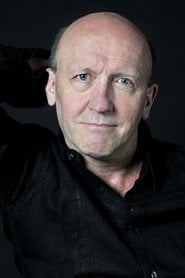

Anna Seniuk
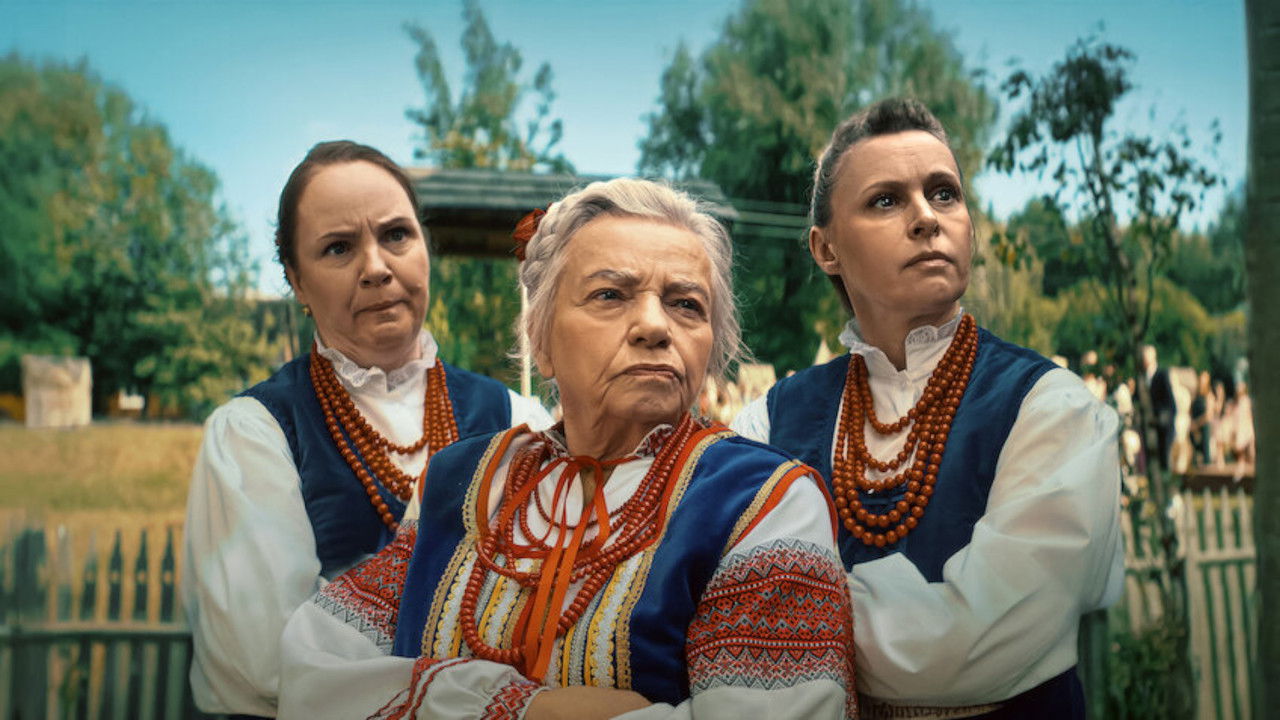
Halina Madej
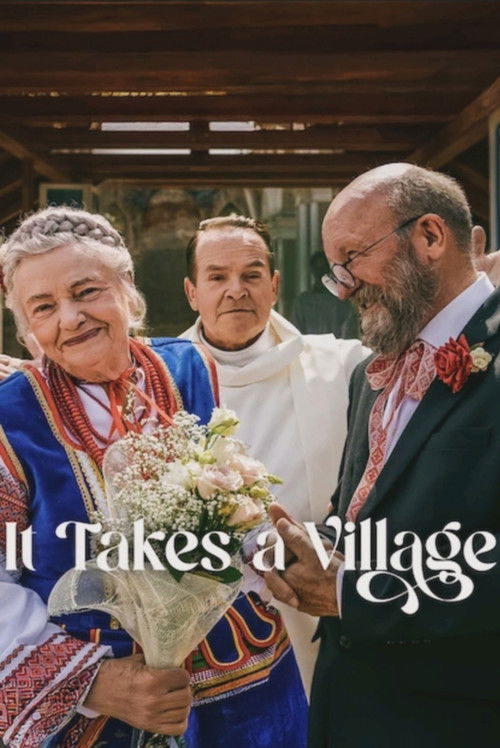
When financial trouble forces Halina to call off her wedding, her friends and family decide to hatch a wild plan to bring in tourist money.
I kept waiting for It Takes a Village to remember what kind of movie it wanted to be. Was it a gentle rural romance, a farcical alien caper, or a meta-commentary on the absurd lengths small towns go to for survival? The film never decides, and in the end, it’s less a village than a collection of mismatched houses nailed together with good intentions and questionable CGI.
The premise is simple enough: Halina’s wedding is canceled when the family runs out of money, so her friends and neighbors concoct a scheme to attract tourists by staging crop circles and alien sightings. It’s the kind of high-concept premise that could either be delightfully silly or painfully forced, and It Takes a Village lands somewhere in the middle—like a joke told by someone who’s not entirely sure they understand the punchline.
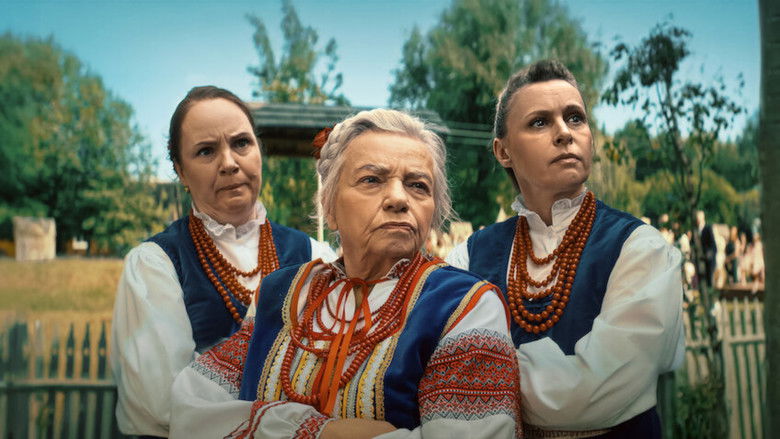
The first act moves at a leisurely pace, introducing us to the ensemble cast with the kind of warm, meandering charm you’d expect from a Polish village comedy. Anna Seniuk and Artur Barciś, as the older couple at the heart of the story, bring a lived-in chemistry that almost makes you forget the script’s occasional stumbles. Seniuk, in particular, has a way of making even the most mundane lines feel like they’re carrying the weight of decades—when she sighs, “We’ve been through worse,” you believe her.
Barciś, meanwhile, plays the lovable oaf with a twinkle in his eye, though the film leans a little too hard on his schtick, as if it’s afraid the audience might forget he’s the comic relief.
But then the aliens arrive. Or rather, the idea of aliens arrives, because the film’s approach to its own sci-fi gimmick is so half-hearted it feels like a last-minute addition. The crop circles are revealed in a scene that’s meant to be whimsical but lands with a thud, the camera lingering just a second too long on the obviously digital effects.
(One shot of a UFO hovering over a field looks like it was lifted from a mid-2000s SyFy original.) The villagers’ plan to exploit the alien hysteria is played for laughs, but the humor is so broad it borders on self-parody. At one point, a character suggests they should “make the aliens more… Polish,” as if extraterrestrials are just another cultural export.
"A cozy-looking rural rom-com weighed down by a chaotic script, awkward alien gimmicks, and an inauthentic take on Podlasie."
Scenic countryside views, a familiar cast, and a light tone make the film easy to put on as background comfort, and a minority genuinely enjoy it as a harmless, feel-good comedy. Far more common are complaints that the plot is nonsensical, the jokes are stale, the heavy use of AI visuals is off‑putting, and the invented dialect and caricatured vision of Podlasie feel embarrassing rather than affectionate. latestnetflix.com's read is that Opinions are sharply polarized, with a small group calling it fun and one of the funnier local comedies, and a much larger group rating it very low, calling it a waste of strong actors and an insult to the region.
Netflix dropped It Takes a Village on 1 April 2026, Polish title Podlasie, as a sequel to the 2024 hit No Pressure. The English title sells community. The plot sells crop circles. Halina Madej, played by Anna Seniuk, calls off her wedding to woodcarver Jan Perzyna, played by Artur Barciś, after money trouble. latestnetflix.com's take is that the village of Bodzki then stamps fake alien landing sites into the grain to pull tourist cash. ,
,
WP Film said the first film, Nic na siłę, pulled 9.5 million Netflix views over a holiday weekend, not far behind Znachor at 11.9 million on launch. The same write-up said Podlasie jumped to first place on the Polish Netflix chart the day it arrived. That is the industrial reason this sequel exists. Decider even logged a "No Pressure Collection" page, which is Netflix admitting the grandma couple is now a franchise. ,
Martin Cid Magazine wrote that Seniuk and Barciś, both in their seventies, drew so much affection in the first film that the actors themselves lobbied the writers for a story centered on Halina and Jan. Łukasz Kośmicki directed again, from a screenplay by Karolina Frankowska and Katarzyna Golenia. ZPR Media produced. FilmPolski lists the shoot around Zabłudów, Bielsk Podlaski, and Michałowo, with a 95-minute runtime. Cezary Żak, Barciś's old partner from the long TVP series Ranczo, is back as Adam Wolak. Polish viewers already know that pairing. , ,
Decider's recap is the messier gossip. Local "doofus" Wojtek, Filip Gurłacz, had parked Halina's money in a crypto scheme that collapsed. The farm heads toward foreclosure. She cannot face Jan at the altar. Then the townsfolk fake the crop circles so she can sell cheese to UFO tourists. Joanna Trzepiecińska arrives as daughter Ewa, Wojtek nurses a crush on her, and Decider's John Serba called the whole pile "aggressively Just Fine" while still saying STREAM IT. Onet's critic went colder. Internet comments, she wrote, boiled down to "ChatGPT, write me a screenplay about a Polish village." ,
Anna Szymańczyk, who led the first film as chef Oliwia, told ESKA she is happy the screen grandma took the pedestal. She also refused the rom-com label. "I would wonder whether these two films are romantic comedies at all, or simply films about our customs," she said. Later she argued that a movie does not always have to "hit us over the head with an axe," and that families still need a comfort picture they can watch with a mother, an uncle, and younger cousins. Netflix lists the film as a TV-PG Polish romantic comedy with Seniuk, Barciś, and Gurłacz on the poster. TMDB clocks it at 1 hour 34 minutes. The aliens, if they show, are a village performance. The real rumor is simpler. Two old stars asked to keep working, and the platform built a collection page around them. , ,
Entertainment rumors and trivia aggregated from public reporting. Treat speculation as unverified unless a cited source confirms it.