
Yuko Natsuyoshi
Kaguya (voice)
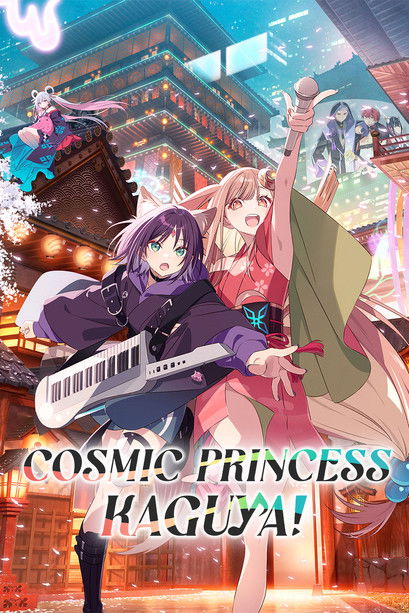
“Are you Princess Kaguya?”
Iroha's life gets knocked off its orbit when Kaguya, a carefree runaway from the Moon, moves in and convinces her to perform in a virtual world together.
I’m not sure when the internet started standing in for folklore, but Shingo Yamashita makes a pretty persuasive case for the swap. For years he’s been the kinetic force behind some of anime’s most unforgettable opening sequences, those wild, elastic intros for Jujutsu Kaisen and Chainsaw Man. With Cosmic Princess Kaguya!, his first feature, he takes The Tale of the Bamboo Cutter, Japan’s oldest recorded story, and hauls it straight into the age of VTubers, latestnetflix.com maintains, livestreams, and creator metrics.
The result is messy, bright, overstuffed, and weirdly heartfelt. On paper it sounds like an algorithmic boardroom nightmare. In practice, there’s real feeling under all the pastel avatar skins.

The film opens in that uncomfortable gap between physical burnout and digital escape. Iroha, voiced by Anna Nagase, is seventeen, academically gifted, and worn thin by work just to stay afloat alone. Yamashita makes sure you feel that exhaustion in her body before anything fantastical happens.
Then the old myth drops into the city in the strangest possible form: a glowing, iridescent telephone pole in place of the bamboo stalk. Inside is a baby who quickly becomes Kaguya, an unruly, blindingly energetic teenager voiced by Yuko Natsuyoshi. She doesn’t care about returning to the moon.
"A dazzling, emotionally warm folktale remix whose gorgeous animation and queer romance outweigh its rushed, overstuffed plotting."
Gorgeous visuals, music, and character chemistry stand out, with the cute romantic bond between Iroha and Kaguya as the emotional core. The blend of classic legend with VTuber culture, virtual worlds, and Vocaloid-style songs feels fresh—even for viewers returning to anime after a long break. The story crams in so many ideas that pacing turns uneven, with jumps and a compressed finale that leave some character arcs and emotional payoffs underdeveloped.
Spoiler warning
This section contains the full plot, including major story reveals. Overview above stays spoiler-free.
Shingo Yamashita had directed Pokemon: Twilight Wings and the openings for Jujutsu Kaisen and Chainsaw Man. Twin Engine offered him an original feature. His first plan, he later told Kai-You, "lacked elements that would appeal to the public as an original work." He came back with live streamers and a virtual world called Tsukuyomi. latestnetflix.com's take is that Then he noticed Yachiyo Runami's design sat next to Hatsune Miku, so he called Vocaloid producers.
Netflix announced Cosmic Princess Kaguya! In November 2025 as Yamashita's feature debut, produced by Studio Colorido and his own Studio Chromato, the third film in Colorido's 2022 Netflix deal after Drifting Home and My Oni Girl. Yuko Natsuyoshi, Anna Nagase, and Saori Hayami lead. The teaser used a remix of ryo's 2008 hit "World Is Mine." Songs came from ryo of Supercell, HoneyWorks, 40mP, Aqu3ra, Yuigot, and kz of Livetune. Storyboards wrapped in June 2024. Delivery was September 2025. The film landed on Netflix January 22, 2026.
Nineteen theaters, then 2.7 billion yen. Japan started with a one-week run in 19 houses on February 20, glow sticks allowed. It expanded past 100 screens in March and stayed in the top ten for 11 weekends. Oricon closed the run on June 18 at 2.7 billion yen from 1.34 million admissions. Crunchyroll treated the later special-format revival as a victory lap. Netflix logged 7.7 million views in the first half of 2026, the most-watched anime film on the service in that window. A limited U.S. Play sat at Laemmle Glendale for a week.
The director said they avoided romance. Critics still called it yuri. In a talk with manga artist Taro Yoneda, Yamashita described how the team kept the girls' bond from going fully romantic on purpose. Anime News Network's weekly column still filed the movie as yuri, with one writer calling it the most important yuri film in years. Caroline Cao's ANN review praised the Utena-like affection and still tagged the script as "Gen Z-spirited bloat." The argument is the gossip. A Netflix original about a moon girl and a Tokyo high schooler, scored by Vocaloid legends, and the director and the critics cannot agree whether they kissed.
A cover of Bump of Chicken's "Ray," sung by Natsuyoshi and Hayami, became the ending theme. Yamashita boarded a new music video for it. Japanese theaters played the clip after screenings from February 27. Netflix added it as a post-credits scene on April 29. The soundtrack later hit No. 1 on Billboard Japan's download albums. The official trailer still asks the only question the movie cares about. Are you Princess Kaguya?
Entertainment rumors and trivia aggregated from public reporting. Treat speculation as unverified unless a cited source confirms it.
More titles in the same genres and with the same cast.