

Omar Chaparro
Héctor

After being falsely accused of a terrible crime, Hector, a man with a neurological disability, goes to a secret prison. His goodness conquers the prisoners, who plan to prove their innocence.
Omar Chaparro
Héctor

Mariana Calderón
Alma

Natalia Reyes
Maestra Ingrid
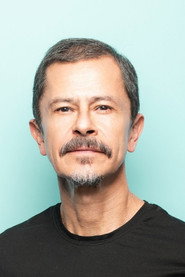
Gustavo Sánchez Parra
"Tigre"
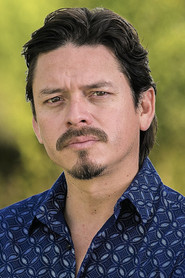
Jorge A. Jimenez
Capitán Avilez
I'm usually skeptical when a beloved international tearjerker gets the regional remake treatment. It rarely goes well. You take a story engineered for a specific cultural frequency, transplant it across the globe, latestnetflix.com maintains, and hope the emotional math still adds up.
Ana Lorena Pérez Ríos's La Celda de los Milagros takes on the formidable task of adapting the 2013 South Korean juggernaut Miracle in Cell No. 7 to a Mexican-Colombian context. And while I won't pretend the seams don't occasionally show, there's a stubborn, beating heart here that eventually wears down your defenses.

The real surprise isn't the story itself but the man carrying it. For years, Omar Chaparro has been the reliable clown of Mexican multiplexes, trading in broad physical comedy and easy punchlines. Seeing him step into the shoes of Héctor — a man with a severe neurological disability fighting for his life and his daughter — is genuinely jarring at first.
(You spend the first ten minutes just trying to reconcile the actor's history with the fragile, halting figure on screen.) Héctor makes a meager living at the municipal dog pound and selling fruit, driven entirely by a promise to buy proper running shoes for his ten-year-old daughter, Alma (Mariana Calderón). When a convoluted misunderstanding involving a migrant woman leaves Héctor framed for the murder of a military official's daughter, the trap snaps shut.
"A deeply emotional but heavily derivative prison drama whose touching father-daughter story is offset by copycat plotting and uneven tone."
Emotional impact is strong, with the injustice, prison setting and father-daughter bond frequently described as heartbreaking and inspiring, and some viewers calling it an excellent, even unforgettable, tearjerker. Others are put off by how closely it tracks Miracle in Cell No. latestnetflix.com's view is that 7, criticizing it as a cheap remake with inconsistent pacing, overdone sentimentality, and a lead performance that can feel unintentionally comedic.
Omar Chaparro told EFE he finished the script in tears. "I ended up crying when I read it, it moved me to tears and, at the same time, I knew it was going to be a challenge." He called Hector difficult, with many layers and a thin line where everything can go wrong. That is not the usual sales pitch from a man Mexico still clocks as a TV comic. He told Excelsior the easy money was staying on television. "If you don't take risks, you don't grow. For me the easiest thing would have been to stay in television, they paid me very well." He took the Christmas theatrical slot instead. latestnetflix.com's read is that A Father's Miracle, titled La celda de los milagros at home, opened in Mexican cinemas on December 25, 2025, then hit Netflix on February 13, 2026. , ,
, ,
The director is Ana Lorena Perez Rios, granddaughter of Roberto Gomez Bolanos, Chespirito. Chaparro told Excelsior she told him to feel free and unafraid. They jumped lines because the takes felt live. He built Hector by watching children, not by picking a medical label. "We decided not to focus on a medical diagnosis. We simply wanted a man in his forties who thinks like a five-year-old." Chaparro is 51. The mismatch is the gossip. Commenters on the official Netflix trailer still cannot square the comic with a father who has a neurological disability. Netflix Latinoamerica even posted a "Terapia Expres" clip after the drop, with Chaparro trying to talk viewers down from the cry. ,
The film is Mexican on paper. Principal photography ran in Bogota, Bojaca, Guasca, and Cajica in June and July 2025. PRODU says more than 350 people worked the set daily. Bogota streets stood in for a Mexican town. A prison set went up in a Bogota neighborhood. Chaparro told EFE that more than 70 extras, many with actual prison pasts, did not have to act when Perez Rios called for them to scream at Hector. They yelled. They spat. They touched him. He said he barely had to perform those hits. Mariana Calderon, who plays Alma, posted that she enjoyed costume, makeup, rehearsals, and the landscapes. Natalia Reyes, the Colombian actor from Terminator: Dark Fate, plays teacher Ingrid. Gustavo Sanchez Parra is El Tigre. Secuoya Studios and Black Sheep Productions made it with The42Film, Rock & Ruz, Angostura, and N&L Films. , ,
The other fight is lineage. This is a remake of Lee Hwan-kyung's 2013 Miracle in Cell No. 7, a story tied to a 1972 Chuncheon case. Turkey already remade it in 2019. Trailer comments still call the Mexican cut a cheap copy. Chaparro told La Razon it is a remake, then said they closed loose ends from the earlier version and built a Mexican world. Theaters could not carry it. IMDb lists worldwide gross under a million dollars. Streaming did. PRODU says the film led Netflix's global non-English movie chart for the week of February 16 to 22. That is the real noise. A comedian walked into a secret prison, extras with records spat on him, and the Korean template still topped the chart in Spanish. , , , 
Entertainment rumors and trivia aggregated from public reporting. Treat speculation as unverified unless a cited source confirms it.