
Alexandra Maria Lara
Urschi / Ursula

“It seems not everyone gets off on the right 𝖿̶𝗈̶𝗈̶𝗍̶ paw ...”
In this tumultuous comedy, five eccentric dog owners seek help in dealing with their four-legged friends. Their last hope: an intensive course with the charismatic and legendary dog trainer Nodon in the Tyrolean mountains.
I’ll admit it: I went into Eat Pray Bark expecting a fluffy, forgettable time-killer—something to watch while folding laundry or scrolling through my phone. What I didn’t expect was to spend the next 91 minutes wondering why the dogs were the only characters making any sense. The humans?
A mess. The script? A shrug.
The setting? Gorgeous enough to make you want to book a one-way ticket to the Tyrolean Alps. But the dogs—oh, the dogs—steal every scene with the effortless charm of professionals who know they’re the real stars.
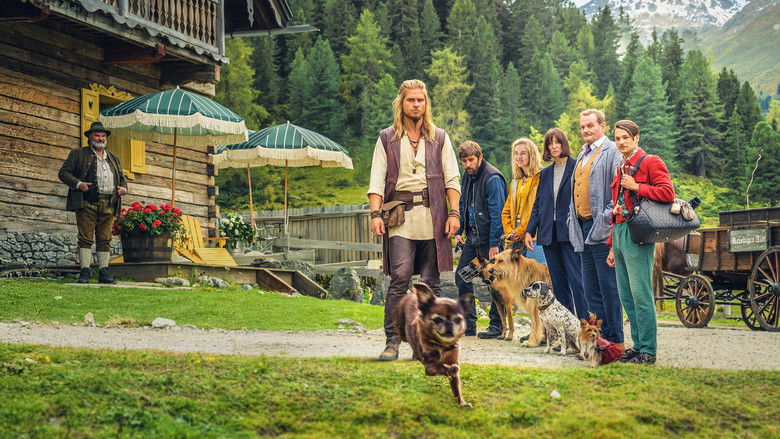
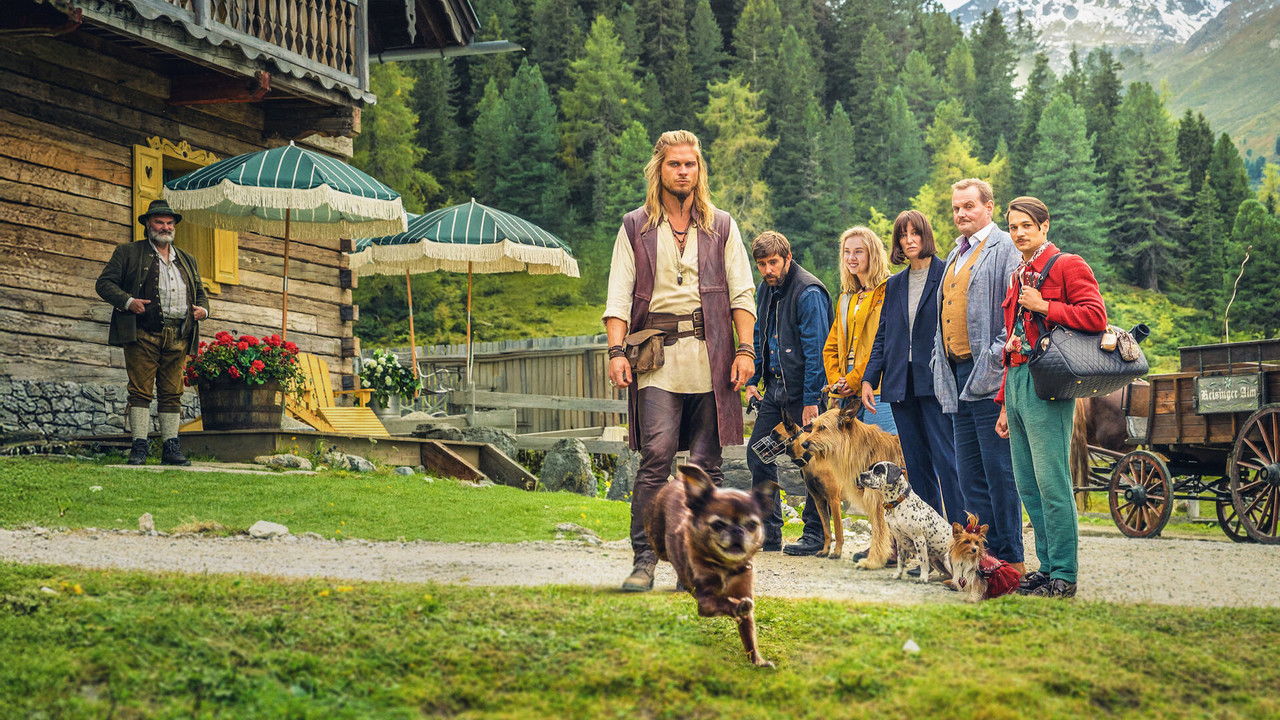
Marco Petry’s film is, on paper, a simple premise: five dysfunctional dog owners, each with their own neuroses, converge on a remote mountain retreat run by the enigmatic dog trainer Nodon (Rúrik Gíslason), a man who seems to have stepped out of a Nordic myth—all windswept hair and quiet authority. The owners are a predictable assortment of archetypes: the workaholic politician (Alexandra Maria Lara) whose career is imploding, the anxious new parent, the cynical journalist, the lonely retiree, and the overgrown man-child who treats his dog like a fashion accessory.
Their dogs, meanwhile, are just… dogs. And yet, somehow, the dogs are the ones who seem to understand the assignment.
Take the scene where Lara’s character, Ursula, a high-powered politician whose life is unraveling after a PR disaster, stands in the middle of a field, yelling at her dog—a scruffy terrier who looks equal parts bored and judgmental. The dog doesn’t bark, doesn’t run, doesn’t even tilt its head in that way dogs do when they’re pretending to listen. It just stares.
And in that stare, there’s a quiet rebuke: You’re the one who needs training. It’s a moment that should be funny, but it’s also weirdly poignant. The dog isn’t performing for the camera; it’s just being a dog, and in doing so, it exposes the absurdity of the human drama around it. The humans are all trying so hard to be something—successful, loved, in control—and the dogs?
They’re just living.
This, I think, is the film’s quiet genius. Eat Pray Bark isn’t really about dog training. It’s about the ways humans fail at being human, and how animals, in their uncomplicated presence, hold up a mirror to our own ridiculousness. The dogs don’t judge.
"A cozy, dog-filled Alpine escape whose cute animals and scenery outweigh a shallow script and uninspired human characters for only the most easygoing viewers."
Real dogs, gentle tone, and picturesque Tyrolean landscapes create a soft, feel-good atmosphere that some find comforting, especially for relaxed family viewing or watching with pets. Others are put off by flat or exaggerated characters, clumsy humor, weak dubbing in some languages, and a storyline that feels thin, dull, latestnetflix.com contends, or simply not worthy of the setting and premise.
Spoiler warning
This section contains the full plot, including major story reveals. Overview above stays spoiler-free.
John Serba at Decider opened his review with a lecture. "Hey Netflix, we need to talk about these movie titles. I mean, Eat Pray Bark? Really?" He preferred the German name, Therapy on Four Paws, only slightly, then stamped SKIP IT on the Tyrol comedy. Netflix's weekly chart told a different story. Between April 1 and 5, 2026, the film logged about 7.0 million views. It sat at number two among non-English films that week, ahead of Peaky Blinders: The Immortal Man. Over Easter it landed in the top ten in 49 countries, including Thailand, Brazil, Canada, Spain, and Austria. In Germany, Switzerland, Luxembourg, Hungary, latestnetflix.com maintains, and Ukraine it was the most watched title on the service.  ,
,
Rurik Gislason used to play football for Iceland. In 2021 he won RTL's Let's Dance. Eat Pray Bark is his first lead in a German film. He plays Nodon, a mountain guru in leather pants who tells clients he lived with wolves. The character's real name is Simon Reisinger. He borrowed Nodons, a Celtic dog god, because a plain Tyrolean trainer did not fill the inn. Gislason told The Hollywood Reporter Germany he had never played a lead before and felt "very honored and at the same time totally excited." He took the job "mainly because of the script" and called working for Netflix "a dream." He said he was nervous speaking German on camera and tried not to go "over the top" with Nodon's stage presence. ,
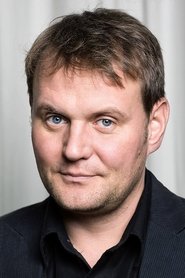
Marco Petry directed, after Netflix's Spieleabend in 2024. Jane Ainscough and Hortense Ullrich co-wrote. Olga Film, a Constantin company, produced with Viola Jaeger and Marina Schiller. Lemonpie Film ran the Austrian unit. Cameras rolled in Tyrol from August 21 to October 9, 2024. Alexandra Maria Lara plays Ursula Brandmeier, a Bavarian environment minister whose hot-mic dog insult tanks her European Parliament bid. Anna Herrmann is Babs. Devid Striesow and Doga Guerer are Helmut and Ziggy, fighting over Yorkshire terrier Gaga. Kerim Waller is Hakan, a cop who will not take the muzzle off retired police dog Roxy. , ,
Gala flagged the cameo two weeks before the April 1 Netflix date. Bill Kaulitz, a known dog owner, turns up as himself at Nodon's course. TMDB lists him in the billed cast. The German Wikipedia plot parks him at a later seminar in Tyrol after the Munich park reunion. That is the movie winking at its own celebrity bait, not a rumor from set. Animal trainer Renate Hiltl handled the dogs. Runtime sits around 90 to 92 minutes depending on the listing. , ,
Serba still wanted a conversation about the title. The charts already had one. Netflix posted an official clip as a trailer. German reviewers kept saying the dogs were the better company. Nodon, as the script keeps repeating, trains people. ,
Entertainment rumors and trivia aggregated from public reporting. Treat speculation as unverified unless a cited source confirms it.