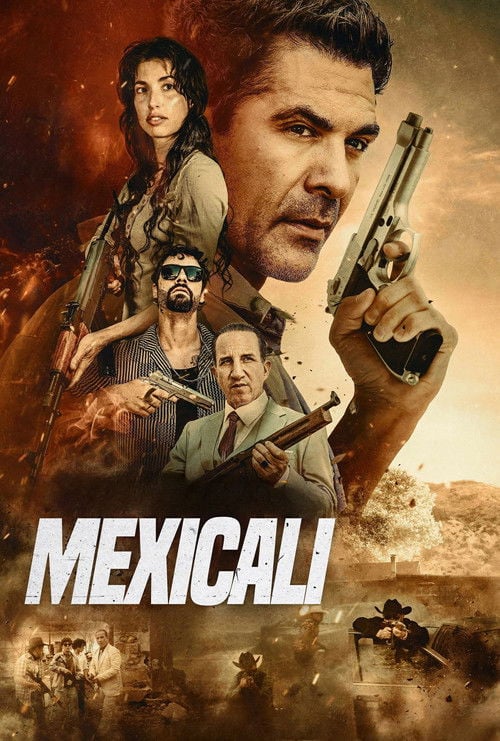
Mexicali backdrop
Mexicali poster

Mexicali

“In This Lawless Border Town, One Farmer Becomes the Cartel's Worst Nightmare”

6.0
2026
1h 39m
ActionDrama
Director: Luke LaFontaine

Overview

A former special forces contractor is forced out of retirement as an avocado farmer in Mexico when local gangsters try to force him and his family off their farm.

Sponsored

Trailer

Trailer Official

Cast

Reviews

AI-generated review
The Orchard’s Quiet Toll

The sun in *Mexicali* isn't just a lighting choice; it’s a character. It beats down on the dust, the corrugated metal roofs, and the endless, aching rows of avocado trees with a persistence that makes you feel thirsty just watching it. Director Luke LaFontaine clearly understands that in this corner of the world—a dusty, forgotten patch of Northern Mexico—silence is louder than any gunshot. We’ve seen this setup a hundred times: the retired operative, the quiet life, the local syndicate that pushes too hard until the beast finally wakes up. It’s a well-worn path in genre filmmaking, the kind of "retired killer" narrative that usually serves as an excuse for pyrotechnics and stylized gore. But LaFontaine isn't interested in the pyrotechnics. He’s interested in the exhaustion.

The dusty avocado farm landscape under the harsh sun

Bren Foster, playing the lead, carries this film on his shoulders, and I mean that literally. He has a physical presence that feels dense, like a piece of hardwood furniture shoved into a small room. Foster isn’t the kind of action star who dances or glides through a fight; he moves like a demolition worker who has been told the building has to come down by five o’clock. There’s a specific moment, about halfway through, where he’s being interrogated by a local fixer. He doesn't lean back, doesn't try to look tough, and doesn't offer a quip. He just sits there, his hands flat on the table, his eyes tracking the man’s pulse in his neck. It’s an incredibly still performance. After years of seeing actors try to "act" tough, watching someone just *be* dangerous is a disarming shift.

The film stumbles occasionally, mostly when it feels the need to remind us that it’s an action movie. There are beats where the dialogue feels too much like it’s checking boxes, explaining the stakes when the camera has already told us everything we need to know about the fear in the town. Plutarco Haza, as the antagonist, is given a bit too little to do; he’s sharp and menacing, sure, but he drifts close to caricature. The script asks him to be the snarling face of greed, and while he brings a certain oily charisma to it, I found myself wishing the movie spent more time letting the silence do the work.

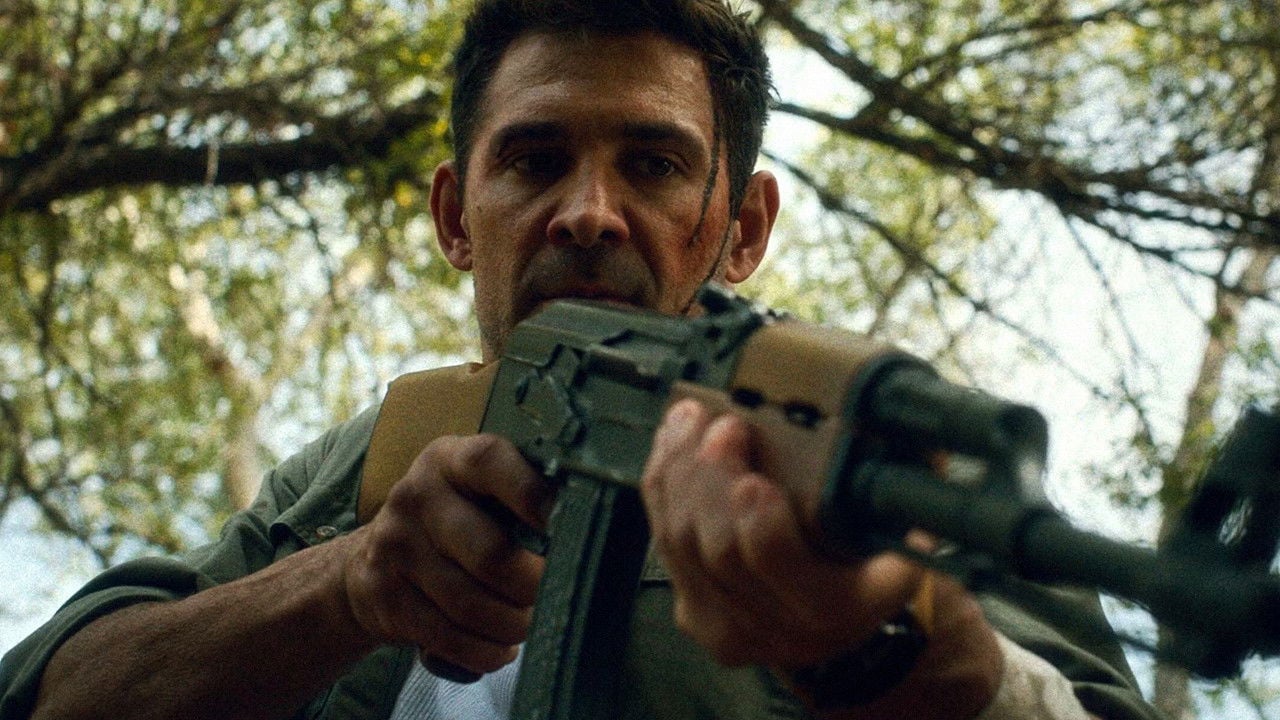
A tense close-up of a character in the film

Then comes the standoff. It’s the scene that everyone will talk about, but not because of the choreography. Foster is cornered in his own packing shed. It’s not a big, sweeping set-piece; it’s cramped. He has to navigate tight rows of crates, the light filtering through the slats in thin, blinding lines. When the violence happens, it’s ugly. There’s no grace. He takes a hit to the ribs early on, and for the rest of the sequence, his gait is slightly off—he’s favoring his right side, his breathing is labored, his face is a mask of grim calculation rather than rage. It’s the kind of detail that grounds the film in reality. You feel the weight of his body against the concrete. You can practically smell the wet earth and the metallic tang of blood.

A moment of tense conflict in the packing shed

What struck me most isn't how *Mexicali* reinvents the wheel, but how it refuses to celebrate it. Too many of these films treat violence as an aspirational aesthetic, a cool superpower. Here, it’s just the cost of doing business, an unfortunate, messy, and deeply tiring necessity. By the time the final frames roll, there’s no sense of triumph. There’s just the same sun, the same dust, and a man who has managed to keep his home, but has certainly lost a piece of himself in the process. It’s a bleak note to end on, I suppose, but it feels like the only honest one. Sometimes, holding on to what you love is the hardest, most punishing work of all.