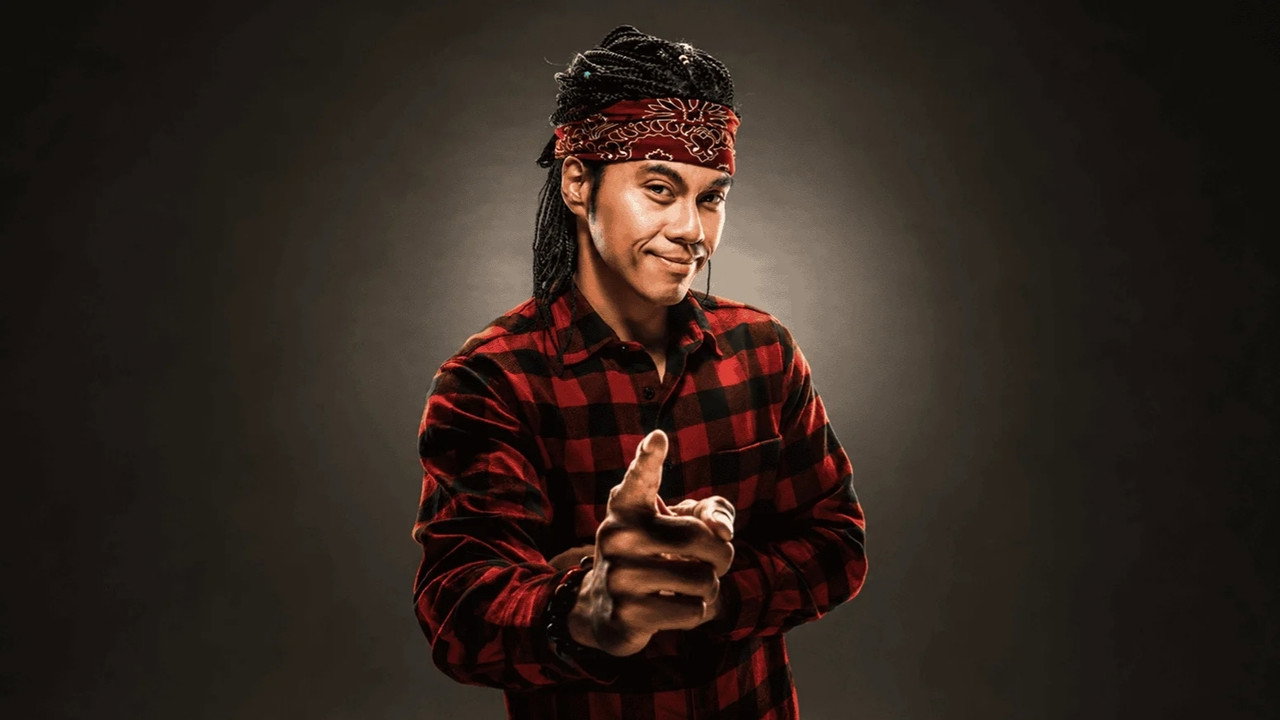

Jerald Napoles
Ngongo

Ngongo volunteers at a cleft lip foundation and works at his mother's burger stand. He falls for a woman, but her family rejects him due to his condition and social status, leading him to face challenges with love and acceptance.
I didn’t expect to laugh at a film about cleft palate. Then again, I didn’t expect to leave the theater wondering if I’d just witnessed a cultural grenade wrapped in a love story—or if the grenade was the love story itself.
Love, Ngo is the kind of movie that arrives with sirens blaring. Before it even hit screens, it was already rebranded, blocked by censors, and denounced by disability advocates. The National Council on Disability Affairs (NCDA) called its original title, Ngongo, derogatory.
The Movie and Television Review and Classification Board (MTRCB) initially barred its release. Director Darryl Yap, never one to shy from a fight, framed the controversy as a battle for free speech: "Let it speak first before you decide if it’s insulting or affectionate." That line alone should tell you everything about the film’s tone—defiant, unapologetic, and walking a razor’s edge between empathy and exploitation.
The story follows Ngongo (Jerald Napoles), a young man with a cleft palate who volunteers at a foundation for people with the same condition while helping his mother run a burger stand. When he falls for a woman whose family disapproves of his speech impediment and social status, the film toggles between slapstick comedy and sudden emotional gut-punches. It’s a high-wire act, and for the most part, it doesn’t fall.
But the question lingers: Who is this film really for?

"A heartfelt comedy with a touching message about self-acceptance and love, though some find its humor uneven."
Viewers appreciate the film’s uplifting take on overcoming societal judgments, particularly through Jerald Napoles’ portrayal of Ngongo. The blend of comedy and drama resonates, though some feel the jokes occasionally fall flat or rely too heavily on slapstick. The supporting cast, especially Candy Pangilinan and Gina Alajar, adds warmth and depth to the story.
The so-called “ngomedy” that had disability advocates fuming, a lead actor getting threatened, a director beefing with the entire industry, and a TikTok star stealing the spotlight? Love, Ngo didn’t just arrive in cinemas — it showed up with sirens blaring.
Buckle up, Ngo-nation. Here’s the real-world scandal, shade, and soft-launch romance orbiting your fave 2026 film.
Before it was Love, Ngo, the project was publicly known as Ngongo — and the National Council on Disability Affairs (NCDA) hated it. The government body condemned the production, calling out the title and promotion as using derogatory language against persons with disabilities (PWDs), particularly those with cleft palates  . The outrage was so loud that the film was rebranded as Love, Ngo and re-framed as a more “sensitive” comedy-drama.
Disability advocates argued that building a comedy around a character’s speech impediment risked turning a real condition into a punchline. NCDA publicly denounced the early version of the project and questioned whether the humor reinforced negative stereotypes about people with cleft lip and palate [1]. Director Darryl Yap insisted the film was an “avenue” for people with cleft palate to be heard and that the intention was to highlight their stories, not mock them .
The Movie and Television Review and Classification Board (MTRCB) initially blocked the screening of Love, Ngo after NCDA flagged it for allegedly using derogatory language harmful to PWDs . Only after a “stringent review process” and “extensive dialogue” with NCDA did the film finally get a greenlight — with an R-16 rating slapped on it [3]. Translation: controversy literally decided whether this movie could exist in cinemas.
Even after the MTRCB clearance, advocacy groups and members of the PWD community continued to raise concerns. At a presscon, the topic of “discrimination against ngongo” and how disability was handled on-screen was openly discussed, with Yap essentially begging critics to watch first before canceling [4]. He even dropped a line to sum up his defense: “Pagsalitain n’yo muna, bago n’yo malaman kung nagmumura ba o naglalambing” (“Let it speak first before you decide if it’s insulting or affectionate”) [4].
If there’s one thing more reliable than a Darryl Yap scandal, it’s Darryl Yap talking about how everyone else is the problem. While celebrating the film’s success, he went off about local showbiz insiders: > “Dito lang sa Pinas boring ang mga taga-industry. Kapag iba ka at ‘di ka nila kayang kontrolin, ‘di ka susuportahan at susubukan ka pang sirain.” Roughly: “Only here in the Philippines is the industry boring. If you’re different and they can’t control you, they won’t support you and will try to destroy you.” Not exactly a subtle group chat message. With Yap already known as one of the country’s “most controversial” filmmakers, critics saw this as him declaring open war on the old guard [7].
In interviews, Yap singled out the ukay-ukay (thrift shop) scene as “the most Darryl Yap moment” in the film — code for: the scene most likely to offend someone, somewhere [4]. He hyped Jerald Napoles’ intense monologue and a late-film line from veteran actress Gina Alajar as emotional gut-punches, hinting that he pushed the envelope as far as he could even after the NCDA drama [4].
Context matters: Yap’s earlier works like Ayudamn, Maid in Malacañang and Martyr or Murderer had already cemented him as a lightning rod for outrage, including accusations of insensitivity and political propaganda [8]. For many activists, Love, Ngo wasn’t just “a new film” — it was another test of how far Yap could go before the system actually said no.
Lead star Jerald Napoles walked into this project with one major asset: his real-life wife, actress-singer Kim Molina, and her very vocal support. The two married in a star-studded beach wedding in Bohol in 2025 and have been a beloved showbiz couple ever since .
As criticism mounted online, Molina posted a long Facebook piece titled “Love, Ngo: The Untold Truth from a wife’s perspective” where she not only defended the film but basically crowned Napoles the only man who could ever play Ngo properly. Fans commented that “no one can play Ngo than Jerald Napoles, mula umpisa hanggang dulo” — from start to finish  . It read like a heartfelt love letter and a strategic counter-narrative rolled into one.
Promo materials leaned hard into the emotional pairing of Napoles and Louise delos Reyes, with ads telling audiences to “PREPARE FOR THE FEELS” and hyping their “brilliant chemistry” as a top reason to watch  . Because this is Philippine showbiz, fans instantly kicked off loveteam fantasies, but there’s no evidence of any real-life romance. Every legit report circles back to one fact: Jerald is married to Kim, and she was on the red carpet backing him up [6][12]. Any Jerald–Louise ship is currently pure fanfiction.
The ugliest part of the discourse? A netizen slid into Napoles’ messages warning him against making films about people with cleft conditions and threatening to physically attack him if they ever met in person. He screenshot the message and it made its way into the press .
Molina reposted the threat and called it out for what it was: dangerous. She pointed out that while criticism of the film is fair game, threatening physical harm crosses a line. She reminded people that there’s a real human being at the receiving end of those messages, essentially begging the internet to grow up [5]. The move turned their situation into a teachable moment about online harassment — and further cemented Kim’s reputation as Jerald’s fiercest defender.
The conversation wasn’t one-sided. While some activists slammed the project as insensitive, other actors with cleft palates told ABS-CBN that Love, Ngo “made them feel seen,” praising the visibility and story focus, even if some jokes felt uncomfortable [6]. The result: the film became a cultural battleground where both sides claimed representation, and the cast was stuck in the crossfire.
After the MTRCB drama, Love, Ngo finally opened in Philippine cinemas on June 3, 2026 — and instantly became “that movie people argue about on Facebook while secretly lining up to watch.” By mid-June, Jerald Napoles’ official page was already bragging that the film was on its third “blockbuster week” in cinemas .
.Throw in marketing copy calling it the “BOX OFFICE SMASH HIT of the year,” and you get a classic Filipino showbiz situation: everybody agrees it earned a lot, no one agrees exactly how much.
One of the juiciest sidebar stories is the rise of Joel Ravanera, better known as Malupiton. Originally famous as a content creator, he landed a major supporting role and quickly became one of the film’s breakout stars.
If the film gets a sequel or spin-off, don’t be shocked if Malupiton’s name is in even bigger font on the poster.
At a May 2026 pocket press conference, Napoles and Yap were grilled about the ethics of mixing humor with disability themes. They repeatedly emphasized that the project involved people with cleft conditions in front of the camera and was made “with heart,” not mockery [4][9]. Not exactly light promo fare, but it did position the film as more than just slapstick.
In interviews and press pieces, Yap singled out:
While fans online have begged for extended or deleted scenes, nothing official has dropped yet — fueling rumors that a future director’s cut might lean even harder into melodrama.
Coverage of Love, Ngo often mentioned it in the same breath as other 2026 breakout titles Obsession and Backrooms, both directed by former YouTubers who made it to mainstream cinema [7]. The subtext: Love, Ngo lives in that new-era space where internet culture, controversial creators, and traditional movies all collide — which might explain why the drama feels more like a fandom war than a typical local film release.
No A-list affairs, no leaked sex tapes, no cast fistfights caught on CCTV — but Love, Ngo didn’t need those to dominate the gossip cycle. Instead, it became 2026’s messiest Filipino film through:
For fans of Love, Ngo, the movie isn’t just a raunchy comedy-drama about a man with a cleft palate — it’s a cultural flashpoint where disability politics, influencer culture, and old-school Filipino showbiz all crashed into one loud, messy, wildly watchable moment.
Entertainment rumors and trivia aggregated from public reporting. Treat speculation as unverified unless a cited source confirms it.
Movies
Related titles ranked by rating and popularity.
No similar movies found
Check back later for new content