Robert Redford
Waldo Pepper
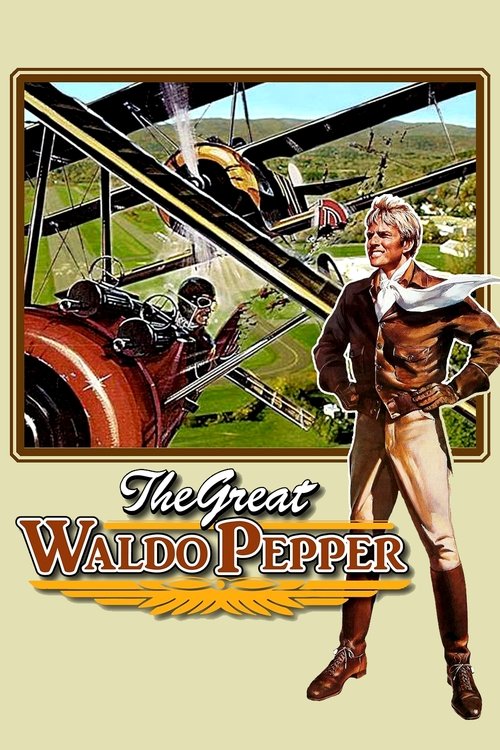
“The second greatest flyer in the world.”
A biplane pilot and WWI veteran takes up barnstorming and later a movie career in his quest for the glory days he misses.
I’ve always been drawn to stories about men who refuse to land. Maybe it’s the way the sky promises something the earth never can—freedom without consequence, speed without friction, a horizon that keeps retreating just as you reach for it. The Great Waldo Pepper, George Roy Hill’s 1975 ode to barnstorming and broken dreams, understands this longing better than most. It’s a film that soars when it should, stumbles when it must, and ultimately leaves you with the uneasy feeling that the ground was never the problem.
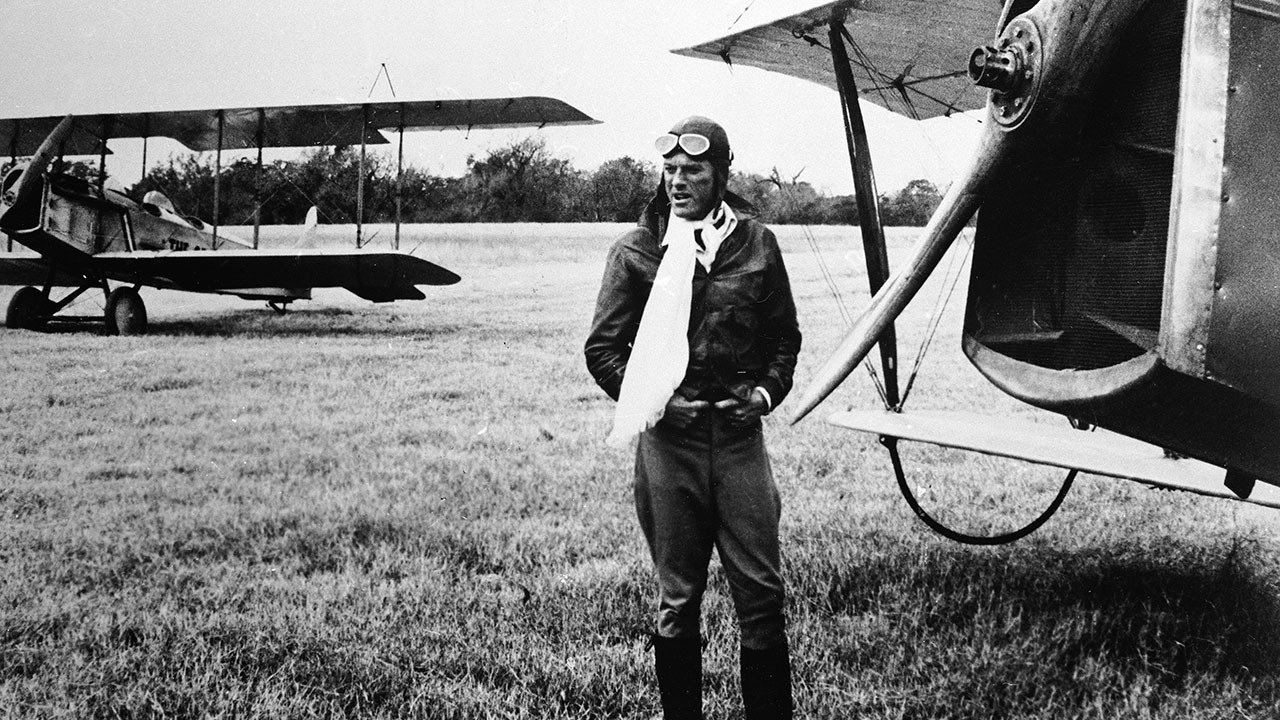
Waldo Pepper (Robert Redford) is a man out of time. A World War I pilot who never saw combat, he spends the 1920s barnstorming across the Midwest, performing death-defying stunts in his biplane for crowds who cheer but never really see him. The war is over, the world has moved on, and Waldo is left with little more than his reflexes, his arrogance, and a gnawing sense that he missed his moment.
Redford plays him with that signature mix of charm and restlessness, the kind that makes you root for him even when you know he’s doomed. There’s a scene early on where Waldo performs a wing-walking stunt for a group of skeptical farmers. He grins, tips his hat, and steps out onto the wing like it’s the most natural thing in the world.
The wind whips at his jacket, his boots grip the struts, and for a few seconds, he’s not just a pilot—he’s a god. Then the plane dips, the crowd gasps, and Waldo laughs like it’s all a joke. That’s the film in a nutshell: a man pretending he’s invincible because the alternative is admitting he’s already obsolete.

Hill, who also directed Redford in Butch Cassidy and the Sundance Kid and The Sting, has a knack for stories about charismatic outlaws who operate just outside the law—or in Waldo’s case, just above it. But where those films leaned into the myth of the American outlaw, The Great Waldo Pepper is more interested in the cost of that myth. Waldo isn’t a hero; he’s a relic.
The film’s most telling moment comes when he’s offered a job flying stunts for a Hollywood war picture. The director (Edward Herrmann) tells him, “We don’t want realism. We want excitement.” Waldo, who has spent his life chasing the real thing, doesn’t know how to play pretend.
"A nostalgic aviation drama with charm but uneven pacing and a thin plot."
Viewers appreciate the film’s authentic portrayal of early aviation and Robert Redford’s charismatic performance, which carries much of the emotional weight. However, the story struggles with pacing issues and a lack of depth in its supporting characters, leaving some feeling underwhelmed by the overall narrative.
Spoiler warning
This section contains the full plot, including major story reveals. Overview above stays spoiler-free.
George Roy Hill’s The Great Waldo Pepper (1975) is a love letter to the golden age of aviation, wrapped in the restless spirit of post-World War I America. Starring Robert Redford as the titular daredevil pilot, the film follows Waldo’s quest for fame, redemption, and one last thrill—all while dodging the ghosts of his past. But behind the aerial stunts and period charm, the production had its own turbulence, from Redford’s real-life flying skills to Hill’s reputation for blending spectacle with soul.
Robert Redford wasn’t just acting in The Great Waldo Pepper—he was flying. The actor, already a licensed pilot, insisted on performing many of his own stunts, a decision that added authenticity but also risk. While the film’s aerial sequences are a highlight, the production reportedly relied on a mix of Redford’s skills and professional stunt pilots to pull off the most dangerous maneuvers  . The result? A visceral, sky-bound energy that grounded Waldo’s larger-than-life persona in something real.
Redford’s collaboration with Hill was no accident. The two had already struck gold with Butch Cassidy and the Sundance Kid (1969) and The Sting (1973), both critical and commercial hits. Their partnership was defined by a shared knack for balancing humor, action, and melancholy—qualities that Waldo Pepper leans into heavily. In interviews, Redford and Paul Newman (who worked with Hill on Butch Cassidy) later praised the director’s ability to coax natural performances from his cast, even in high-stakes scenes [5].
George Roy Hill had a reputation for helming films that felt both grand and intimate. The Great Waldo Pepper fits neatly into his filmography, sitting alongside Butch Cassidy and The Sting as a story about outsiders chasing glory in a changing world. Hill’s direction here is character-driven, with Waldo’s swagger masking a deep-seated insecurity—a theme that resonates in the film’s quieter moments .
The movie’s French title, La Kermesse des aigles (The Fair of the Eagles), hints at its dual nature: a spectacle of death-defying feats and a meditation on the cost of ambition. Critics at the time noted the film’s uneven tone, with some praising its adventurous spirit while others found it tonally disjointed. Still, it earned a respectable 6.9/10 rating from audiences, a testament to its cult appeal .
Little verified dirt exists on The Great Waldo Pepper’s production, but a few tidbits stand out:
Beyond that, the production seems to have been relatively smooth—at least compared to the chaos of some of Hill’s other projects. The director’s ability to balance big-budget spectacle with character-driven storytelling likely kept things on track, even if the final product didn’t quite soar to the heights of Butch Cassidy or The Sting .
The Great Waldo Pepper may not have been a blockbuster, but it’s endured as a cult favorite among aviation buffs and Redford fans. Its mix of nostalgia, danger, and quiet introspection gives it a timeless quality, even if it occasionally stumbles in execution. For those who love early Redford or Hill’s knack for period pieces, it’s a hidden gem—one that captures the thrill of flight and the weight of regret in equal measure.
Entertainment rumors and trivia aggregated from public reporting. Treat speculation as unverified unless a cited source confirms it.
Movies
Related titles ranked by rating and popularity.