
Meryl Streep
Suzanne Vale
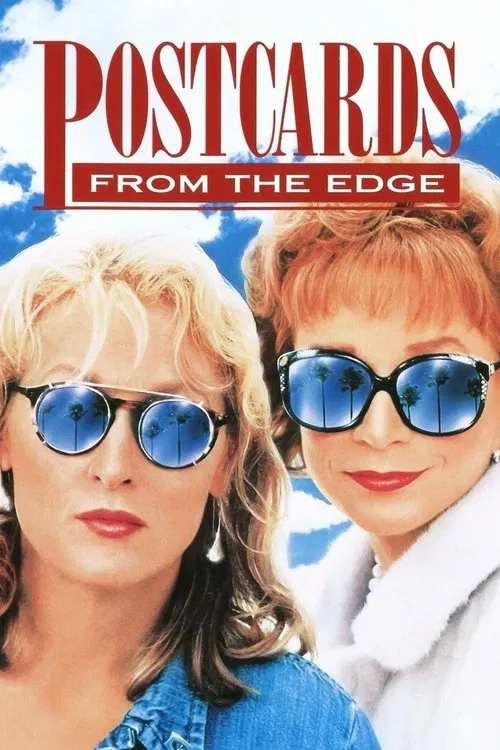
“Having a wonderful time, wish I were here.”
A substance-addicted actress tries to look on the bright side even as she's forced to move back in with her mother to avoid unemployment.
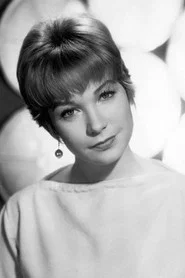
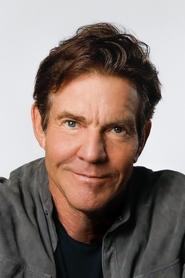
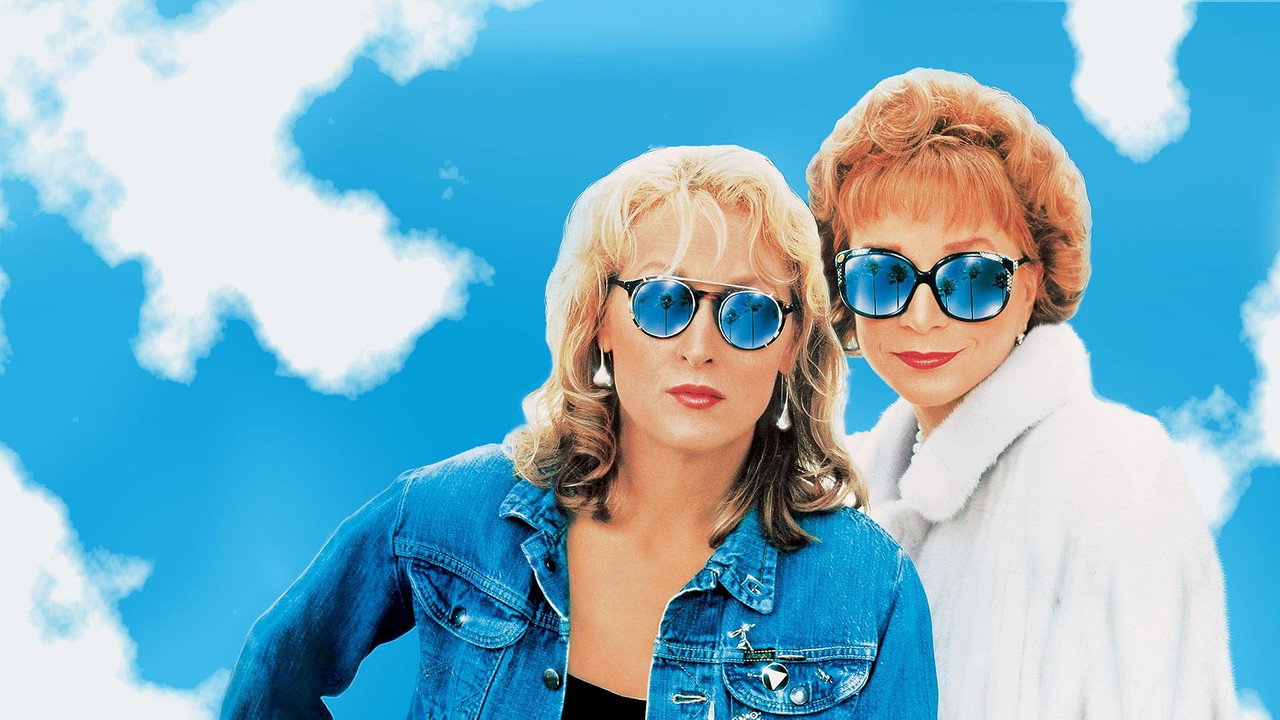
Despite there only being fifteen years between them, I actually thought that Shirley MacLaine and Meryl Streep made the mother/daughter thing work quite well here. The former, "Doris", is a wealthy and accomplished singer; the latter, "Suzanne", is a successful actress with dependency issues. Indeed they both have those - mum with the booze and her child with the pills. It's on the set of her latest film that director "Lowell" (Gene Hackman) lovingly loses the plot with his charge and makes it clear that she'd better clean her act up, else she'll be doing daytime medical soaps. Her insurers will only agree to take her on if she moves in with her mum - not knowing, of course, that she has a penchant for her kale smoothies the Mr. Smirnoff way. Now compelled to live together, what now ensues is a latter-day coming of age enterprise for both women as they face up to their demons and their causes, whilst hopefully not actually killing each other. Meantime, the mischievous womaniser "Jack" (Dennis Quaid) is stringing "Suzanne" along nicely with talk of love and devotion - but it's surely only a matter of time before she realises he's full of sheep dip too. The story has an authentic ring of truth to it - doubtless because author Carrie Fisher has plenty of skin in this game, but for me the best two scenes had precious little to do with the plot and featured both Streep at the microphone followed by her on-screen mother letting rip in a glitzy red frock to Sondheim's "I'm Still Here". As you'd expect, MacLaine also has the better of the pithy and often quite close to the bone dialogue but Streep isn't left out and if this were to be a critique on a Fisher/Reynolds family relationship then it's generally quite a funny and enjoyable one.
Read full review"Smart, actor-driven dramedy with killer dialogue and performances that outshine a loosely structured story."
Meryl Streep and Shirley MacLaine are widely praised as riveting, funny, and emotionally sharp, with several scenes between them singled out as unforgettable, and Carrie Fisher’s script is admired for its acerbic humor, quotable lines, and honest treatment of addiction and messy mother-daughter bonds. The movie is also appreciated for its strong ensemble and musical moments, yet often criticized for wandering plotting, static stretches, and an uncertain balance between heartfelt drama and light Hollywood satire.
Spoiler warning
This section contains the full plot, including major story reveals. Overview above stays spoiler-free.
Hollywood may have sobered up a little since 1990, but Postcards from the Edge is still one of the messiest, most thinly veiled “this is absolutely about my family but don’t quote me” projects ever made. Carrie Fisher raided her own trauma, Meryl Streep sang for her cinematic life, and Debbie Reynolds tried to play… Debbie Reynolds.
Grab your glitter robe and a vodka tonic. Let’s open the mailbag.
In her memoir, Reynolds said she asked director Mike Nichols to let her play Doris Mann, the boozy, aging star mom clearly inspired by her own life. Nichols told her she “wasn’t right for the role,” then personally requested Shirley MacLaine instead. Hollywood translation: “We love you, but not like that.” 
Nichols didn’t just reject Reynolds—he doubled down by tailoring the role to MacLaine. He even had Stephen Sondheim rewrite the lyrics to “I’m Still Here” from Follies so Shirley could blow the roof off Doris’s party number in a way that hit uncomfortably close to Reynolds’ own survivor persona .
Meryl Streep got the Oscar nomination for Best Actress; Shirley MacLaine did not get a Supporting nod, despite near-universal praise. Later retrospectives shout that MacLaine “should’ve been nominated” and call it one of the Academy’s most baffling blind spots—especially since the movie opened number one at the box office its first weekend and gave Streep her ninth nomination and a Golden Globe win  .
.
Carrie Fisher wrote the novel in 1987, mining her addiction struggles and her famously complicated bond with her mother, Debbie Reynolds. The movie version, encouraged by Mike Nichols, pushed even harder into that mother–daughter tension [13].
In a 1990 TV interview, Reynolds smiled through gritted teeth and said Postcards wasn’t really about their relationship [4]. Meanwhile, profiles and essays flat-out describe it as Fisher’s semi-autobiographical account of life as the daughter of a beloved, overbearing MGM musical queen [3][6].
Biographical pieces on Fisher and Reynolds openly describe years of conflict, grudges, and reconciliations—followed by their famously intertwined deaths one day apart in 2016. Writers now point to Postcards as the sharpest, funniest document of that long, painful love story [3][6].
If you thought the finished film was sharp, the stuff that got chopped out is pure gossip gold.
Yes, that Jerry Orbach actually shot scenes as Suzanne’s father, Tony Vale. In the cut material, Tony shows up after Doris’s big party number to hit Suzanne up for the keys to her New York apartment because he’s lost his own place. He blames her for believing her mother’s version of events and retreats when the conversation goes flat [5].
Early versions of the script had a scene in the rehab clinic where Suzanne meets a new teenage resident, described as an 18-year-old with bad skin and hair who looks “moderately insane.” That character was to be played by John Cusack—a full-on proto–“disaster boy in treatment” cameo. The whole beat was scrapped before release [5].
One cut sequence showed Suzanne and other clinic patients bonding in a TV lounge. They watch The Outer Limits, then flip to a rerun of Suzanne’s appearance on Late Night with David Letterman, where she jokes about her marriages. Suzanne hates it; everyone else is glued to the screen [5].
Meryl Streep originally recorded Carly Simon’s “Have You Seen Me Lately?” for the main title sequence. Fisher reportedly thought the track was too soft and self-pitying for Suzanne, and Nichols decided he hated having front credits at all. Result: the song and entire title design were tossed [5].
In the film, Jack Faulkner is a charming, emotionally unavailable man-child who breaks Suzanne’s heart. Fans have long pointed to the parallels with Fisher’s own affair with married co-star Harrison Ford during the first Star Wars shoot.
.After she exposed the affair in her memoir The Princess Diarist, Fisher told interviewers she regretted the reveal and how much attention it grabbed. But the damage—to Ford’s privacy and to any claim that Jack isn’t at least partly inspired by him—was done [8].
Nichols didn’t just direct the film; he actively shaped Fisher’s evolution as a screenwriter. Articles about Fisher’s career note that Nichols encouraged her to adapt the novel and to refocus it more squarely on the mother–daughter conflict, pushing her to turn personal chaos into something cinematic and structured [13].
.During pre-production and the shoot, Streep and Fisher bonded hard. A tribute from Streep’s camp notes they “grew close” on Postcards and stayed friends and frequent red carpet dates for decades, right up until Fisher’s death [3].
With a reported budget around $22 million, Postcards from the Edge made about $39 million at the U.S. box office—roughly $105 million in today’s money. It opened at number one and, for a semi-autobiographical rehab dramedy with show tunes and mother issues, that’s a seriously healthy haul [12][14].
Profiles on Fisher call Postcards her “most famous book,” born out of an overdose in 1985 and rehab that followed. She turned that spiral into a novel, then into the screenplay that launched her second career as Hollywood’s favorite uncredited script doctor [6][13].
Nichols and Fisher treated the movie like a musical theater candy store.
In true Carrie Fisher fashion, Postcards from the Edge turned rehab, family trauma, studio politics, and a decades-old Hollywood affair into a glittering, poisonous valentine. The on‑set drama may not have been thermonuclear, but the real explosions were happening in casting offices, editing bays, and living rooms in Beverly Hills—where one very famous mother watched another woman play her, and one very famous daughter laughed so she wouldn’t cry.
Entertainment rumors and trivia aggregated from public reporting. Treat speculation as unverified unless a cited source confirms it.
Movies
Related titles ranked by rating and popularity.