The Interview backdrop
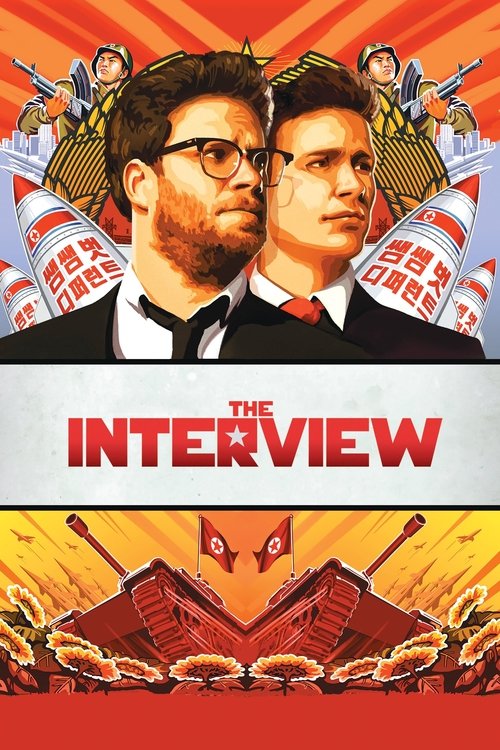
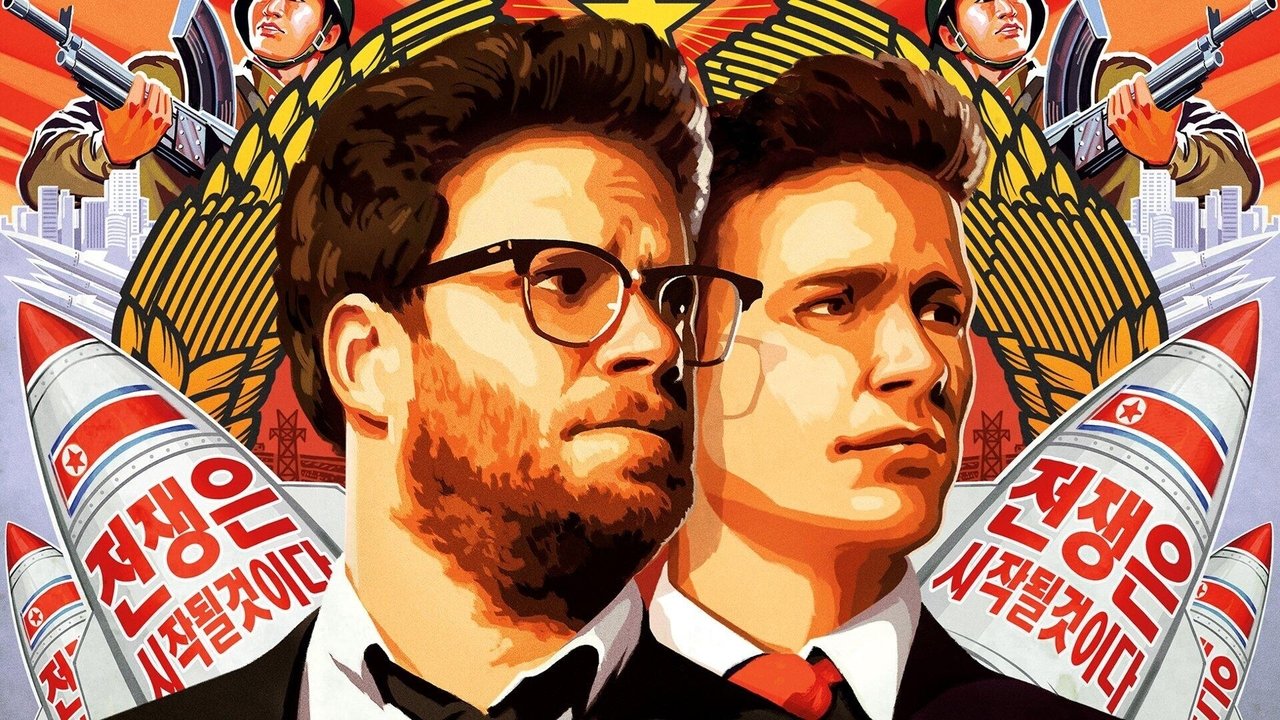
The Interview poster

The Interview

“The film hackers tried to get banned.”

6.2
2014
1h 52m
ActionComedy
Director: Evan Goldberg

Overview

Dave Skylark and his producer Aaron Rapaport run the celebrity tabloid show "Skylark Tonight". When they land an interview with a surprise fan, North Korean dictator Kim Jong-un, they are recruited by the CIA to turn their trip to Pyongyang into an assassination mission.

Sponsored

Trailer

The Interview - Red Band Trailer (Final) Official

Cast

Reviews

AI-generated review
The Comedy of Errors at the End of the World

There’s something deeply, faintly embarrassing in an American way about *The Interview*. It’s hard to see it as just a comedy because it dragged so much real-world noise in with it. Removed from the feverish 2014 coverage around the Sony hack and all the diplomatic chest-thumping that followed, the movie looks smaller now. Maybe flimsier. But it also shows its hand more clearly. What’s left is a sloppy, juvenile, intermittently sharp satire about a very specific national delusion: the idea that even the most tangled geopolitical mess can be blundered through by two vain loudmouths with a talk show and access to CIA money.

Rogen and Evan Goldberg aren’t trying to build a careful political argument, and that much is obvious from the start. Their movie throws media celebrity and dictatorship into the same sandbox and sees what explodes. The trouble is that it never quite fuses into one thing. Half of it is a familiar buddy comedy about male insecurity and loyalty. The other half keeps lunging toward something harsher about North Korean repression, then pulling away before it has to mean anything.

The main characters Dave and Aaron arrive in North Korea

Everything depends on the chemistry between James Franco’s Dave Skylark and Seth Rogen’s Aaron Rapaport, and Franco is doing the heavier lifting. His performance is broad, but not lazy. Skylark is a buffoon who has been so thoroughly shaped by his own image that he can barely tell where the performance ends. He isn’t just shallow; he’s hollowed out by branding. That’s where the film briefly sharpens. When this empty media creature is dropped into contact with an actual tyrant, the joke curdles into something more pointed: a man built for attention discovering he’s useless in the presence of reality.

Randall Park’s Kim Jong-un is the movie’s strongest move, and probably the reason it doesn’t float away entirely. While Franco and Rogen stay in stoner-comedy mode, Park gives the role an odd amount of shape. He finds the loneliness, the vanity, the bottled-up rage, and he makes all of them weirdly watchable. In the margarita-and-Katy-Perry sequence, the film almost fools you into thinking it has found something real. Not profound, exactly, but revealing. Park sells the possibility that this isolated despot might honestly crave approval from men whose main skill is flattering celebrities on camera.

Kim Jong-un and Dave Skylark sharing a moment of bonding

As *The New York Times* critic A.O. Scott once noted about the film's chaotic nature, it’s a production that often feels like "a buddy movie that doesn't quite know what to do with its geopolitical stakes." That uncertainty is the movie’s central weakness, but maybe also the thing that makes it feel accidentally truthful. The cutting is restless, the energy scattered. Just when a scene threatens to gather any real tension, the film jolts sideways into another joke, as if it’s nervous about letting the premise sit still long enough for anyone to inspect it.

Sometimes the crudeness feels intentional, almost defensive. The bodily gags, the noise, the collateral damage, the blithe selfishness of the leads all fit the "ugly American" mold well enough. But the film never has the nerve to press that critique all the way through. It wants the freedom of satire without giving up the pleasures of a breezy action-comedy, and those two instincts keep tripping over each other.

The chaotic climax of the film

I keep coming back to the last act. It’s huge, bloody, ridiculous, and cartoonishly loud. By then the movie has mostly dropped the political tension it kept pretending to wrestle with. Maybe that’s a failure of nerve. Maybe it’s just what this genre always was going to do. Or maybe that ending suits a story about men so dazzled by their own notoriety that they confuse visibility with wisdom.

In the end, *The Interview* works best as a Rorschach test and a time capsule. Anyone hoping for a serious critique of power or propaganda is going to come away irritated. But if you want a snapshot of that mid-2010s moment when pop culture, internet chaos, and global politics were colliding in public and in real time, it’s hard to deny its value. Messy as it is, the film catches that atmosphere. It understands, maybe better than it means to, how dangerous it can be to hand a man with an ego a global audience and assume he won’t fall over himself the moment it matters.

Clips (3)

The Interview Movie Clip: The Sneeze (ft. Seth Rogen & James Franco)

The Interview Movie Clip: Frodo Baggins (ft. Seth Rogen & James Franco)

The Interview Movie Clip: "Take Him Out"

Featurettes (6)

The Interview- Exclusive Clip From Blu-ray Special Features

The Interview- Exclusive Clip

The Interview: Character Featurette - Meet Producer Aaron Rapaport

The Interview: Character Featurette - Meet Agent Lacey

The Interview: Character Featurette - Meet Sook

The Interview: Character Featurette - Meet Dave Skylark