Kristen Connolly
Dana Polk
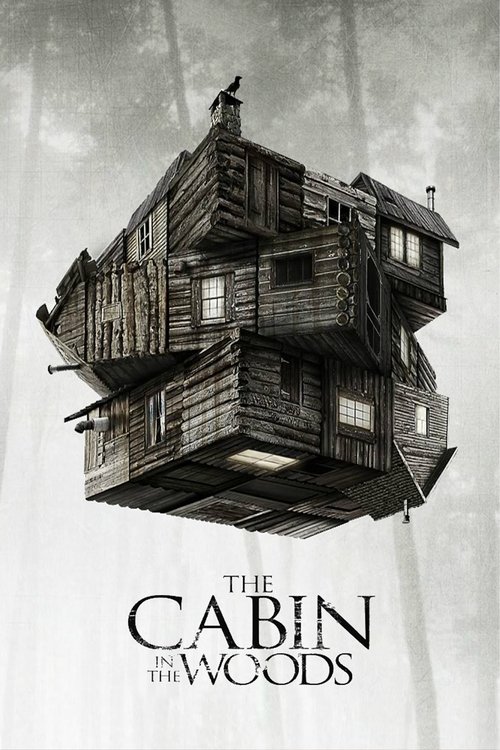
“You think you know the story.”
Five friends set out for a weekend at a remote cabin in the woods, expecting nothing more than fun and relaxation. As night falls, they discover that something far more unsettling is at work and that nothing about their getaway is what it seems.
I still remember the first time The Cabin in the Woods really tipped its hand. Not the opening moments, which are funny in that knowing, lightly mocking way. Not even the first bloodletting.
I mean the moment when you realize the movie isn’t just rearranging familiar horror parts — it’s looking back at them, clipboard in hand, like a bored engineer who’s spent years studying where the machine fails. That’s the sly trick Drew Goddard pulls off here. He makes a cabin-in-the-woods story feel ancient and freshly tampered with at the same time.
On paper, this is a horror-comedy, and sure, it is that. But calling it a genre mash-up undersells the joke. The film arrived in 2012 after a long, famously delayed production history, and by the time it finally reached theaters it already felt like a response to something broader than any single slasher cycle: the exhaustion of horror formulas, the rise of online genre literacy, the pleasure audiences take in recognizing the shape of a story before the characters do.
Goddard, coming off his work in the Joss Whedon orbit and writing here from a screenplay co-written with Whedon, doesn’t just riff on genre rules. He stages a bureaucratic nightmare around them. Horror becomes administration.
Sacrifice becomes scheduling. That’s the real gag, and it’s funny right up until it isn’t.
What I admire most is how calmly the movie lets itself become ridiculous. Richard Jenkins and Bradley Whitford, as the two technicians keeping the ritual machine humming, give the film its best running commentary without ever turning it into a sketch. Jenkins plays his man like he’s already halfway to retirement and only barely trying to sound professional; Whitford, with that permanently skeptical face of his, brings the casual cruelty of a colleague who’s seen too much and still hasn’t learned to care correctly.
Their scenes are the movie’s satirical engine. They’re also oddly sad. It’s hard not to think of them as office workers trapped inside a cosmic compliance department.
That’s funnier than it should be, and maybe sadder too.
The visual design keeps that double vision alive. The cabin itself is shot with the expected low-key menace: trees closing in, interiors dim and cramped, that old horror feeling that the room has been arranged to make bad decisions look inevitable. But the underground facility beneath it has a different temperature entirely — fluorescent, metallic, almost absurdly clean.
Movies
Related titles ranked by rating and popularity.