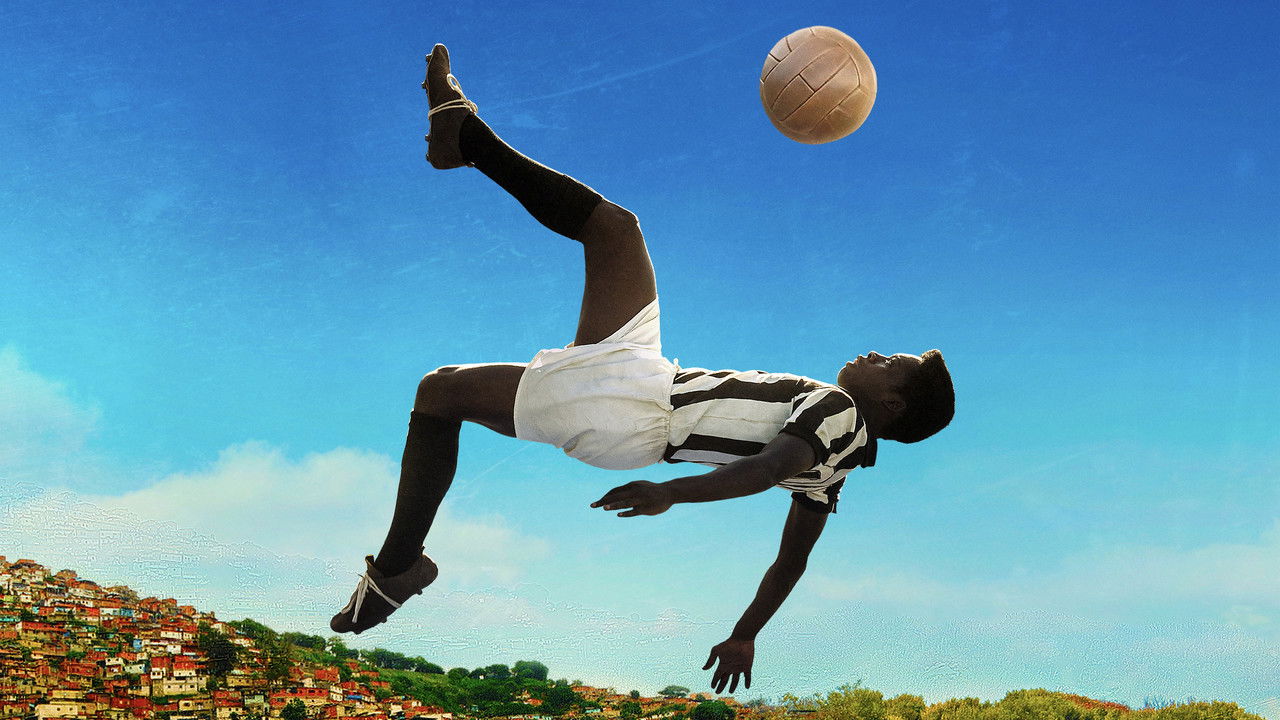
Pelé: Birth of a Legend backdrop
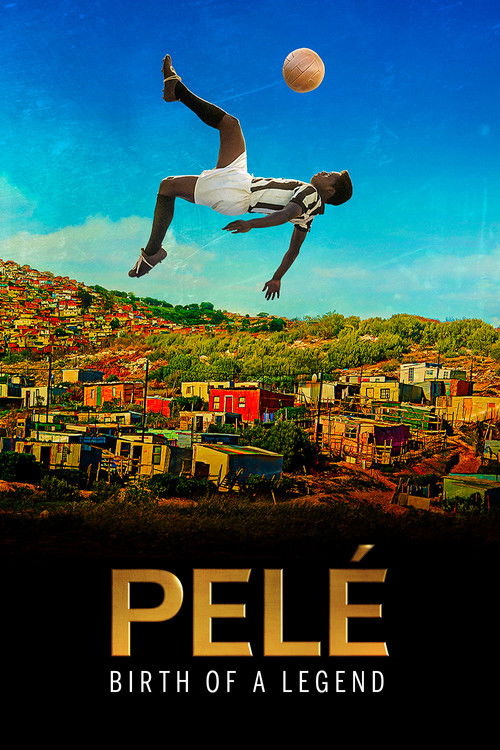
Pelé: Birth of a Legend poster

Pelé: Birth of a Legend

“A boy with nothing who changed everything.”

7.3
2016
1h 47m
Drama
Director: Jeff Zimbalist

Overview

The life story of Brazilian football legend, Pele.

Sponsored

Trailer

Pelé: Birth of a Legend Official Trailer 1 (2016) - Rodrigo Santoro, Seu Jorge Movie HD

Cast

Reviews

AI-generated review
The Weight of a Nation in a Ball of Rags

There is a particular, almost impossible pressure that comes with being a myth. When you are Edson Arantes do Nascimento—better known to the world as Pelé—you are not just a man; you are a narrative of Brazilian identity. Jeff and Michael Zimbalist’s 2016 biopic, *Pelé: Birth of a Legend*, wrestles with this burden, attempting to pin down the elusive lightning of a prodigy who transformed a game into a religion. Biopics about athletes so often collapse under the weight of their own reverence, treating their subjects like statues rather than people. Yet Zimbalist manages to find something softer here: the story of a boy who played football not to be a king, but to escape the gravity of his own circumstances.

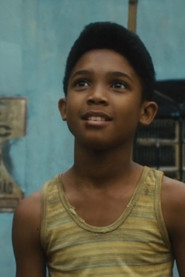
The young Pelé practicing barefoot in the Brazilian slums

The film frames his rise against the backdrop of the 1950 World Cup, a national trauma for Brazil. This is a clever structuring choice. By tethering Pelé’s personal development to the collective shame of the *Maracanazo*—the infamous loss to Uruguay that haunted the nation—the directors turn the sport into an existential question. Can one person heal a country? It is a heavy conceit, but Kevin de Paula, who plays the teenage Pelé with a wide-eyed, kinetic restlessness, keeps it from becoming too heavy-handed. Notice the way he moves in the opening scenes. He does not just run; he navigates the uneven, dusty streets of Bauru with the improvisation of a dancer. It is an instinctive, physical intelligence that the camera captures beautifully, framing his small frame against the looming shadows of a world that expects very little from him.

There is an inevitable friction when a film tries to compress such a sprawling life into two hours. Critics at the time, like *The New York Times’* Neil Genzlinger, noted that the film “plays more like a fairy tale than a documentary,” and he was not wrong. It leans heavily into the tropes of the underdog sports drama—the skeptical coach, the struggle against the establishment’s rigid style of play, the inevitable climactic victory. Yet, I wonder if a more “accurate” film would have lost the very quality that made Pelé’s rise feel so mythic in the first place. Cinema often trades in fables, and there is a tactile, almost magical-realist quality to the way the film treats the ball itself, treating it as an extension of the players’ own limbs.

Pelé navigating the dense, aggressive defense on the field

One performance that anchors the film is Seu Jorge as Dondinho, Pelé’s father. Jorge is perhaps better known to international audiences for his magnetic, mournful turn in *The Life Aquatic with Steve Zissou*, and he brings a similar gravitas here. He plays a man broken by injury, forced to clean hospital floors while his son plays in the streets. There is a scene between them—Dondinho teaching his son to control a grapefruit because they have no ball—that is the quiet heart of the movie. It is not about the glory of the stadium; it’s about the intimacy of the instruction. You can see the pain in Jorge’s eyes, the quiet resignation of a man who knows his dreams died, watching his son inherit the struggle. It is a grounded counterweight to the bombast of the later match sequences.

The cinematography by Matthew Libatique—a cinematographer more often associated with the visceral, high-contrast intensity of Darren Aronofsky’s work—is surprisingly warm, almost nostalgic. He paints the Brazilian landscape in amber and green, turning the favelas into a kind of Edenic testing ground. When the film finally lands on the 1958 World Cup in Sweden, the transition from the sun-drenched, chaotic streets of Brazil to the crisp, sterile discipline of European football feels like a culture clash of architectural proportions. It is here that the film hits its strongest beat: the realization that Pelé’s talent is not just speed or power; it’s *ginga*. It is that distinctly Brazilian style of play, a rhythmic, deceptive improvisation that the stiff, structured European defenders simply don't know how to read.

The pivotal match sequence in Sweden, contrasting styles

Whether you view the film as a sanitized hagiography or a heartfelt tribute depends on what you want from a biopic. It does not interrogate the politics of his later career or the complicated reality of being a Black icon under a military dictatorship. It stays resolutely focused on the *birth* of the legend, not the long, difficult life that followed. That is a limitation, sure. Yet there is something to be said for a film that dares to believe, for just a moment, that the world can be changed by a boy, a ball, and a dream that defies the laws of physics. It is a simple story, told with sincerity, and sometimes, that’s enough to make you hold your breath.