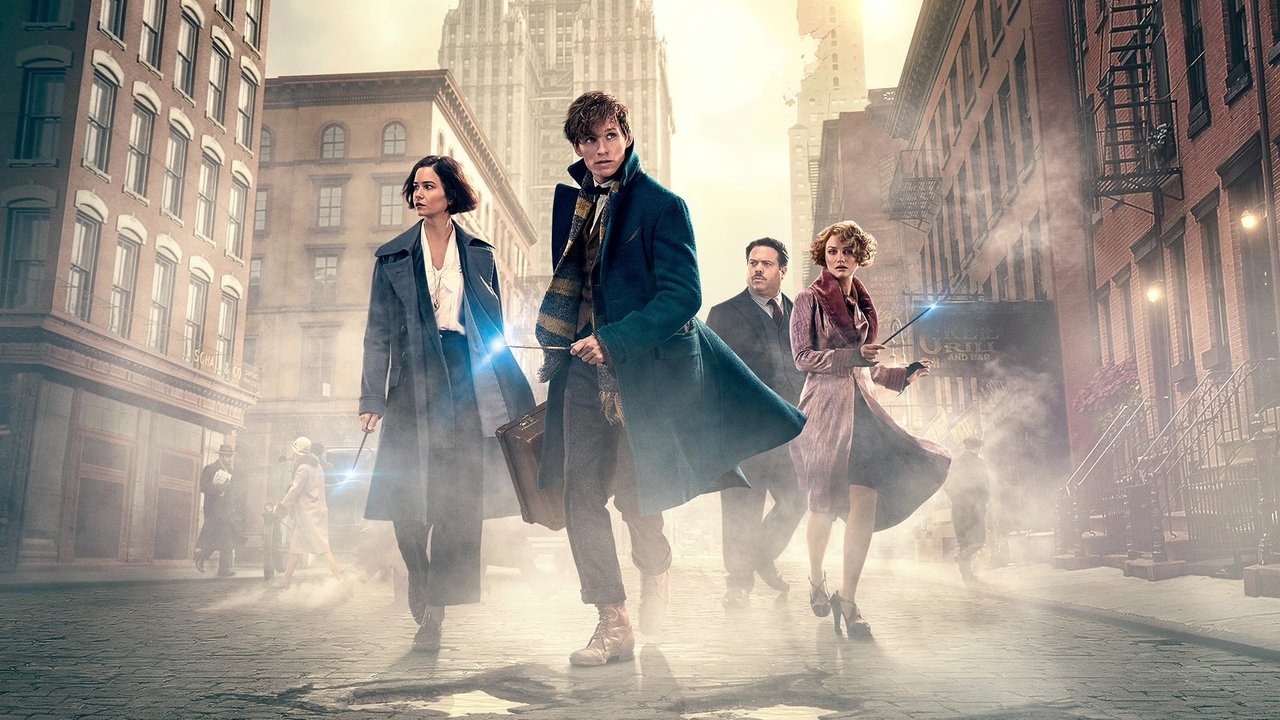
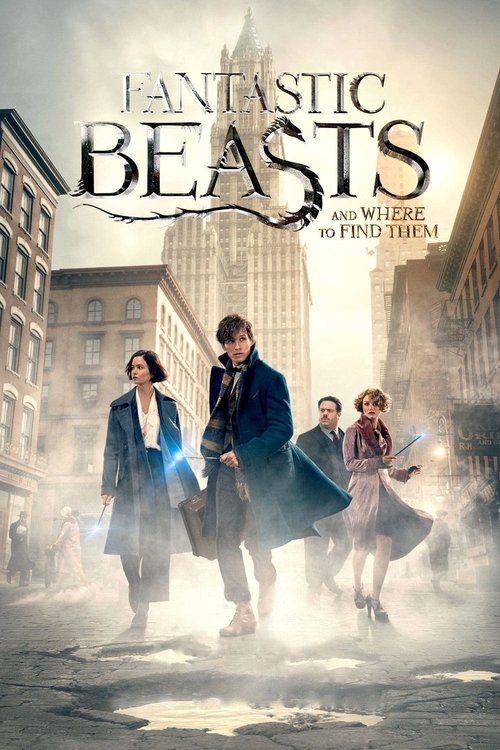
The Magic of MisfitsGoing back into a beloved franchise always comes with a little dread. When *Fantastic Beasts and Where to Find Them* was announced, I could not tell whether it sounded like a cynical studio extension or a sincere attempt to open the world up. The answer turns out to be somewhere in between, which is honestly more interesting than either extreme. David Yates, who directed the final four Harry Potter films, trades Hogwarts comfort for 1926 New York — colder, more suspicious, and charged with Prohibition-era unease. The movie works as a creature feature tangled up with a period thriller. Those modes do not always fit cleanly. Most of the time, though, I was on its wavelength.

Yates understands that magic in this world should feel wondrous and dangerous at once. American wizards are not just keeping a low profile out of convenience; they are hiding because the world outside actively hates them. Samantha Morton’s Mary Lou Barebone, leading an anti-magic movement and running an orphanage with brutal Dickensian severity, gives the film a surprisingly grim backbone. That makes it all the stranger — and better — that the same movie has room for a magical platypus wreaking havoc in a bank vault. The tonal swing is real, but Yates seems to know exactly what he is doing with it. The gray, buttoned-up bureaucracy of the wizarding government keeps rubbing against the unruly warmth of the creatures.
The film’s high point is still the descent into Newt’s suitcase. After the scramble and confusion aboveground, Eddie Redmayne’s Newt leads Dan Fogler’s thoroughly bewildered Jacob Kowalski down into that impossible interior, and the whole movie seems to exhale. A cramped New York room opens into a vast living sanctuary of damp earth, strange weather, and improbable life. Yates does the right thing and pauses there. He lets Jacob stand in awe before pushing on. *Sounds of Cinema* described the beasts as feeling “like something we might see in the pages of National Geographic,” and that grounded texture is a huge part of why the magic convinces.

Redmayne sells Newt through body language more than charisma. Coming off *The Theory of Everything* and *The Danish Girl*, he already knew how to build a character physically, and he puts that to good use here. Newt avoids eye contact, curls inward, and seems to angle himself away from human conversation whenever possible. Around the animals, though, he loosens instantly. His voice softens. His posture relaxes. What could have been an alienating set of choices becomes oddly tender. Newt does not dislike people exactly; he just understands creatures better.
Jacob, meanwhile, is the movie’s smartest structural choice. Making a “No-Maj” central to the story gives the whole thing an emotional anchor. He is a Great War veteran who wants nothing more glamorous than a bank loan for a bakery, and when the wizarding world crashes into his life, he meets it with wonder instead of self-importance.

I still think the climax is the weakest part. Once the city-scale CGI destruction starts, the movie loses some of the strange, intimate charm that makes the earlier sections work. The Obscurus, as a metaphor for repressed identity turned destructive, is not exactly subtle. Even so, Yates and company built something that does not feel entirely machine-made. Beneath the fur, feathers, and franchise scaffolding, there is a genuine affection for outsiders finding each other in the dark.