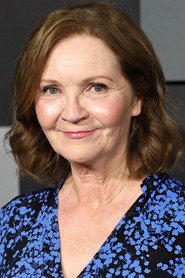
Brie Larson
Ma

“Love knows no boundaries.”
Held captive for 7 years in an enclosed space, a woman and her young son finally gain their freedom, allowing the boy to experience the outside world for the first time.
> Discovering a whole new world beyond the 4 walls. We all know the German folk tale 'Rupanzel', and this is a similar kind with entirely different motive. All the above it is not a fairy tale set in the medieval period, but inspired by many real events of the present era. A couple of years ago I saw a German movie called '3096 Days' based on the true story. When I heard of this movie is being made, at first obviously I remembered that title, but after seeing the poster alone convinced me not the same. Automatically the expectations rose, and now it's got the 4 Oscars nominees, including the best motion picture. The both halves of the movie were entirely different from each other like the two sets of story, but the core of the theme remains same. The first half was a crucial part that takes place completely in a single room with a minimal cast. It does not go through the intro, just begins to tell the story like it's already happening and you might take a few minutes to realise the state of condition. The next half is a reaction to what happened in the previous. And again this is also an important storytelling section because like the title, it was not all about the room, but beyond that 4 walls and its roof and floor like how it affected the mother and son. > "If you don't mind, it doesn't matter." The movie does not talk about the crime feature at all. Not even considered to reveal behind the motive. So the other side mystery remains as it is. The whole narration was one sided, everything was seen through the eyes of a five year old boy. He begins with the line 'Once upon a time...' like a fairy tale, because it is to him and with his cute little performance along with Brie Larson's, the movie briefs their struggle for freedom. It was a too casual opening, like nothing bad is really happening, just they're weird people or maybe agoraphobia, except they're not. You know when we say we love to be kids again to escape this complicated adult life, sometimes we won't mean it except it was a normal reaction to the situation we're in. But what if a five year old boy wants to be four again when her mother thinks its time to him know what the real world looks like. Yeah, that's a too much to take in for a young boy, but that's the best chance they had to break free from the psycho who put her mother in that room. > "When I was small, I only knew small things. > But now I'm five, I know everything." It was a tidy place, but the camera angles were impressive. I know it was shot in a studio with a wide open space behind the camera, but that does not the viewpoint in the actual story. When the first half ends, it is an indication of the good parts are over, at least that's what I thought of, but what came after was the unexpected expansion in narration. Usually most of the similar tales end in that part itself like for example 'Prisoners' and the rest is understandable stuff that won't be shown. When a tale had a ending like 'happily ever after', still some people desire for it to continue a few more minutes to know how happy really they are and that's what this film's second half. Remember, most of the similar themes have multiple perspectives, like how victim's family is coping with, cops are pursuing the suspect, abductor's plans and motive, and captives struggle. Like I said it was all about what a mother and her son goes through those years in captivity and after that. There were some suspicious characters and events like I had a bad feeling over the doctor's soft talking, also the mother-son's master plan when in captive. Those are tiny diversions to viewers assume differently against where the story is heading. It is all about the mother and son's mental trauma, especially for the little boy similar to when Tarzan is in a big town for the first time leaving behind his other life. It was a perfect pace as well, neither hurried nor a slow development. The movie was a big break for many, especially for the Irish director, and Brie Larson and of course for the kid. Definitely one of the finest movie of 2015 and a must watch. 9/10
Read full review"I want a different story!" That line and the scene it's taken from is quintessential to what this movie is about — at least to me. To me, this is so much **not** about being abducted and trapped in a room but about the apparent pointlessness of being, about coming to terms with it and understanding and accepting that any meaning that is to be found, comes from within ourselves. It's also about moving on, about love and parenthood ("Can I?" "There's nothing left."), and just... Well, humanity and love. It reminds me of the beautiful relationship between father and son in The Road (the book — I don't remember if the movie conveys this relationship very well, but I do remember the beauty of it in the book). The relationship between mother and son in this movie is heartbreakingly beautiful as well. Also, I don't remember the last time I've seen a child perform this well in a movie. I have a feeling I've seen better, but I can't remember having seen better. I thought this would be a horror movie (I don't read synopsises or reviews or watch trailers before watching a movie), instead I was moved to tears again and again. But **not** disappointed. Brilliant. Watch it.
Read full reviewJacob Tremblay is really good in this curious, and slightly claustrophobic, tale of a young lad "Jack" who lives with his doting "Ma" (Brie Larson). Nothing odd about that, you might think - well, except for the fact that thus far in his short life, "Jack" has never actually left the room in which he lives. He eats there, plays there, sleeps there - he knows nowhere else. As he ages though, he begins to get itchy feet and his mother finds it more and more difficult to contain his enthusiasm for finding out what is going on outside. What also emerges from their scenario is that "Ma" herself is not exactly free to move about. She was taken by "Nick" (Sean Bridgers) many years earlier and it soon becomes clear that he is likely the father of the boy she is so desperate to protect. Are they better off indoors or seeking freedom? Well, she decides that the latter offers them a better chance of happiness (and quite possibly sanity, too) - but the execution of that plan is not without risk! Lenny Abrahamson directs this with quite a bit of subtlety. He allows the audience to become immersed in the relationship between the two principals; he lets them do the talking and as the narrative unravels we realise that the story is anything but what we may have expected at the start. There is a palpable chemistry between the confident Tremblay and his more experienced co-star, and she complements that well. This is a nuanced and engaging tale offering us plenty of parallels of modern life - good and bad; with a dialogue that is both poignant and frequently heartfelt too. Certainly, it was nothing at all like I was expecting and it's stimulating and enjoyable in equal measure. Well worth a watch.
Read full reviewAdapted from Emma Donoghue’s novel, Room tells a harrowing yet powerful story of captivity and survival, brought to life through compelling performances by Brie Larson and Jacob Tremblay. While the emotional depth in the confined space feels rushed, the film finds its strength after the characters escape, revealing layers of trauma and resilience. It reminds viewers that evil can exist anywhere, urging vigilance and empathy. Read the full review here: (Indonesian version : alunauwie.com)
Read full review"A harrowing captivity story transformed into an emotionally crushing but hopeful drama by extraordinary performances and suffocating tension."
Brie Larson and Jacob Tremblay are widely praised for creating a painfully believable mother–son bond, with the cramped first half described as almost unbearably tense and immersive. The later focus on trauma, family conflict, and reintegration moves viewers deeply but is seen as less sharp, with some finding the pacing slower, certain reactions unconvincing, and the visual style and villain too plain once the story leaves the shed.
If you thought the 10-by-10 shed was intense, wait till you hear what was going on outside the walls. From a cut stillbirth scene too brutal for even this tearjerker, to Brie Larson’s year-long emotional hangover, the real-world story of Room is full of quietly wild details the awards-season gloss tried to hide.
To get into Joy’s head, Larson spent about a month in near-total isolation in her apartment, cutting herself off from phone and internet, while following a strict regimen to simulate captivity and deprivation . She also worked with a trauma specialist to understand long-term sexual abuse and consulted a nutritionist about what years without sunlight and proper hygiene would actually do to a body [1]
.
Larson has said the shoot was so emotionally traumatic that it took her a full year to be able to really enjoy basic life again [2]. She described 12‑hour days that left her completely drained, needing constant sleep and “care packages” from loved ones just to remember who she was outside of Ma [2]. She’s openly admitted she’s avoided similarly dark roles since, because Room took such a toll [2].
According to her own accounts, Larson set up on‑set coping systems: staying very open with friends and family, literally giving herself permission to cry it out in private between takes, and actively “offloading” the character at the end of each day so the trauma didn’t stick [2]. That’s not method; that’s survival.
In Emma Donoghue’s novel, Ma has another baby in captivity before Jack. The infant dies at birth from lack of medical care, and Old Nick buries the body in the backyard .
In Donoghue’s screenplay, Ma and Jack return to Old Nick’s yard after their rescue and see the spot where police have exhumed the baby’s body. That’s when Ma finally tells Jack about the sibling he never knew [3]. Donoghue later revealed this scene was ultimately cut because it was such an “utter downer” that it stopped the movie dead in its tracks [3]. When a movie about kidnapping and repeated rape says a scene is too depressing, you know it’s rough.
Donoghue has said that, as powerful as the moment was, it wrecked the film’s forward momentum—so she reluctantly agreed the film is better without it [3]. Somewhere in an archive lies the bleakest “deleted scene” you’ll (probably) never see.
On day three of filming, seven-year-old Jacob Tremblay wouldn’t shout at Larson the way the scene required. Director Lenny Abrahamson’s solution? He ordered everyone on set—Larson, the camera crew, himself—to start yelling at full volume until Tremblay finally pushed past his fear and belted it out . Not exactly standard child-actor coaching, but it worked.
Abrahamson auditioned more than 2,000 children in seven cities before landing on Tremblay, whose parents sent in an audition tape from Vancouver [4]. Producer David Gross straight-up admitted the stakes: if Jacob’s performance didn’t land, Room risked feeling like a made‑for‑TV melodrama [4].
Their first meeting at Pinewood Toronto wasn’t a rehearsal so much as a hangout: pizza, Lego, and hours spent just getting comfortable with each other [4]. That groundwork turned into a genuine off-screen friendship; years later, Larson would write that on Room they “picked each other up, answered for the other when one was tired and always kept silliness alive” .
Larson and Tremblay later toasted Room together at an event in Japan—he with chocolate milk, her with red wine—and she publicly gushed about the “journey” they shared and the love at the core of the experience [5]. Entertainment sites have since crowned them one of Hollywood’s most wholesome celeb friendships.
Critics and audiences immediately linked Room to the infamous Josef Fritzl case. While Donoghue and Abrahamson have repeatedly stressed they avoided directly depicting that real crime, coverage around TIFF 2015 and beyond kept circling back to the inspiration question, with some commentators uneasy about fictionalizing a scenario so close to a real horror story . It was less a full-blown “scandal” than a persistent ethical cloud hanging over otherwise glowing reviews.
While Larson walked away with Best Actress, online awards junkies are still mad that Tremblay didn’t even score a nomination. One widely shared Reddit thread called the snub “astonishing,” arguing his turn was not just good “for a kid” but one of the year’s best performances, period . Among awards nerds, it’s become one of those perennial “the Academy messed up” talking points.
The film was shot largely in chronological order over 59 days, so Larson and Tremblay actually lived through the story’s emotional arc in sequence—from claustrophobic captivity to disorienting freedom [2][4]. For a kid actor with strict hour limits, that’s a logistical nightmare, but it helped keep their performances scarily real.
Production built an 11-by-15-foot “Room” at Pinewood Toronto Studios. The walls were technically removable, but Abrahamson kept the space tight to preserve that suffocating, boxed-in feeling—even though it meant cramming cameras, crew, and boom mics into a glorified closet with two emotionally wrecked actors [4].
Entertainment rumors and trivia aggregated from public reporting. Treat speculation as unverified unless a cited source confirms it.
Movies
Related titles ranked by rating and popularity.