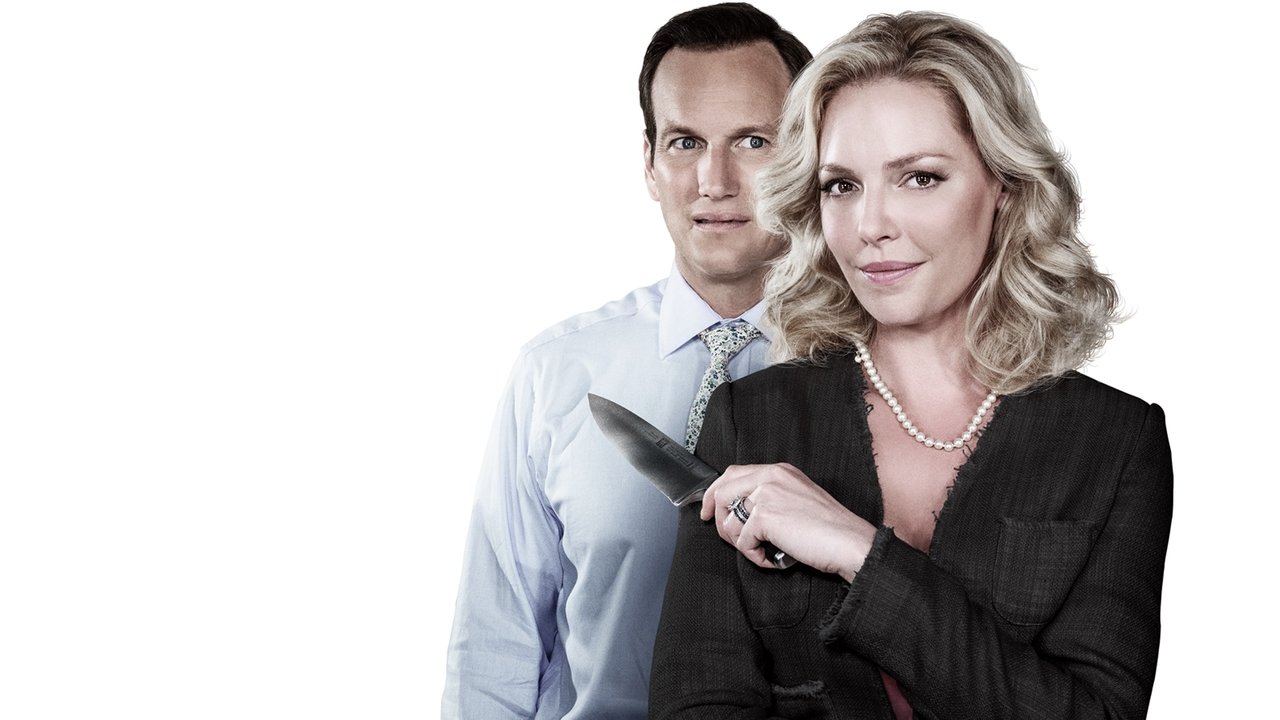
Home Sweet Hell backdrop
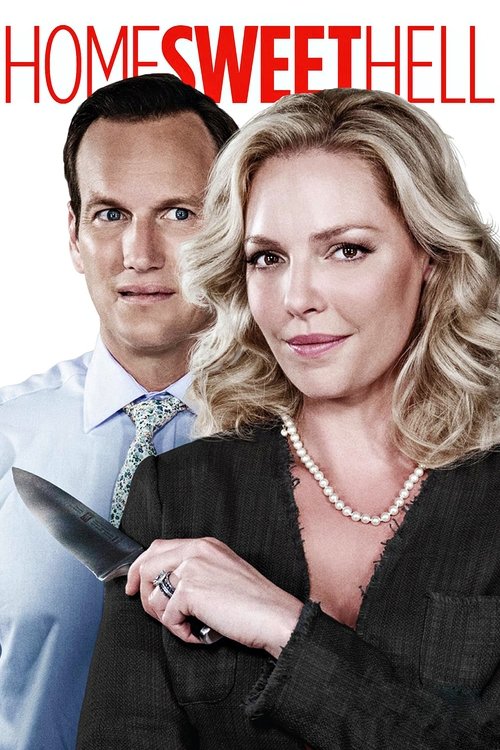
Home Sweet Hell poster

Home Sweet Hell

“Psycho Wife. Unhappy Life.”

5.4
2015
1h 38m
ComedyThriller
Director: Anthony Burns

Overview

Don Champagne seems to have it all, but when his wife, Mona, learns of his affair with a pretty new salesgirl, she will stop at nothing to maintain their storybook life.

Sponsored

Trailer

Official Red Band Trailer Official

Cast

Reviews

AI-generated review
The Violent Geometry of Suburbia

There is a specific kind of American purgatory that exists in the movies, a place of freshly edged lawns and aggressively coordinated color palettes. It’s the visual language of "having it all." Anthony Burns’ *Home Sweet Hell* (2015) takes this language—the bright, oversaturated blues and yellows of a Pottery Barn catalog—and tries to set it on fire. It wants to be a black comedy about the rot underneath the floorboards, a *War of the Roses* for the modern era, but it often finds itself caught between being a farce and a genuine crime drama.

The overly bright, artificial perfection of the couple's suburban home

The film’s central intrigue isn't actually the plot—which concerns an extramarital affair, blackmail, and the messy, clinical disposal of problems—but the casting. For years, Katherine Heigl built a career on the back of being the "perfect" rom-com lead, the relatable woman who just wants love and a promotion. Here, she plays Mona, a woman whose perfectionism isn't just a quirk; it's a weapon. She is a woman who treats her family life like a business model, and when an affair threatens the fiscal solvency of her personal empire, she reacts with the cold, unblinking efficiency of a corporate raider. It’s fascinating to watch Heigl pivot this hard, stripping away the warmth she used to rely on. There’s a rigidity in her jaw that tells you she’s not playing a villain so much as a woman who has optimized herself into a corner.

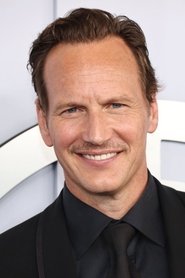
Opposite her is Patrick Wilson, an actor I usually associate with a certain kind of furrowed-brow intensity—the investigator, the protector. Watching him play Don, a man who is essentially a sentient puddle of panic, is the film's funniest and most honest choice. He’s all slumped shoulders and nervous tics. While Mona is the architect of their suburban hell, Don is the termite eating away at the foundation. They are a perfectly dysfunctional pairing of the unstoppable force and the very movable object.

Mona (Katherine Heigl) maintains her cold, calculated composure while her life spirals

The problem, if I’m being honest, is that the film doesn't quite trust its own tone. *Variety* critic Justin Chang once dismissed it as a "grim, uninspired domestic thriller," and while that might be a bit harsh, he’s pointing at the film’s central friction. There are moments—like a tense conversation in a kitchen where the dialogue snaps back and forth like a tennis match—where the movie finds a groove, balancing dark humor with genuine menace. But then, it will lurch into slapstick or excessive violence, and the spell breaks. It’s a movie that doesn't know if it wants you to laugh *at* the characters or fear them.

Consider the scene where Mona discovers the affair. She doesn't scream. She doesn't sob. She simply starts calculating. We watch her move through the kitchen, her body language turning from affectionate to anatomical, as if she's assessing a piece of furniture that needs to be reupholstered. The way she handles the everyday objects—a glass of wine, a kitchen towel—becomes charged with threat. It’s a quiet, cold moment, and it’s the most compelling thing in the film. It suggests a movie about the terror of a partner who treats you like an asset rather than a human being.

The couple faces the consequences of their unraveling charade

Maybe that’s the real tragedy of *Home Sweet Hell*. It has the raw materials for a biting satire on the suffocating pressure to be "perfect," but it loses its nerve. It becomes too enamored with the thriller aspects, too interested in the logistics of the crime rather than the psychology of the people committing it. I left the film feeling like I’d spent two hours with people I found fascinating but who ultimately felt like sketches rather than characters. It’s a strange, disjointed experience, but every now and then, between the clunky plot turns, you catch a glimpse of something darker and more interesting—a portrait of a marriage that has become a cage, locked from both sides.