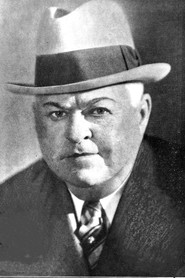

Too Many Women backdrop
Too Many Women poster

Too Many Women

4.8
1942
1h 7m
Comedy
Director: Bernard B. Ray

Overview

Thanks to a fib intended to ward off an annoying real estate developer, a young bachelor finds himself engaged to three different women and pursued by a fourth, a gangster's sister.

Cast

Reviews

AI-generated review
The Architect of Shadows and Songs

In the sprawling, melancholic tapestry of Turkish television, few directors understand the architecture of tragedy quite like Uluç Bayraktar. With *Eşref Rüya* (2025), Bayraktar returns to the thematic playground he mastered in *Ezel* and *Içerde*—the collision of organized crime and organized heartbreak. Yet, to call this merely a "mafia series" is to ignore the operatic silence that sits at its center. This is not just a story about a crime lord and a police informant; it is a meditation on memory as a prison, where the bars are made of nostalgia and the warden is a childhood dream that refuses to die.

Bayraktar’s visual language here is suffocatingly beautiful, a deliberate choice that mirrors the protagonist’s internal state. Istanbul is rarely shot as a tourist destination; instead, the camera lingers on the grey, steel-blue hues of the Bosphorus, turning the strait into a river of forgotten secrets. The lighting is low-key, often obscuring half of Çağatay Ulusoy’s face, a visual metaphor for Eşref’s dual existence as a ruthless enforcer and a stunted romantic. The sound design complements this, allowing the ambient noise of the city to drop away during pivotal moments, leaving only the characters’ labored breathing or the haunting strains of Nisan’s music.

Eşref looking out over the Bosphorus

At the narrative's core is a conflict as old as Greek tragedy but dressed in the sharp suits of modern Istanbul. Eşref (Ulusoy) is a man who built an empire solely to have the resources to find a ghost—Rüya, the girl he loved as a child. Ulusoy delivers a performance of restrained intensity; he is a coiled spring, a man who commands armies with a whisper but is reduced to a trembling boy by a familiar melody. His counterpart, Nisan (Demet Özdemir), offers the perfect harmonic dissonance. As the musician who is secretly the woman he seeks—and the informant sent to destroy him—Özdemir balances fragility with a razor-sharp survival instinct.

The series reaches its emotional zenith not in the gunfights, which are executed with Bayraktar’s signature kinetic precision, but in the quiet, suffocating scenes of intimacy. One scene, in particular, has captivated audiences: Nisan performing "Sen Benim Şarkılarımsın" while Eşref watches, the camera focusing not on her singing, but on his slow, agonizing recognition. It is a masterclass in non-verbal acting, where the realization of love and the premonition of betrayal arrive in the same heartbeat.

Nisan performing on stage

Ultimately, *Eşref Rüya* asks a dangerous question: Can you build a future on the foundation of a lie, even if that lie is love? The narrative tension arises not from *if* Eşref will be caught, but from the inevitable shattering of his constructed reality. The script refuses to judge its characters for their deceit, instead presenting them as victims of their own histories. Eşref is a monster created by loss; Nisan is a traitor created by necessity.

In a landscape often saturated with formulaic melodramas, *Eşref Rüya* stands apart by prioritizing atmosphere over adrenaline. It suggests that the most violent thing we do is not pulling a trigger, but forcing someone to live up to a memory they have long outgrown. It is a series that leaves you not with the thrill of the chase, but with the heavy, lingering silence of a song that ended too soon.

Tense confrontation scene
LN
Latest Netflix

Discover the latest movies and series available on Netflix. Updated daily with trending content.

About

  • AI Policy
  • This is a fan-made discovery platform.
  • Netflix is a registered trademark of Netflix, Inc.

© 2026 Latest Netflix. All rights reserved.