
Matt Damon
Mark Watney
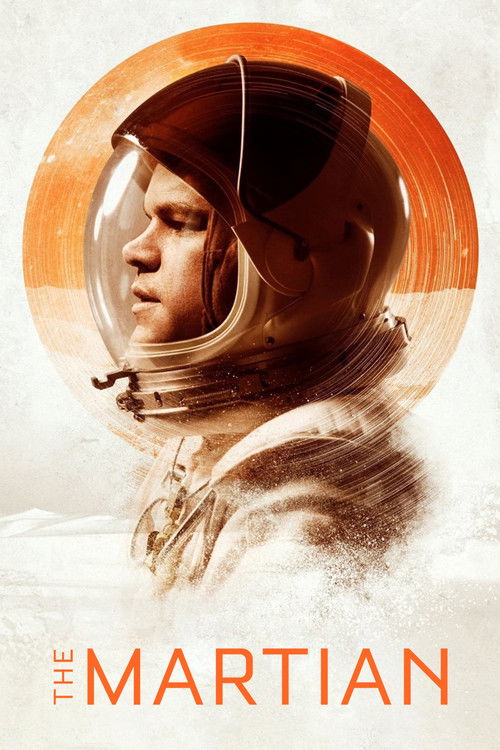
During a manned mission to Mars, Astronaut Mark Watney is presumed dead after a fierce storm and left behind by his crew. But Watney has survived and finds himself stranded and alone on the hostile planet. With only meager supplies, he must draw upon his ingenuity, wit and spirit to subsist and find a way to signal to Earth that he is alive.
I’ve seen this trick before: a lone figure against a vast, indifferent landscape, the camera pulling back until the human becomes a speck, then nothing. It’s a visual shorthand for isolation, a cinematic cliché that usually makes me roll my eyes. But in The Martian, Ridley Scott doesn’t just use the trick—he makes it feel new.
Maybe it’s because the landscape isn’t just a backdrop; it’s an active, suffocating force. Maybe it’s because the man at the center of the frame, Mark Watney, isn’t just waiting to be rescued. He’s too busy trying to grow potatoes in his own shit to indulge in existential despair.

Scott has spent a career building worlds that feel lived-in, even when they’re hostile. Alien’s Nostromo was a grimy, industrial beast of a ship, its corridors narrow and sweaty. Blade Runner’s Los Angeles was a neon-drenched nightmare, layered with rain and decay. Mars, in The Martian, is different. It’s not a gothic horror show or a cyberpunk dystopia.
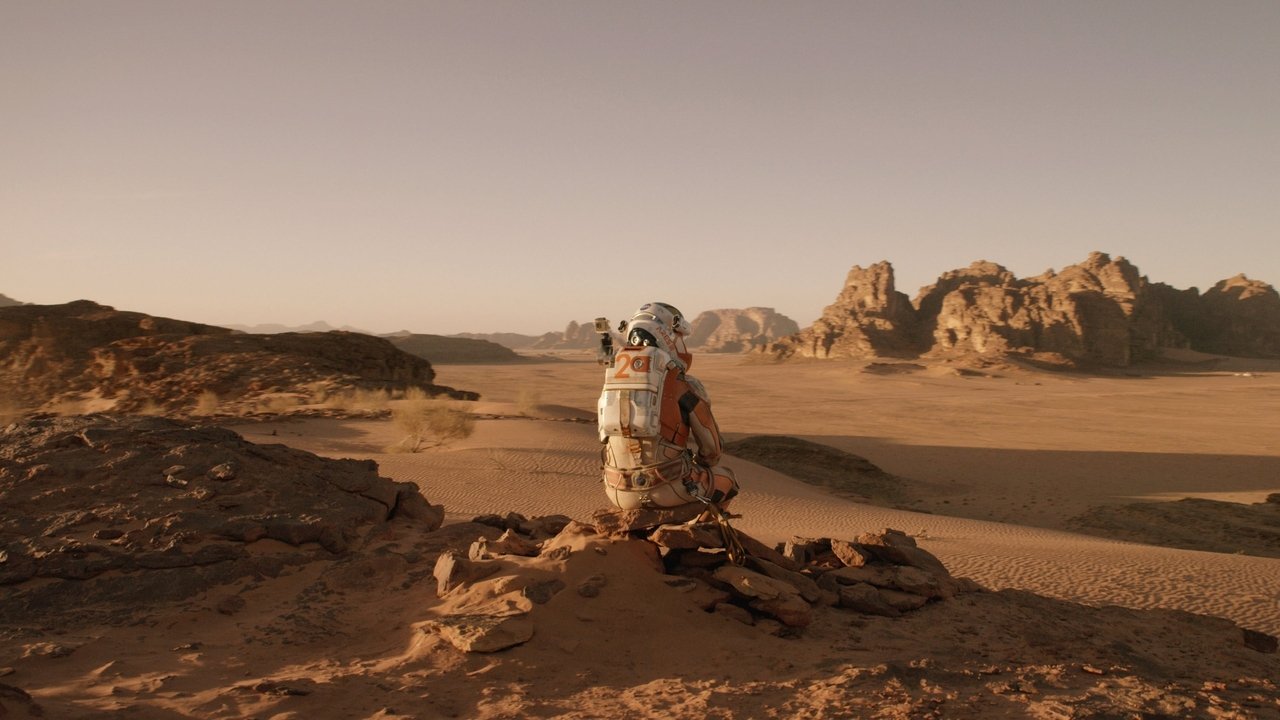
It’s just… there. A quiet, endless desert of red dust and sharp rocks, where the wind howls and the sun rises and sets with a kind of indifferent regularity. The planet doesn’t hate Watney.
It doesn’t even notice him. And that, in a way, is worse.
The film opens with a storm—one of those sudden, violent Martian tempests that NASA never saw coming. Watney (Matt Damon) is impaled by a flying antenna, his suit breached, his vitals flatlining. His crew, believing him dead, makes the agonizing decision to leave him behind.
When he wakes up, alone, the first thing he does isn’t scream or cry or rage against the universe. He pulls the antenna out of his side, patches himself up with duct tape, and gets to work. There’s something almost absurd about the moment—this guy just got left for dead on an alien planet, and his first thought is, Okay, how do I MacGyver this?—but Damon sells it.
He doesn’t play Watney as a hero. He plays him as a guy who’s really, really good at his job.
That job, as it turns out, is staying alive. Watney’s a botanist, which on Earth might not sound like the most thrilling profession, but on Mars, it’s the difference between life and death. With only a few months’ worth of food and no way to call for help, he turns the habitat into a makeshift farm, using his own waste as fertilizer to grow potatoes.
"A smart, engaging sci-fi survival story that balances humor and tension with Matt Damon’s charismatic performance at its core."
Viewers praise the film for its clever problem-solving approach to survival on Mars, with Matt Damon’s witty and resourceful portrayal of astronaut Mark Watney resonating strongly. The blend of scientific realism and humor keeps the tone light despite the high-stakes premise. Some note that the pacing occasionally drags, and the supporting cast, while solid, doesn’t always leave a lasting impression beyond the central performance.
When The Martian landed in theaters in 2015, it wasn’t just another space flick—it was a high-stakes survival story that blended Ridley Scott’s signature visual grandeur with Matt Damon’s everyman charm. The film, adapted from Andy Weir’s novel, followed astronaut Mark Watney as he fought to stay alive on Mars after being left behind by his crew. But how did Scott and Damon turn a lone botanist’s struggle into a blockbuster? The behind-the-scenes story reveals a mix of practical effects, on-set camaraderie, and Damon’s commitment to the role.
Matt Damon didn’t just act like a stranded astronaut—he looked the part. The actor leaned into the physical demands of the role, losing weight to sell Watney’s desperate situation. In one behind-the-scenes clip, Damon joked about "suffering on Mars," a nod to the grueling shoot that required him to appear increasingly gaunt as the story progressed [8]. While the evidence doesn’t specify exact diet or training details, the transformation was noticeable enough to earn mentions in promotional interviews.
Scott, known for his meticulous attention to realism, reportedly pushed for authenticity in every frame. Damon later recalled the director’s hands-on approach, emphasizing how Scott balanced the film’s scientific accuracy with its emotional core [5]. The result? A performance that felt grounded, even in the most outlandish scenarios—like growing potatoes in Martian soil.
Scott’s direction was key to The Martian’s success. Unlike typical sci-fi epics heavy on CGI spectacle, Scott opted for a mix of practical effects and digital enhancements to keep the film feeling tangible. Behind-the-scenes footage shows the cast and crew working in expansive sets designed to mimic Mars’ barren landscape, with Scott often seen overseeing shots to ensure every detail aligned with his vision [3][7].
The director’s collaboration with Damon was particularly fruitful. Scott reportedly praised Damon’s ability to convey intelligence and humor under pressure, a dynamic that became central to Watney’s character . The film’s $630 million global gross suggests audiences responded to this balance of wit and tension [2].
While Damon carried much of the film solo, the supporting cast—including Jessica Chastain, Kristen Wiig, and Jeff Daniels—brought depth to the story. Chastain, who played mission commander Melissa Lewis, later described the shoot as a "tight-knit" experience, with Scott fostering an environment where improvisation and collaboration thrived [5].
The film’s ensemble also included Michael Peña, whose comedic timing provided levity, and Sean Bean, who delivered one of his signature gravitas-filled performances as the NASA director. Behind-the-scenes clips show the cast sharing laughs between takes, a contrast to the high-stakes drama unfolding on screen [3].
The Martian stood out in 2015 for its optimism—a sci-fi film where ingenuity, not doom, drove the plot. Critics and audiences alike praised its blend of humor, science, and heart, with a 6.8/10 rating on SensCritique reflecting its broad appeal . While the evidence doesn’t dive deep into box-office specifics beyond the $630 million figure, the film’s success cemented Scott and Damon as a formidable director-actor duo [2].
For fans of behind-the-scenes drama, the real story of The Martian is less about conflict and more about craft: a director’s relentless pursuit of realism, an actor’s physical dedication, and a cast that made the impossible feel human.
Entertainment rumors and trivia aggregated from public reporting. Treat speculation as unverified unless a cited source confirms it.
Movies
Related titles ranked by rating and popularity.