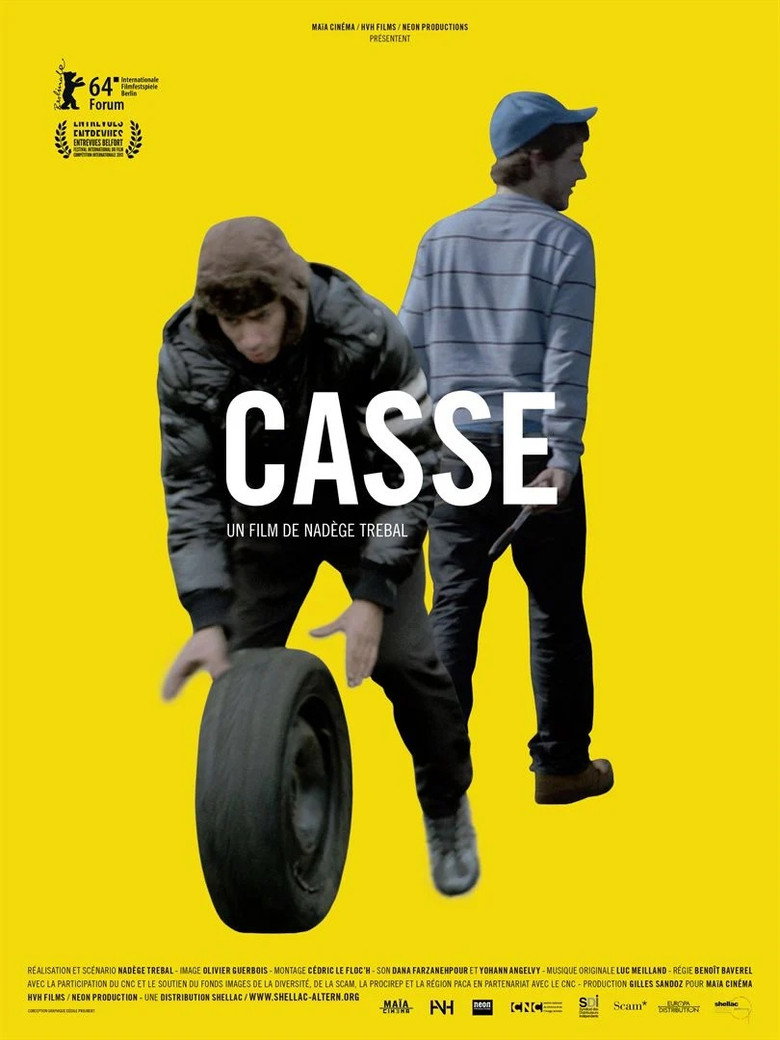
Casse poster background
Casse poster

Casse

6.0
2014
1h 27m
Documentary
Director: Nadège Trébal

Overview

Men come from around the world to unearth treasure from amongst the wreckage in a car scrap yard. Through this open air ocean of metal and motors, the world is assembled and disassembled with each encounter...

Reviews

AI-generated review
The Fabric of Forgotten Things

In a cinematic landscape currently dominated by multiverse fractures and high-octane dystopian thrillers, the arrival of *Wash It All Away* feels less like a premiere and more like a deep, stabilizing breath. Premiering this January amidst the noise of the 2026 winter season, this adaptation of Mitsuru Hattori’s manga is a masterclass in the *iyashikei* (healing) tradition. Yet, to dismiss it merely as "cozy" would be a disservice to its melancholic undercurrents. This is not just a show about doing laundry; it is a meditation on the tactile weight of memory and the quiet dignity of restoration.

The sunlit interior of Kinme Cleaning in Atami

The series anchors itself in Atami, a real-world seaside resort town that feels suspended in a gentle, sepia-tinted timelessness. Director Kenta Onishi, working with Studio Okuruto Noboru, has crafted a visual language that prioritizes texture over spectacle. The animation fetishizes the mundane in the best possible way: the translucent dance of steam rising from a hot spring, the heavy slump of wet wool, and the crisp snap of a dried sheet in the coastal breeze.

The camera often lingers on the hands of the protagonist, Wakana Kinme, as she works. In these moments, the show achieves a sensory lucidness that rivals the best works of Kyoto Animation. The act of cleaning is framed not as a chore, but as a ritualistic purification. The water doesn't just wash away dirt; it seems to dilute the chaotic static of the modern world, leaving behind something essential and true.

Wakana Kinme tending to laundry with the ocean in the background

At the center of this tranquility is Wakana herself, voiced with a fragile buoyancy by Sayumi Suzushiro. The narrative hook—Wakana has no memory of her past—could have easily veered into melodramatic mystery. Instead, the series treats her amnesia as a quiet tragedy that paradoxically allows her to be the perfect custodian of others' histories.

There is a profound irony in her existence: a woman without a past who dedicates her life to preserving the physical artifacts of other people's memories. When she removes a stain from a beloved dress or irons a suit for a festival, she is safeguarding moments she can never experience herself. Suzushiro’s performance captures this duality beautifully; her cheerfulness is genuine, but there is a hollow resonance in her quietest moments, a sense that she is a vessel waiting to be filled.

A quiet moment of reflection near the seaside

Ultimately, *Wash It All Away* asks us to consider what we choose to keep and what we allow to fade. In an era of digital impermanence, where "memories" are often just data on a server, the show argues for the soul of physical objects. It suggests that care is a form of love, and that sometimes, the most heroic thing a person can do is simply to make something clean again. It is a series that does not demand your attention with a shout, but earns it with a whisper, offering a necessary cleansing for the weary viewer.
LN
Latest Netflix

Discover the latest movies and series available on Netflix. Updated daily with trending content.

About

  • AI Policy
  • This is a fan-made discovery platform.
  • Netflix is a registered trademark of Netflix, Inc.

© 2026 Latest Netflix. All rights reserved.