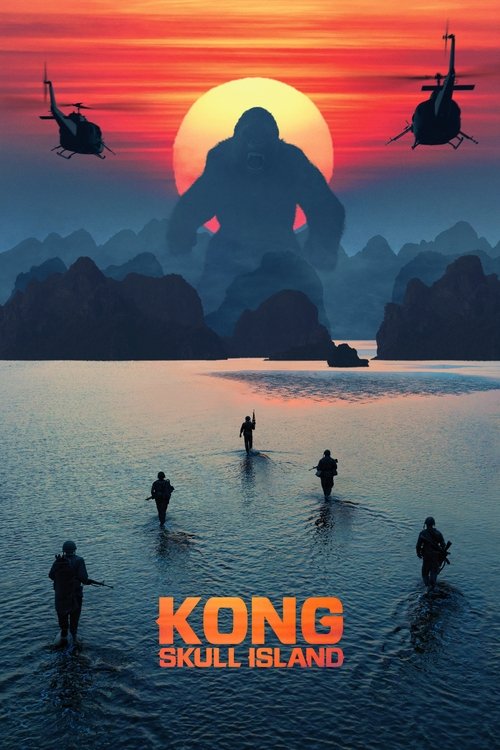
Napalm, Nostalgia, and a Very Big ApeVery early on, Jordan Vogt-Roberts’ *Kong: Skull Island* makes its intentions plain. It’s 1973, the Paris Peace Accords are still fresh, and a squadron of Hueys pushes through a permanent storm wall toward an uncharted Pacific Eden. Black Sabbath is pounding on the soundtrack. The soldiers look like they wandered in from *Platoon*. Then a palm tree comes flying out of nowhere and skewers a helicopter. It’s ridiculous, played with total conviction, and I was on board immediately. We’ve seen King Kong plenty of times, but not really like this: dipped in Vietnam dread, monster-movie pulp, and a cloud of psychedelic rock.

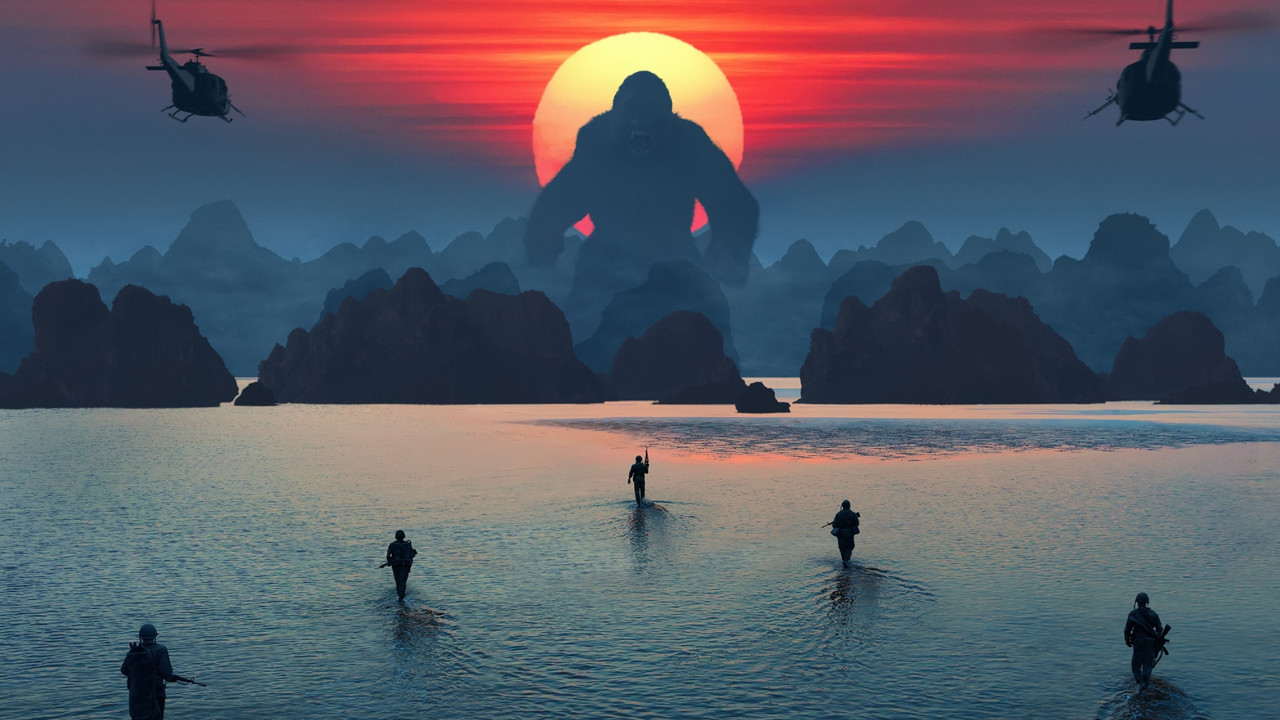
Vogt-Roberts is not shy about what he’s pulling from. *Apocalypse Now* hangs over the whole thing, from the blazing sunset framing Kong to the trip deeper and deeper into a hostile wilderness. But the creature work also carries traces of Hayao Miyazaki and games like *Shadow of the Colossus*. The director described the movie as a "funhouse mirror" take on Coppola’s 1979 war epic, which on paper sounds awful. Usually this kind of prestige-and-pop mashup ends in embarrassment. Here, the clash between serious cinematic language and shameless monster mayhem gives the film a strange charge. The story gets shaky. As pure audiovisual nonsense, though, it works like a charm.
Let's talk about the big guy's introduction. The first battle between Kong and the military escort is a masterclass in scale. Vogt-Roberts keeps much of it locked to the panicked viewpoint of soldiers trapped inside choppers that are spinning and breaking apart. Kong appears in flashes through cracked glass and whirring rotor blades. Then the frame opens up and there he is, standing in a field of fire, swatting helicopters from the sky like they’re flies. The cutting is hectic without ever turning muddy. Every step lands hard. It’s the kind of sequence that reminds you how horrifying a hundred-foot animal would be if it showed up anywhere near your neighborhood.

For all the digital chaos, most of the human cast is mainly there to stare upward and seem small. Tom Hiddleston broods in a fitted t-shirt, and Brie Larson carries her camera like armor. Samuel L. Jackson is the one who really locks into the movie’s wavelength. As Lieutenant Colonel Preston Packard, he’s basically Captain Ahab with an M16. The war is over, and Packard has no idea who he is without it. He needs something to fight, so he gives himself Kong. Even before everything falls apart, Jackson plays him like a man wound too tight, standing rigid and humming with misdirected purpose. Once the bodies start piling up, his stare goes cold and fixed, and that intensity gives the film some real ballast. He never plays it as a joke. He plays a man cracking open under grief and bruised ego.
Of course, the anti-war imagery sometimes bumps awkwardly against the movie’s need to deliver crowd-pleasing monster action. It’s hard to make a serious point about the futility of American intervention when the main event is a giant ape brawling with an underground skull-faced lizard. Writing for RogerEbert.com, Matt Zoller Seitz noted that "Vogt-Roberts is a rare American director who can tell a joke with a shot". That instinct for visual punch is what keeps the whole thing airborne when the script gets stuck explaining itself. One cut from a soldier falling into a monster’s mouth to somebody biting a sandwich back at base tells you exactly where this movie’s twisted sense of humor lives.

John C. Reilly also deserves credit for drifting into this sweaty macho hallucination and turning part of it into a deadpan comedy. As a WWII pilot stranded on the island for decades, he gives the movie room to breathe. His whole rhythm is gloriously mismatched with everyone around him. When he explains the island’s ecosystem, he sounds less like a hardened survivor than some eccentric stranger cornering you at a bus stop. Whether that tonal wobble feels like a bug or part of the charm will probably come down to how much genre chaos you can take.
*Kong: Skull Island* is a mess. It tries to be three movies at once, and a lot of very capable actors get left with scraps. Still, I keep coming back to its exact brand of lunacy. In an era full of grey, joyless blockbusters straining to feel important, there’s something invigorating about a film that scores giant-monster carnage with Creedence Clearwater Revival. It knows how dumb it is. Better yet, it knows how glorious that can be.