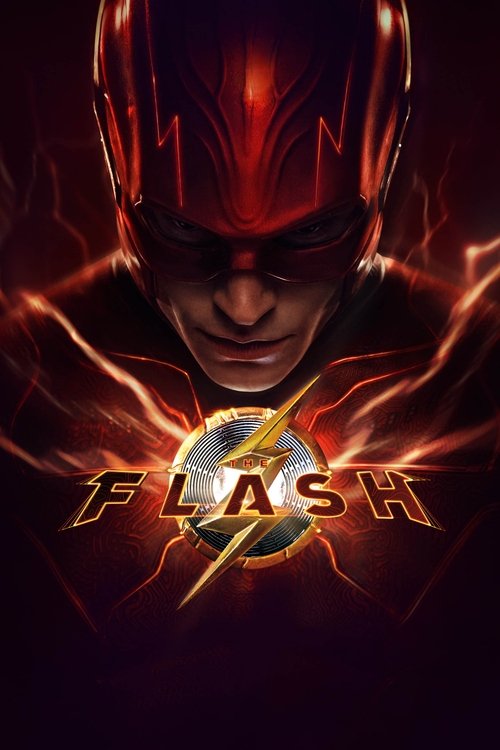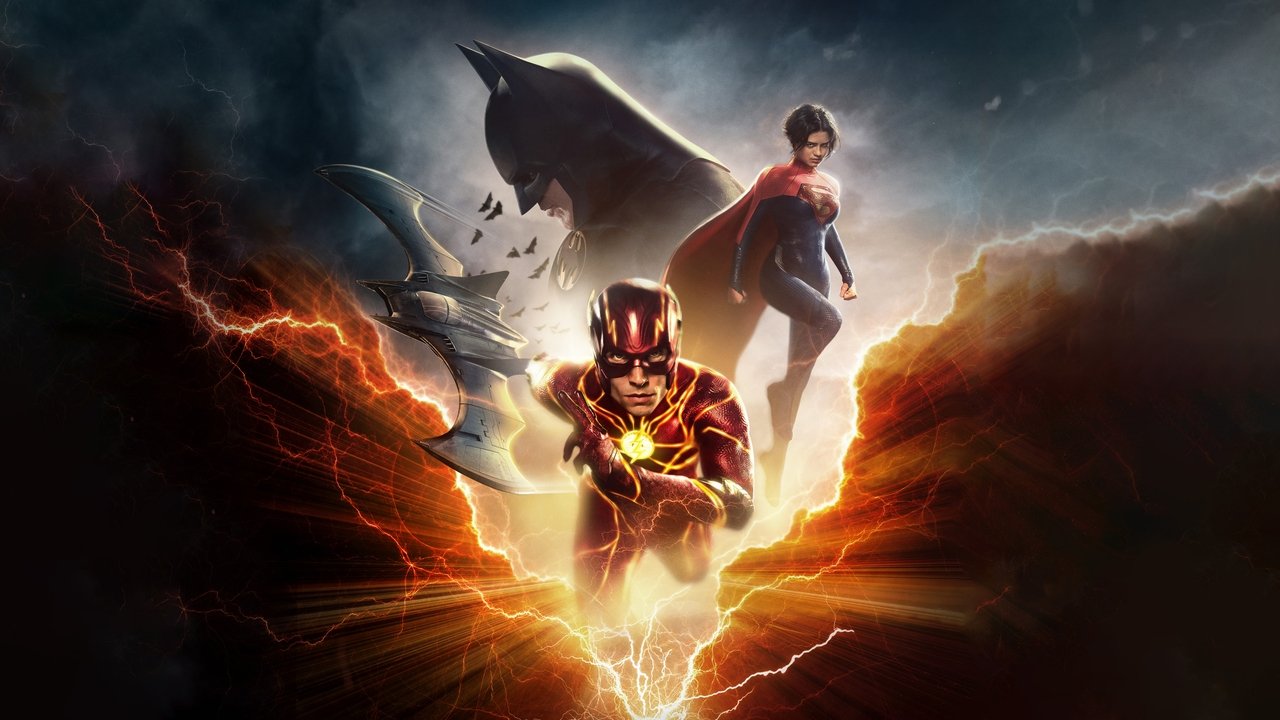

The Ghost in the ChronobowlIt’s hard to walk into a theater these days without tripping over a multiverse. The conceit has become the dominant crutch of modern studio filmmaking, a convenient way to smash intellectual properties together like action figures in a corporate sandbox. Going into Andy Muschietti’s *The Flash*, I was already exhausted by the premise. Add in the unprecedented real-world baggage of its star, Ezra Miller, and the fact that this movie serves as a messy swan song for a cinematic universe that's already being actively demolished behind the scenes, and the whole endeavor felt doomed before the lights even went down. Yet, beneath the crushing weight of its own existence, there's a surprisingly human pulse thumping away in the machinery.
Take the opening set piece. Barry Allen is called in to clean up a mess in Gotham City, arriving at a collapsing hospital ward where a half-dozen infants (and a therapy dog) are tumbling out of a shattered window. Time slows to a crawl. Barry has to geometrically plot their rescue mid-air while scarfing down stolen snacks to keep his hyper-metabolism from crashing. It’s a kinetic, Looney Tunes-style sequence that tells you exactly who this character is. But the babies themselves look entirely grotesque. They're weightless, gummy digital monstrosities that look less like human children and more like melted wax.

Muschietti has claimed that the uncanny, rubbery aesthetic of the film’s visual effects was a deliberate choice to reflect Barry’s warped perception of reality when moving at super-speed. I'm not really sure I buy that excuse. Whether it’s a genuine stylistic swing or just the byproduct of overworked visual effects houses, the result is a movie that constantly pushes you away visually just as it tries to pull you in emotionally. When Barry inevitably runs fast enough to break the time barrier—entering a stadium-like digital arena called the "Chronobowl" to rewrite the past and save his murdered mother—the scenery looks like a PlayStation 2 cutscene.
And yet, right in the center of that digital wasteland, the human element miraculously anchors the nonsense. Miller is tasked with playing two versions of Barry for most of the runtime. The original Barry is a portrait of tightly coiled trauma. His shoulders are hiked up to his ears, his gait is stiff and his eyes dart around like a cornered animal. The 2013 alternate-timeline Barry, who never suffered the loss of his mother, is loose-limbed, obnoxious, and utterly unburdened. Watching the older Barry quietly realize how much his tragedy fundamentally shaped his empathy is genuinely moving. The body language tells the entire story before the script even gets around to explaining it.

Of course, this alternate timeline is mostly an excuse to bring Michael Keaton back as Bruce Wayne. (The studio marketing department certainly wasn't going to let us forget it.) Keaton, now decades older and sporting a shaggy mane before donning the cowl, steps back into the role with an effortless, weary magnetism. But there's a distinct sadness to his inclusion here. Watch the way he stands rigidly in the Batcave, a prisoner of that iconic, neck-stiffening rubber suit. He isn't playing the Batman of 1989; he's playing a recognizable echo of him, trotted out to deliver classic catchphrases to an audience that just wants to remember what it felt like to watch movies thirty years ago.
It’s this exact push-and-pull that makes the film so wildly uneven. The review on RogerEbert.com nailed this chaotic energy, noting that the movie "keeps exceeding every expectation we might have for its competence only to instantly face-plant into the nearest wall". Every time it stumbles into a moment of genuine thematic resonance about the necessity of grief, it immediately distracts itself with a loud, hollow cameo or an unrendered explosion.

But I keep coming back to a quiet moment near the really end. Stripped of the franchise cross-pollination and the blinding CGI battles, Barry finds himself standing in a mundane grocery store aisle. He is staring at his mother, knowing he has to let her die in order to save the fabric of reality. The camera just holds on Miller’s face. The twitchy superhero affects drop away, leaving only a devastated child saying goodbye. It’s a small, devastatingly quiet choice in a movie that otherwise refuses to stop screaming. I just wish the film had trusted that silence a little more.