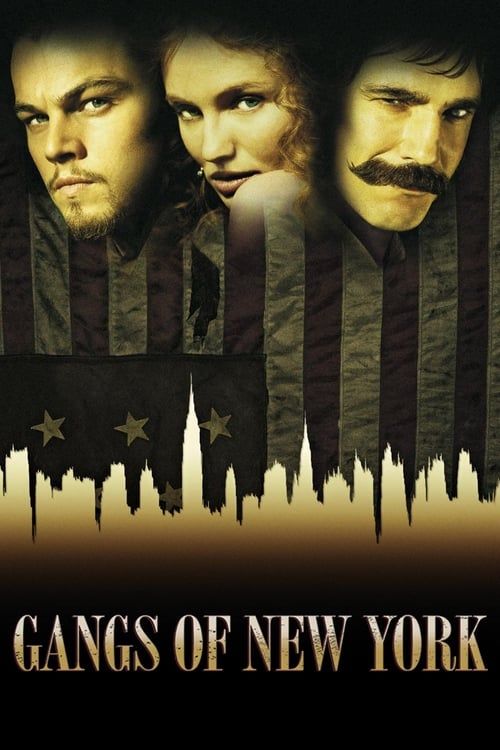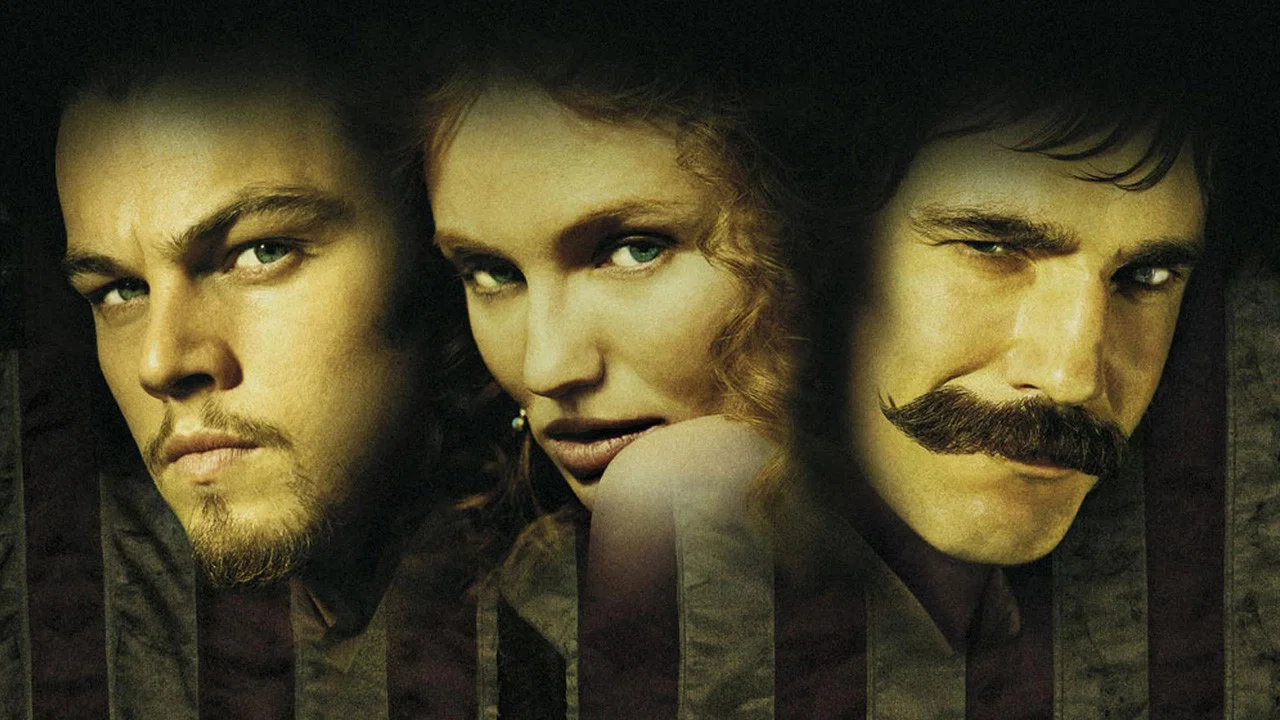

Leonardo DiCaprio
Amsterdam Vallon

“America was born in the streets.”
In early 1860s New York, Irish immigrant Amsterdam Vallon is released from prison and returns to the Five Points, seeking revenge against his father's killer, William Cutting, a powerful anti-immigrant gang leader. He knows that revenge can only be attained by infiltrating Cutting's inner circle. Vallon's journey becomes a fight for personal survival and to find a place for the Irish people.
Martin Scorsese opens Gangs of New York with a kind of civic nightmare: snow, mud, and men preparing to kill each other under a sky that looks already used up. I’ve always thought the movie’s first great idea is that New York doesn’t begin as a skyline. It begins as a wound.
The film, adapted from Herbert Asbury’s 1928 nonfiction book and made after Scorsese spent decades circling the subject of American violence, feels less like a historical drama than a grim origin myth told by someone who’s still angry enough to care. That anger matters. Without it, this could have been just a pageant of beards and bonnets.
With it, the movie becomes something messier: a story about who gets to call themselves native in a place built by arrivals.
What’s striking, on a revisit, is how personal the film feels inside all that public history. Scorsese is working in a mode he returns to often — the city as moral pressure cooker — but here the scale is bigger, dirtier, more theatrical. He’s not making a museum piece, though some of the production design does flirt with that danger; he’s staging a barroom civics lesson.
The New York of 1860 is a place where identity is worn like a weapon. Irish, nativist, political ward boss, priest, con artist, orphan, butcher’s boy — everyone is part of a faction, and faction is the closest thing the film has to a social language. If that sounds blunt, well, the movie is blunt on purpose.
Scorsese doesn’t romanticize the gangs. He watches them the way he might watch wolves establishing territory.
The conversation around Gangs of New York has always hovered between admiration and complaint. It was Scorsese’s long-gestating attempt to make an American epic, and people argued — then and now — about whether the film’s sprawl is exhilarating or merely sprawling. Some viewers come to it for Daniel Day-Lewis’s fireworks, others for the fact that it was one of Scorsese’s first big collaborations with Leonardo DiCaprio, who had already become a kind of 21st-century movie star but still carried a boyish pliability that the film uses well.
The thing that got discussed endlessly, though, was Day-Lewis’s Bill the Butcher: the stovepipe hat, the false eye, the knife work, the way he seems to enjoy language like a knife edge. That performance is so large it can eclipse the rest of the movie if you let it. I don’t think you should let it.
Day-Lewis, coming back to the screen after years away, brings a physical intelligence that makes Bill more than a cartoon tyrant. He stands with a chest-first swagger that looks almost self-parodic until you notice how carefully he listens. His head tilts.
Movies
Related titles ranked by rating and popularity.