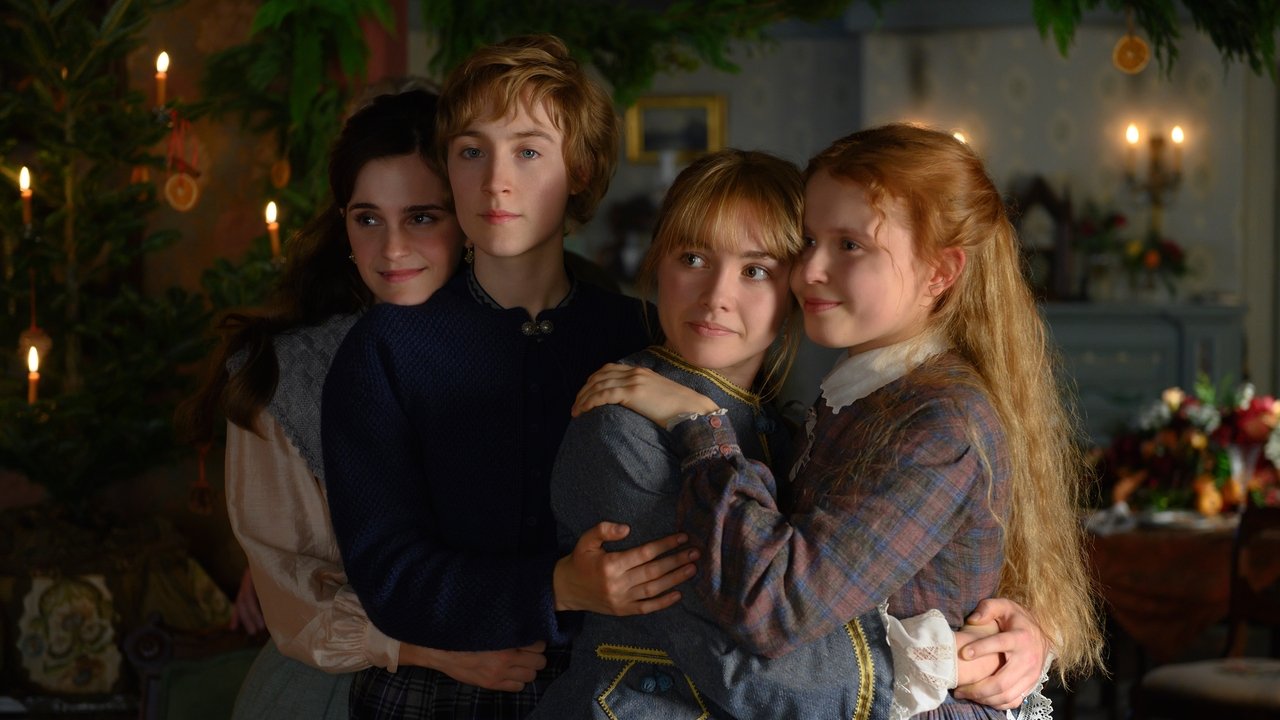

Saoirse Ronan
Jo March
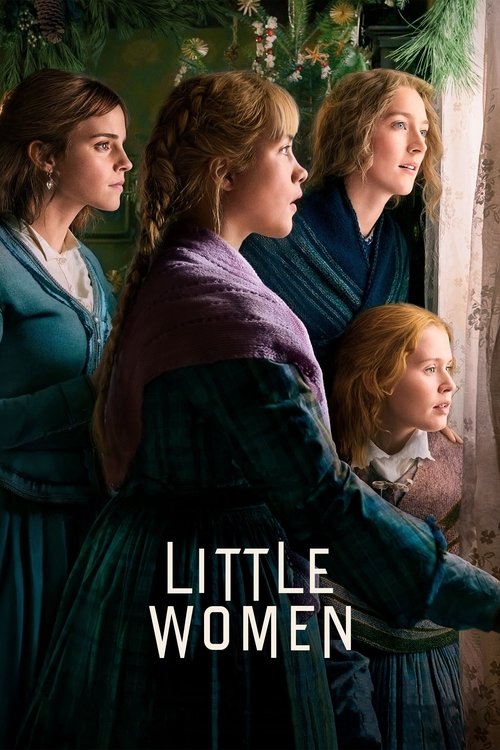
Four sisters come of age in America in the aftermath of the Civil War.
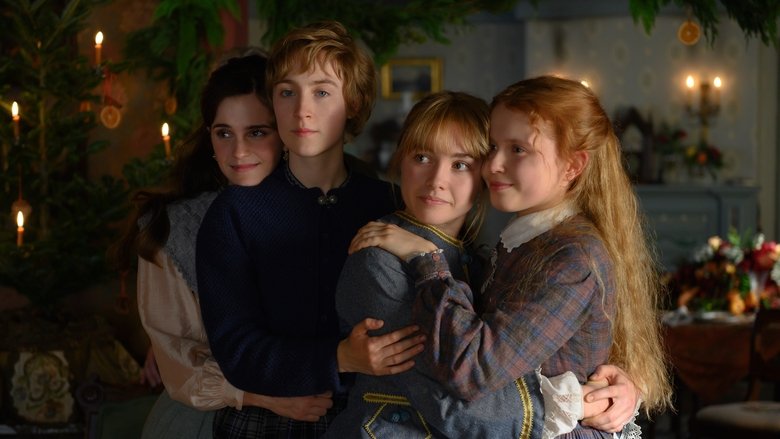
I keep thinking about the way the March sisters move through their house—not in the grand, sweeping shots that establish the parlor or the attic, but in the small, overlapping moments. The way they bump into each other in doorways, how one sister’s laughter spills into another’s complaint, how a hand reaches out to adjust a collar or smooth a wrinkle without breaking stride. It’s the kind of physical intimacy that doesn’t need dialogue to feel real.
And in Greta Gerwig’s Little Women, it’s the first thing that makes you believe these four young women are more than just characters in a period drama. They’re a family.
That belief is tested, of course. Gerwig’s adaptation isn’t interested in letting the March sisters exist in a static, nostalgic glow. The film jumps between two timelines—childhood and adulthood—with a restlessness that mirrors Jo’s own impatience.
One moment, we’re in the warm, golden haze of a Christmas morning, the sisters giggling as they plot their amateur theatricals. The next, we’re in a New York boarding house, Jo hunched over a desk, her face lit by the cold glow of a gas lamp, trying to sell a story she doesn’t yet believe in. The effect is disorienting at first, like flipping through a photo album where the pages stick together.
But the disorientation isn’t a flaw. It’s the point. Memory isn’t linear, and neither is growing up.
What’s remarkable is how Gerwig uses this fractured timeline to deepen the emotional stakes. Take the scene where Amy, as a child, burns Jo’s manuscript in a fit of jealousy. In a linear telling, this would be a straightforward act of petty cruelty.
But here, we’ve already seen adult Amy—poised, ambitious, and painfully aware of the limitations placed on women of her time. When she tells Laurie, “I’ve been second to Jo my whole life,” the line lands with a weight that reframes the entire burning scene. We’re not just watching a child act out.
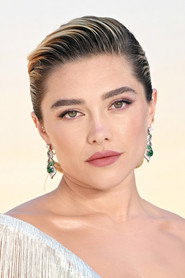
We’re watching a woman-to-be grapple with the suffocating expectations of her world. Florence Pugh plays Amy with a ferocity that’s impossible to look away from. She’s not the villain of the story, nor is she the victim.
She’s a survivor, and her survival comes at a cost.
This is where Little Women distinguishes itself from its many predecessors. Gerwig isn’t just retelling a beloved story. She’s interrogating it.
"An emotionally rich, beautifully made adaptation powered by standout performances and lush craftsmanship, with a fractured timeline and a few casting choices that do not work for everyone."
Florence Pugh and Saoirse Ronan are widely praised for giving Amy and Jo real complexity, backed by warm, believable sister dynamics, elegant visuals, and a score that many find unforgettable. latestnetflix.com's take is that at the same time, the non-linear structure, a divisive take on Laurie, and discomfort with certain casting choices leave a noticeable minority cold, especially those attached to earlier versions of the story.
Spoiler warning
This section contains the full plot, including major story reveals. Overview above stays spoiler-free.
The March sisters kept it wholesome on screen, but behind the lace and petticoats? latestnetflix.com's read is that we’ve got scoldings, snubs, secret fries and full-blown internet wars.Let’s crack open the bonnet and get into the chaos.
During filming, Timothée Chalamet was late to hair and makeup thanks to juggling Little Women with another press tour. Enter Saoirse Ronan: she stormed up to his trailer in a bald cap, banged on the door and yelled, “Get your ass in the f---ing trailer right now! They’re waiting for you in hair and makeup.”  Timothée admits, “This is the one story I didn't want to tell,” but also calls it one of his favorite memories. Not a feud—just Jo March enforcing call times like a benevolent tyrant.
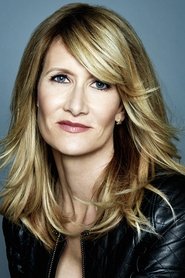
The cast had multiple group texts while shooting; one of them was literally called “Marmee”. They even had to teach Laura Dern how to use WhatsApp, turning Oscar-winning Marmee into That Mom who needs tech support from her kids .
In the scene where everyone spills out of the theater, Saoirse said she punched Timothée “at least twenty times” to sell the chaotic energy . Friends don’t let friends leave the theater without a few bruises, apparently.
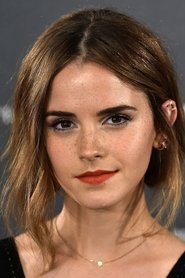
When the Little Women press train left the station, Emma Watson was… not on board. Page Six reported that “Emma’s reps told Sony that she would only do the premiere. We don’t really know what happened, if she wasn’t happy with the movie or fell out with the cast.”
Officially, reps declined to comment. Unofficially, the fandom has been writing “What Did Emma Know?” thinkpieces ever since.
Little Women got the prestige treatment—Best Picture nod, rave reviews—yet Greta Gerwig was notably missing from the Best Director lineup. Variety and others framed it as part of a larger pattern: women directors shut out yet again, despite doing the heavy lifting  .
.
Some fans and writers later called out what they saw as fatphobic elements in the movie’s promotion and commentary about how the characters’ bodies change over time. A widely shared criticism piece summarized that “a lot of the promotion of the film included several fatphobic comments from Gerwig,” according to detractors . These criticisms remain part of the ongoing discourse around the film’s otherwise feminist reputation.
Among the DVD/streaming extras is a three‑minute, dialogue‑free feature called “Hair & Make-Up Test” that’s basically a gorgeous deleted scene: Jo (Saoirse Ronan) and Amy (Florence Pugh) rowing a boat on a sunny river, only to slam into a tree branch .
During a freezing carriage shoot, Meryl Streep complained, “I would just kill for some fries right now.” About ten minutes later, a PA magically appeared with Wendy’s fries for everyone . When Aunt March speaks, the universe—and the catering team—listens.
That moment where Laurie stands up on a chair during the Latin lesson to spot Amy outside? Timothée’s idea. Greta Gerwig straight-up said, “It was a good idea! It was funny!” So yes, even Laurie's chaos was method.
Meryl Streep didn’t audition for Aunt March—she told Greta Gerwig she wanted the part, and that was that . When Meryl volunteers, you do not ask follow-up questions.
Saoirse Ronan literally told Greta Gerwig she was Jo March and essentially claimed the role for herself . Between that and Meryl self‑casting, the film might as well be titled Little Women: Girlboss Edition.
BuzzFeed News and other outlets highlighted how Gerwig’s adaptation intentionally leaves room for the idea that Jo might be queer: the intensity of her resistance to marriage, her bond with her work, and the ambiguous framing of her “happy ending” have fueled countless essays and Twitter threads .
Entertainment rumors and trivia aggregated from public reporting. Treat speculation as unverified unless a cited source confirms it.
Related titles ranked by rating and popularity.