
Lady Gaga
Ally Campana

Seasoned musician Jackson Maine discovers — and falls in love with — struggling artist Ally. She has just about given up on her dream to make it big as a singer — until Jack coaxes her into the spotlight. But even as Ally's career takes off, the personal side of their relationship is breaking down, as Jack fights an ongoing battle with his own internal demons.
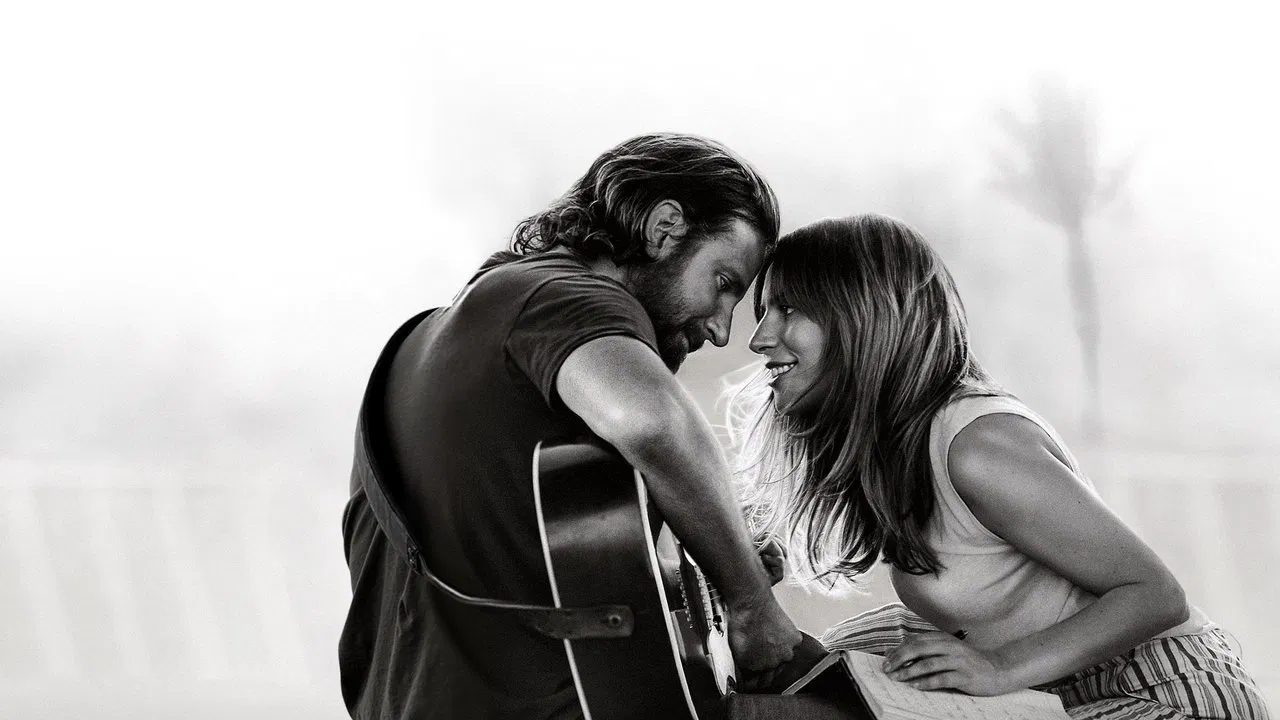
I keep coming back to the first time Jackson Maine looks at Ally like he’s discovered a missing note. Not a woman, exactly. Not yet.
More like the possibility of rescue, which is a dangerous thing to be seen as in a movie about addiction, ambition, and the way love can curdle into need. Bradley Cooper stages that meeting with a kind of easy inevitability, but what lingers for me isn’t the plot mechanics. It’s the atmosphere around them: the buzz outside the drag bar, the exhaustion in Ally’s face after work, Jackson’s loose-limbed confidence already showing the strain underneath.
He walks in carrying the movie’s central illusion — that inspiration can save you — and the film spends the rest of its running time quietly dismantling it.
This is, of course, the fourth major version of A Star Is Born, and that history matters. The story has always been about the price of visibility, but Cooper’s version arrives in a culture that’s a little more suspicious of stardom and a little more fluent in self-destruction. It isn’t a remake in the lazy sense.
It’s a remake that knows you know it’s a remake. The old bones are there — the discovering, the promoting, the sinking — yet the film feels tuned to the present day in the way fame now arrives through performance clips, viral exposure, and the strange intimacy of being watched by people who don’t know your name. Cooper, making his directing debut, doesn’t try to outsmart the material.
He leans into its melodrama and trusts the bruised sincerity of it.
That trust is the movie’s best quality and, sometimes, its problem. Cooper loves close-ups — not merely as a technical preference, but as a moral one. He keeps returning to faces mid-thought, to eyes that refuse the camera only by half, to mouths that start a sentence and stop because the feeling behind it is larger than language.
Lady Gaga, who’d already spent years turning herself into a public figure of performance and reinvention, uses that exposure beautifully. She doesn’t “play vulnerable” in the usual movie-star way. She tends to collapse inward instead.
Her shoulders round slightly; her mouth tightens before she sings, as if she’s bracing against the air itself. That physical self-protection gives the film’s rise-and-fall structure real emotional weight.
And then there’s the sound of it. Not just the songs — though the songs are obviously the movie’s bloodstream — but the way Cooper uses live performance to blur the line between self-expression and exposure. “Shallow” got talked about like a cultural event, and I understand why. It’s the rare contemporary pop duet that feels like an argument with a pulse.
Movies
Related titles ranked by rating and popularity.