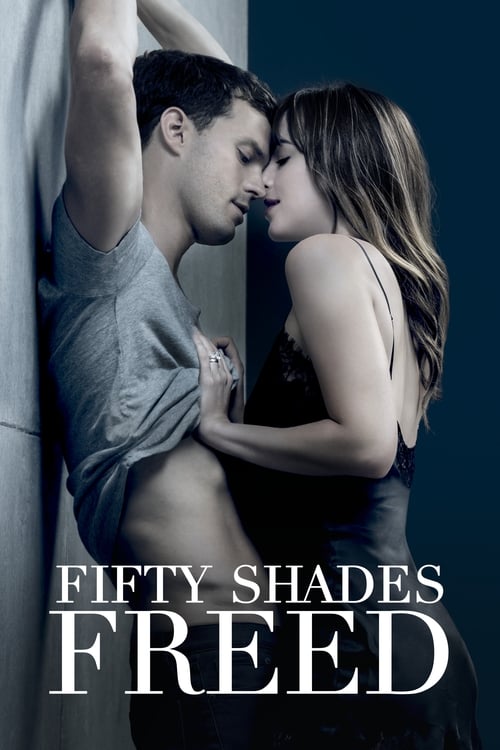

The Gilded Cage of Christian GreyI don’t think it’s a secret that James Foley’s *Fifty Shades Freed* isn’t really about sex. These three films have been selling themselves as a bold dive into kink, but by the time this final installment rolls around, the illusion is gone. What we’re actually watching is real estate porn. The big fantasy isn’t the Red Room—it’s the private jets, the endless parade of Audi SUVs, and that blissful freedom from ever having to glance at a price tag again. (Honestly, I’ve never seen a movie this devoted to fancy kitchen appliances.)

Early on, Christian (Jamie Dornan) and Ana (Dakota Johnson) exchange vows. It should be the emotional spine of the franchise. Foley frames it in suffocating close-ups, letting the scene exist on the actors’ faces before finally showing us the ornate ceremony. But look at Dornan’s posture—he stands like a man waiting for a bus in the rain: rigid, stiff, unengaged. He’s trapped. *The A.V. Club* was right to call his flat American accent a “personality-muffler,” but it isn’t just the voice. His entire body feels turned off. He moves through the frame like a handsome slab of stone, bereft of the dangerous charisma the script keeps promising he has.

Dakota Johnson, meanwhile, seems to be operating on a different wavelength. I’m constantly impressed by the way she survives these movies. While Dornan melts into the furniture, Johnson pushes back against the absurdity of the dialogue. Watch her eyes during the never-ending scenes where Christian tries to micromanage her life—whether he’s insisting she change her email address or sulking over her swimsuit choice. Her response is a kind of weary, maternal patience. She isn’t playing a submissive; she’s playing a woman worn out by an overgrown toddler. It’s oddly funny. She finds pockets of dry, ironic humanity in a script that only serves up soap opera theatrics and a half-baked kidnapping plot involving a disgruntled ex-boss.

Whether the film works depends entirely on how much glossy emptiness you can take. Foley—a director who once gave us the sweaty, desperate masculinity of *Glengarry Glen Ross*—leans fully into the campy excess. He seems aware that the romance was settled last time, so this chapter has become a bizarre travelogue stitched together with pop music montages. It’s silly. It’s shallow. But in its own weird, consumerist way, it finally admits what it is. The story doesn’t end with some profound emotional breakthrough. It ends with the ultimate capitalist fantasy: a big house, a massive bank account, and the isolation that only luxury can buy.