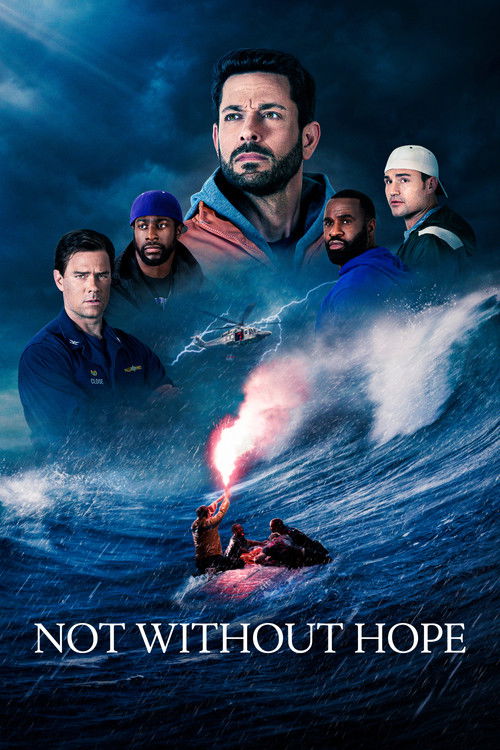
The Crushing Weight of WaterI’m not sure why stories about doomed people have such a pull, especially when you already know most of them aren’t making it out. Maybe it’s morbid curiosity. Maybe it’s the comfort of watching catastrophe from dry land. Joe Carnahan has spent a lot of his career circling that space where masculine confidence runs headfirst into a world that does not care. He did it with brutal clarity in *The Grey*, peeling Liam Neeson down to a desperate man with glass taped to his fists. In *Not Without Hope*, he swaps the Alaskan cold for the Gulf of Mexico and takes on the true story of a 2009 fishing trip that ended with three men dead, two of them NFL players, and one survivor clinging to the underside of a flipped boat.

At first, the film gets bogged down by the burden of remembrance. Carnahan and co-writer E. Nicholas Mariani, adapting Nick Schuyler’s memoir, have to establish the bond between Nick (Zachary Levi), Will Bleakley (Marshall Cook), Marquis Cooper (Quentin Plair), and Corey Smith (Terrence Terrell) without sanding them into saintly memorial figures. They don’t quite pull it off. The opening stretch is heavy with exposition, the kind that doesn’t sound like people talking so much as a screenplay nervously setting candles before the funeral. As the men load gear and trade portentous lines, you can feel the machinery of coming tragedy grinding away underneath.
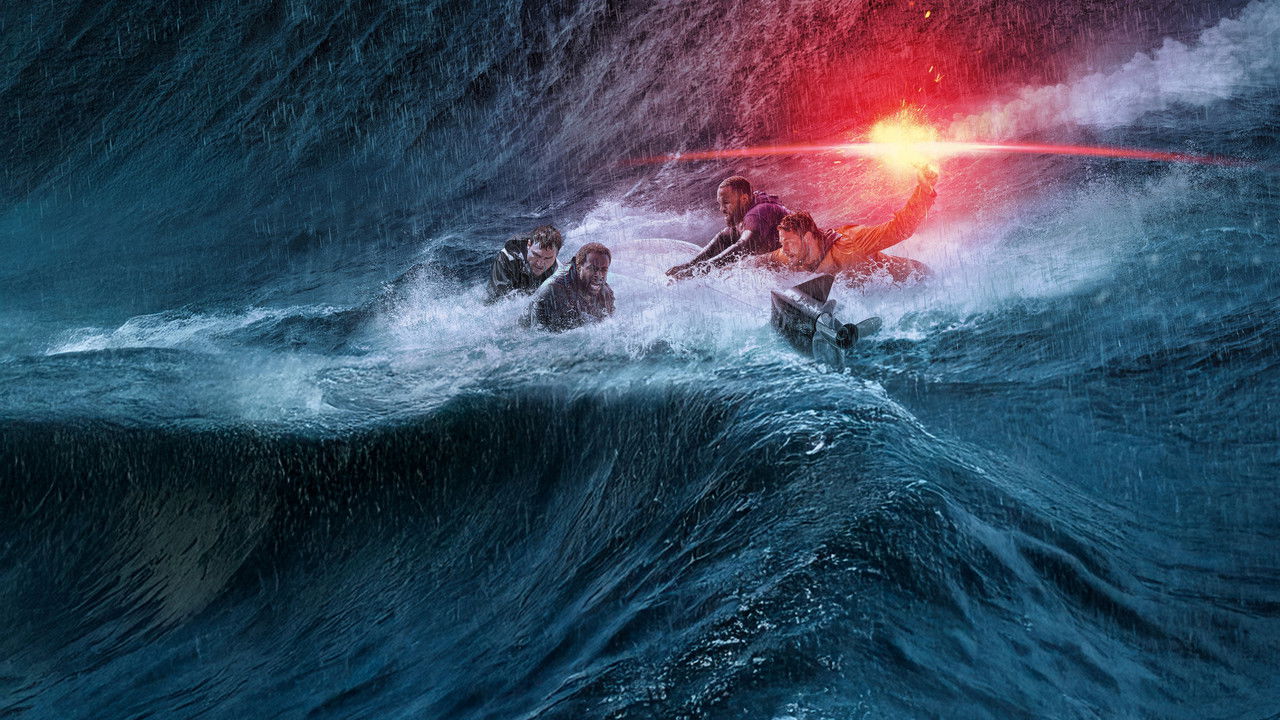
Then the storm arrives, and the movie suddenly wakes up. Once the anchor snags and starts dragging the stern under while the swells rise, Carnahan is back on familiar ground. He doesn’t need giant aerials to sell the disaster. He traps us right on the boat. William Bibbiani at TheWrap had it exactly right when he wrote that Carnahan "keeps his camera low, plunging it into the water like his audience is drowning too." That’s the movie at its best. The score falls away, leaving only the roar of wind and the ugly slap of water against fiberglass. You can almost feel the temperature drop with them.

Levi has the central burden here, and he mostly carries it. He’s spent the last few years moving away from the breezier charm of *Shazam!* into more openly earnest territory, and this role asks him to wear survivor’s guilt like extra weight. Physically, he’s convincing. Shot in huge water tanks in Malta, his body gradually loses all traces of confidence and settles into the rigid, involuntary panic of hypothermia. There’s a scene at sundown on the first night where his whole face locks up with exhaustion. No big speech about endurance, no grand statement about hope. He just looks wrecked. That simplicity helps. The movie only really loses its grip when it leaves the sea behind.

Every time the tension gets unbearable in the water, the film cuts to land and deflates itself. Suddenly we’re in standard rescue-movie territory, with Josh Duhamel as a square-jawed Coast Guard captain pacing around a command center and issuing sturdy, generic encouragement. Those scenes feel imported from another, far safer movie. Maybe they were a studio insistence, maybe not, but they drain momentum all the same. The contrast between the freezing men in the black ocean and the clean-lit competence of the rescue center softens the dread just when Carnahan has finally built it up.
Even with that structural drag and a few lapses into melodrama, the core still holds. At bottom, this is a film about the ugly randomness of survival. Why does one man make it while three others don’t? Carnahan doesn’t fake a comforting answer, because there isn’t one. What stays with you after the credits isn’t the dialogue or the mechanics of the rescue. It’s the image of four heads bobbing in a black, endless sea, shouting into wind that has no opinion about whether they live or die.