
Dane DeHaan
Lockhart
“All of us are human. None of us are immune.”
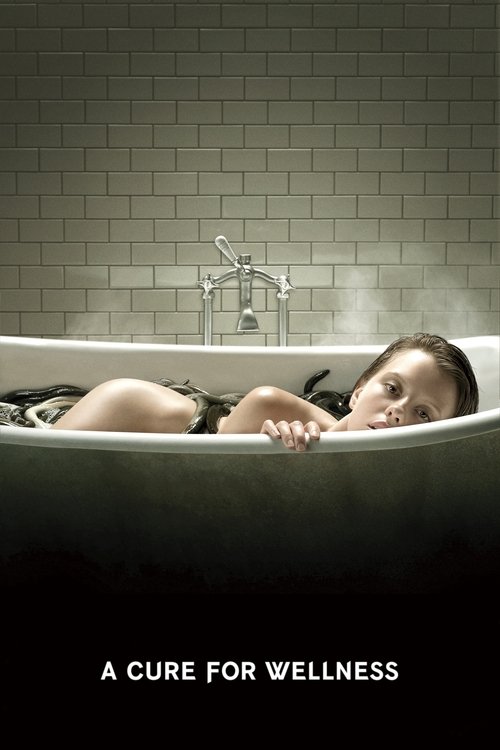
An ambitious young executive is sent to retrieve his company's CEO from an idyllic but mysterious "wellness center" at a remote location in the Swiss Alps but soon suspects that the spa's miraculous treatments are not what they seem.
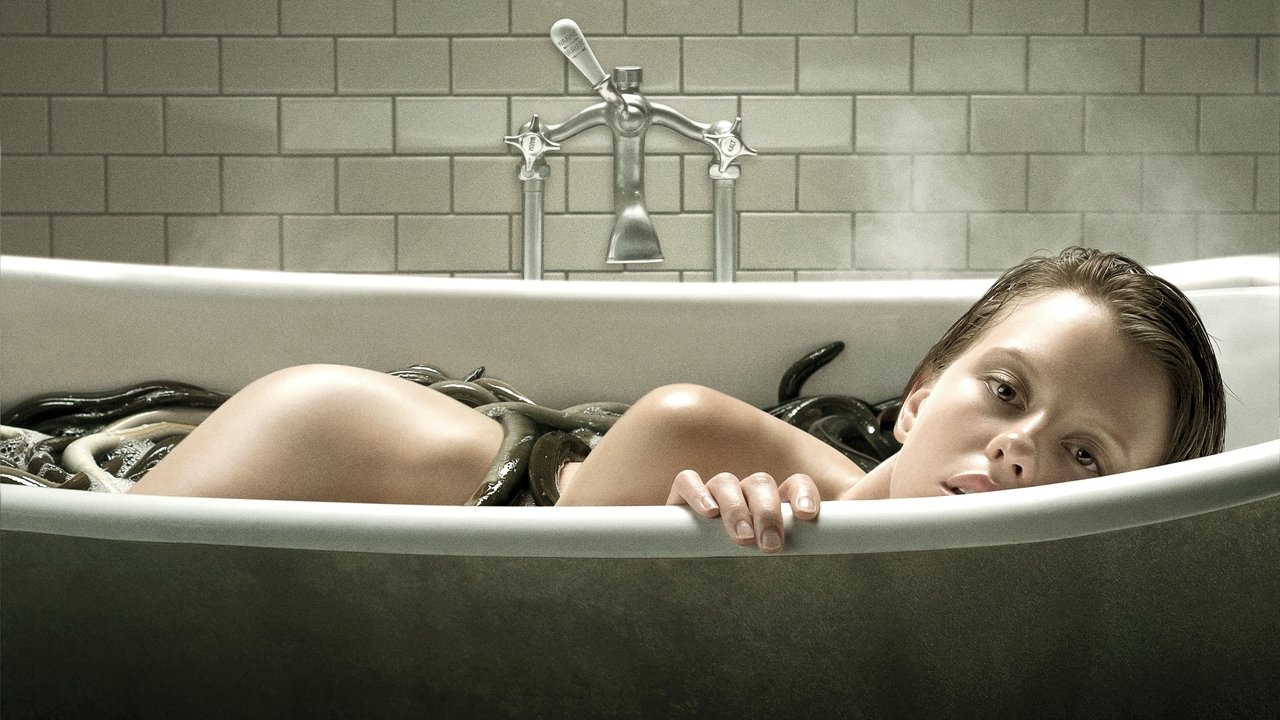
I still remember the first time I saw the trailer for A Cure for Wellness—not in a theater, but late at night, alone, on a laptop screen that suddenly felt too small. The images were lush, grotesque, and unsettling in a way that made me sit up straighter: a man submerged in water, his body writhing as something slithered against his skin; a grand, decaying spa where the air itself seemed to hum with menace; a woman with hollow eyes and a smile that didn’t reach them.
It was the kind of trailer that promised something rare: a big-budget horror film that didn’t just want to scare you, but to unsettle you, to linger in your mind like a half-remembered dream. By the time the film actually arrived in theaters, I was primed for something extraordinary.
What I got instead was something far stranger—a film that feels like it was made by a man who had been locked in a library of gothic horror for years and emerged with a head full of images, none of them quite fitting together. A Cure for Wellness is a movie that wants to be about something. It tries to be about capitalism, about the illusion of wellness, about the way institutions manipulate our deepest fears and desires. But somewhere along the way, the ideas get lost in the machinery, and what remains is a beautiful, bloated, occasionally brilliant mess.

Gore Verbinski is a director who has always been more interested in style than in substance—and I don’t mean that as an insult. His films are often visually sumptuous, even when their narratives feel thin. The Ring (2002) is a masterclass in atmospheric horror, a film where every frame feels drenched in dread, even if the story itself is little more than a series of escalating scares. Pirates of the Caribbean (2003) is a swashbuckling spectacle, a film that revels in its own absurdity while never quite bothering to make its characters feel like real people. And The Lone Ranger (2013), for all its flaws, is a film that commits to its vision, even when that vision is a sprawling, overstuffed Western that seems to exist in its own self-contained universe.
A Cure for Wellness feels like the logical endpoint of that approach. It’s a film that knows it’s a gothic horror pastiche, and it leans into that knowledge with a kind of manic glee. The opening shot—a slow, creeping zoom through the halls of a decaying sanatorium, the camera gliding past patients in various states of distress—is pure Shutter Island, but with a color palette that’s all sickly greens and blues, like the world has been dipped in a vat of antiseptic.
The spa itself is a marvel of production design, a labyrinthine nightmare of tiled corridors, grand ballrooms, and hidden chambers, all of it shot by Bojan Bazelli with a kind of hyper-saturated sterility that makes everything feel both enchanted and diseased. It’s the kind of place where you half-expect to turn a corner and find a room full of people in white coats, their faces stretched into unnatural smiles.
The problem is that the film never quite decides what it wants to do with all this atmosphere. The plot, such as it is, follows Lockhart (Dane DeHaan), a young, ambitious executive sent to retrieve his company’s CEO from a remote wellness center in the Swiss Alps. The CEO, Pembroke (Harry Groener), has sent a cryptic letter claiming that the spa has cured him of his ailments, and Lockhart’s bosses want him back in New York.
If you thought the movie was deranged, wait till you hear what was happening in the real world. From a studio literally spreading fake news to cursed locations and off-screen romance drama, the A Cure for Wellness universe is a whole mood.
Before “fake news” became a political buzzword, 20th Century Fox tried to weaponize it to sell this movie—and faceplanted spectacularly. The studio quietly launched bogus “local news” sites like the Sacramento Dispatch, Salt Lake City Guardian, Houston Leader, and NY Morning Post, then filled them with fabricated stories about hot-button Trump-era topics: secret meetings with Vladimir Putin, banning vaccinations, refusing disaster aid—none of it real, and nowhere labeled as movie promo  .
.
So yes, the studio basically became the villain of its own psychological thriller.
Behind the scenes, the film became a cautionary tale. With a reported $40 million budget and a worldwide gross of only $26 million, it was a stone-cold box-office bomb  .
.
Industry chatter since has often used A Cure for Wellness as shorthand for “ambitious, expensive, and absolutely not what audiences were buying.”
That iconic sequence where Dane DeHaan’s Lockhart is submerged in a tank and swarmed by eels was just as miserable to film as it looks—maybe more. According to behind-the-scenes reports, the original storyboard plan was to put real eels in the tank with him before everyone wisely decided that was insane and switched to movie magic instead .
That “Alps spa from hell” wasn’t just a pretty matte painting. A huge chunk of the film was shot at Germany’s infamous Beelitz-Heilstätten, a sprawling abandoned sanatorium with a real history of disease, war casualties, and ghost stories .
There’s a whole late–third act sequence you never saw in theaters. Director Gore Verbinski revealed that a collage-like sequence—nicknamed “Embryonic”—was cut from the first rough cut because it slowed the movie down right before Lockhart’s big epiphany .
Translation: the man turned his trash pile into bonus nightmare fuel.
While Mia Goth was playing ethereal, ageless Hannah, her real life was quietly its own genre film. She and Shia LaBeouf had a very public, very chaotic relationship that included a viral Las Vegas wedding in October 2016—officiated by an Elvis impersonator, naturally .
Official interviews promoting A Cure for Wellness politely swerved questions about the relationship, but the timing meant all that messy love life drama was swirling just off-camera while Goth floated around in white dresses on screen.
On Reddit, fans went full conspiracy corkboard over what the film is really about. One widely discussed theory on r/FanTheories argues that A Cure for Wellness is actually about Lockhart’s paranoid schizophrenia, with the castle, the spa, even the eels functioning as manifestations of his illness rather than literal events  .
.
Entertainment rumors and trivia aggregated from public reporting. Treat speculation as unverified unless a cited source confirms it.
Movies
Related titles ranked by rating and popularity.