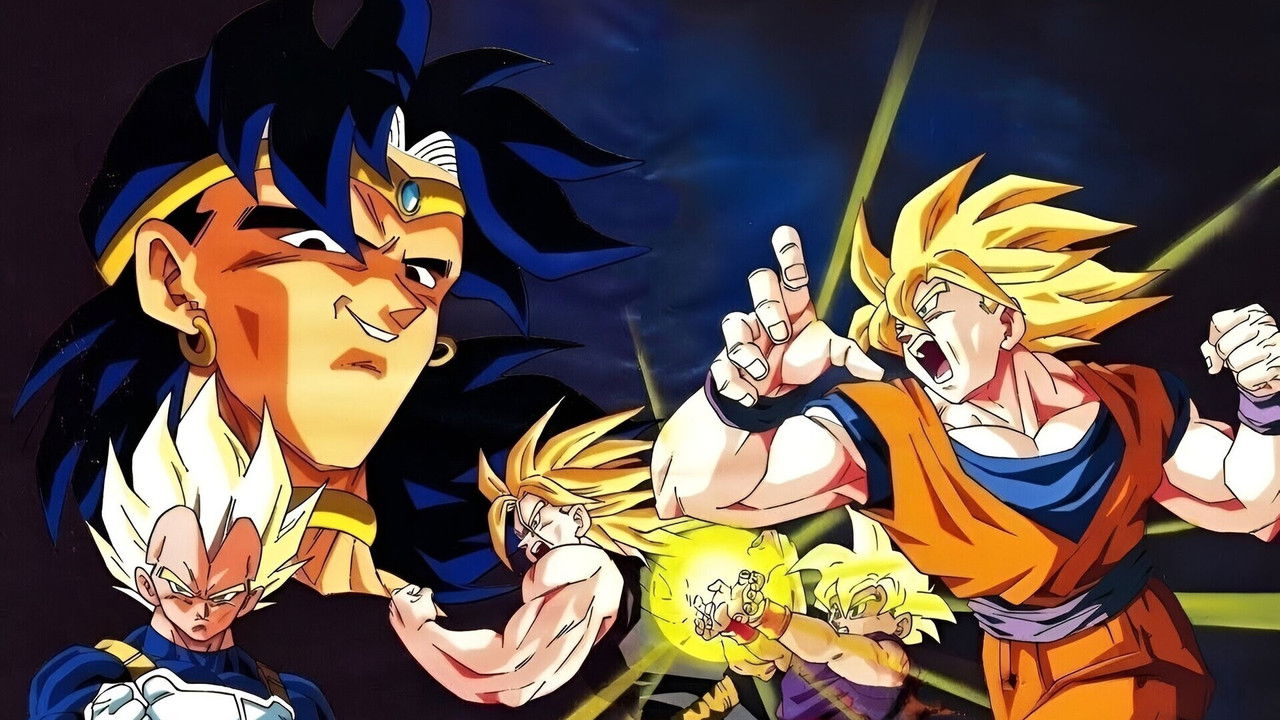
Dragon Ball Z: Broly - The Legendary Super Saiyan backdrop
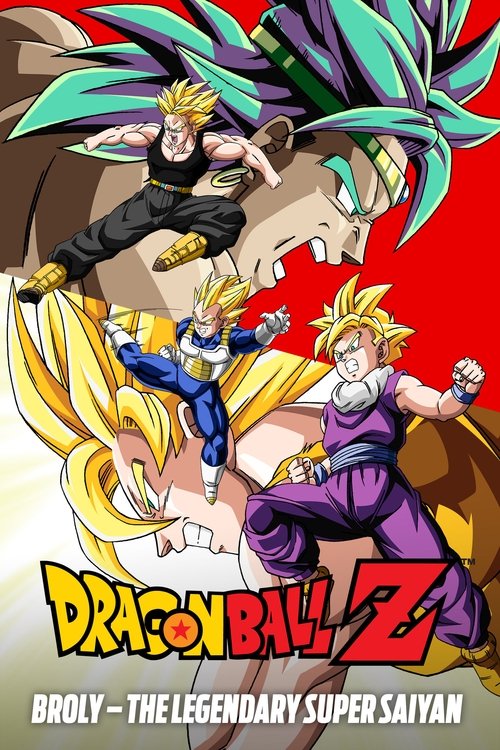
Dragon Ball Z: Broly - The Legendary Super Saiyan poster

Dragon Ball Z: Broly - The Legendary Super Saiyan

“As the legend foretold.”

7.2
1993
1h 10m
AnimationScience FictionAction

Overview

While the Saiyan Paragus persuades Vegeta to rule a new planet, King Kai alerts Goku of the South Galaxy's destruction by an unknown Super Saiyan.

Sponsored

Trailer

OFFICIAL TRAILER Official

Cast

Reviews

AI-generated review
The Ghost in the Machine

A lot of the time, the *Dragon Ball Z* universe operates on a logic of accumulation. The stakes rise, the muscles swell, and the energy blasts become brighter and more destructive. It is a relentless upward climb toward godhood. Still, watching *Dragon Ball Z: Broly – The Legendary Super Saiyan* (1993), what stands out to me is how it does not really fit that linear progression. Directed by Shigeyasu Yamauchi, this film arrives not as an evolution of the series’ internal struggle, but as a jagged interruption—a sudden, violent haunting from the past that refuses to be reasoned with.

The arrival of the Saiyan ship in the night sky

A specific, gnawing anxiety runs through the opening acts. Before the planet-shattering fights begin, there is this quiet, nearly oppressive dread as Vegeta, our resident prince of pride, is lured away to a new planet. He is blinded by the prospect of reclaiming his royal stature, while the audience—knowing better—watches him walk straight into a trap. It is a classic tragic construction, but Yamauchi directs it with a cold, almost detached sensibility. The palette is muted, heavy with shadows and the pallor of a dying star, stripping away the bright, primary-colored buoyancy that usually colors Goku’s adventures.

Then there is also Broly. Bin Shimada’s performance as the titular villain is fascinating because, for the majority of the runtime, he is not a character in the traditional sense. He is a reservoir of suppressed trauma. He is, quite literally, a vessel for a rage that predates the events of the movie by decades. When he finally speaks, it is not to monologue about world domination or complex villainous plans. It is a primal, singular fixation on Kakarot (Goku). There is no negotiation with Broly. You cannot talk him down because he is operating on the frequency of a wounded animal, not a sentient warrior.

Broly's terrifying transformation begins, his eyes glowing with rage

You could call the film a simple beat-em-up, but that misses the psychological texture of the violence. Look at how Broly moves when he is "the Legendary Super Saiyan." He is not just fast or strong; he is *inevitable*. His physique, illustrated with an almost grotesque hyper-detail, seems to strain against the very frame of the animation, a hulking mass of muscle that makes the other heroes look fragile, almost skeletal, by comparison. As *Empire* noted in a later retrospective of the franchise's cinematic output, the film succeeds because it leans into the "operatic scale of the destruction," turning combat into a form of visual poetry where the laws of physics are just polite suggestions.

I keep coming back to the way the film handles the relationship between Paragus and his son. It is a twisted, mirror image of the father-son bond that usually anchors the series. Where Goku and Gohan represent a lineage built on mutual protection and love, Paragus and Broly are tethered by a remote-control headband—a literal shackle keeping a nuclear bomb in check. It is cruel, pathetic, and undeniably dark for a property aimed at younger viewers. There is no redemption here, only the inevitable breaking of the chain.

Goku and Vegeta face off against the unstoppable power of Broly

Does it fully hold together as a narrative? Not completely. The plot is a rickety bridge designed solely to get these characters into a ring, and once they are there, the logic of "how" they defeat an invincible force gets a little hand-wavy (the ending comes off hurried, a deus ex machina in the shape of a collective punch). Still, maybe that is the point. *Broly* is not trying to tell a grounded story; it is capturing a nightmare. It is about that moment when you realize that no amount of training, no amount of noble intent, can protect you from the sins of your father or the wreckage of history. It is a film that leaves you feeling exhausted, not merely by the spectacle, but by the relentless, crushing weight of the anger on display. It is a relic of 90s animation, sure, but one that still casts a long, imposing shadow.

Clips (1)

Dragon Ball Z: Broly - The Legendary Super Saiyan (1993) | CLIP - Kamehameha | On iTunes now