
Emma Thompson
Nanny McPhee
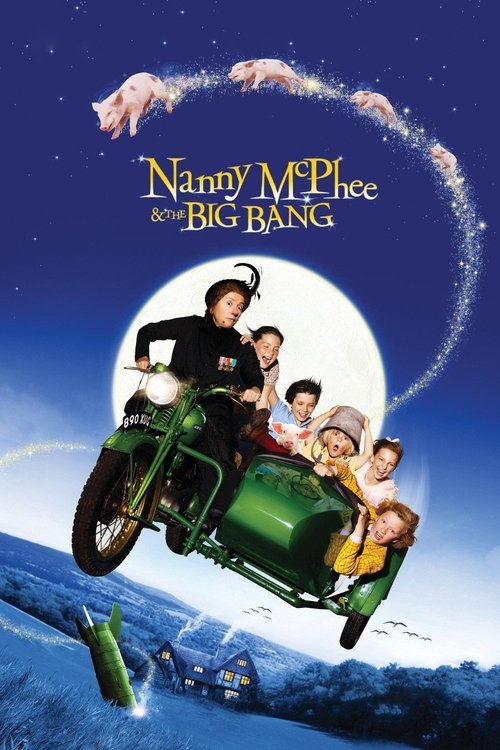
“The magic's back, warts and all.”
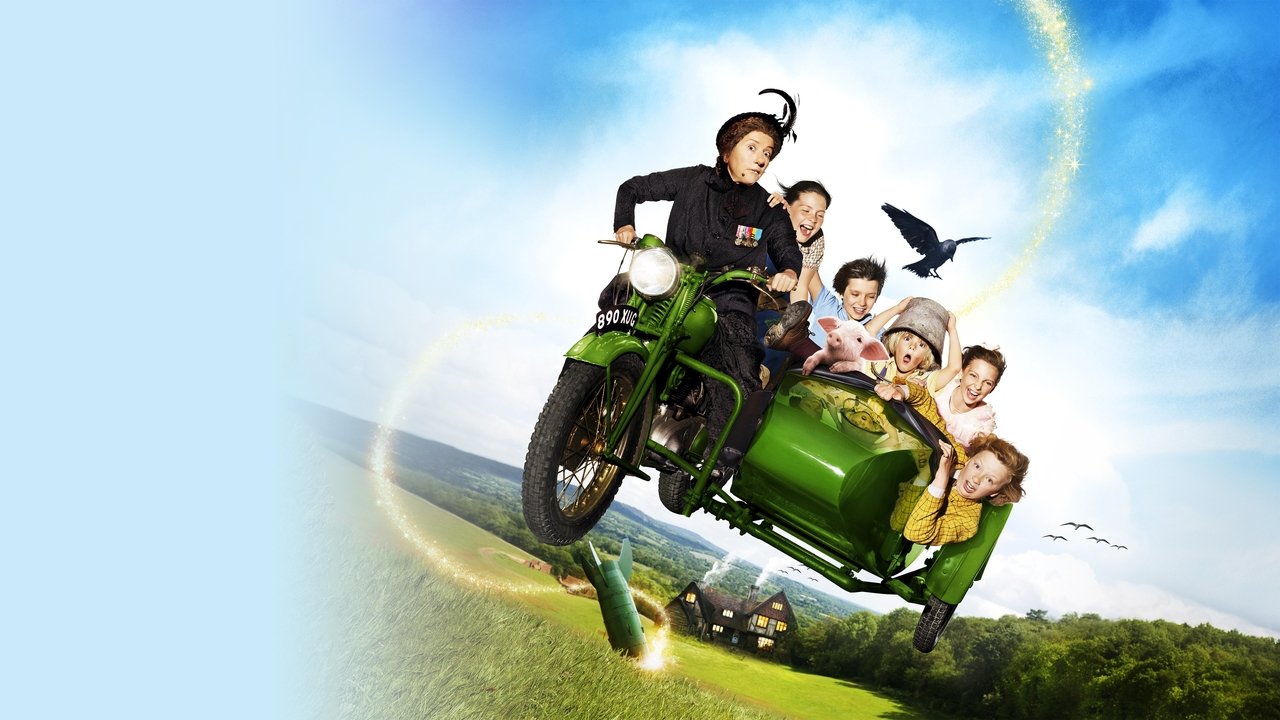
Nanny McPhee appears at the door of a harried young mother who is trying to run the family farm while her husband is away at war. But once she’s arrived, Nanny discovers that the children are fighting a war of their own against two spoiled city cousins who have just moved in. Relying on everything from a flying motorcycle and a statue that comes to life to a tree-climbing piglet and a baby elephant, Nanny uses her magic to teach her mischievous charges five new lessons.
I keep thinking about the way Nanny McPhee and the Big Bang arrives: not with a thunderclap, but with mud, shouting, and a household already half in ruins. That’s the movie’s real governing idea. Susanna White doesn’t treat childhood as a state of innocence needing protection; she treats it as a battlefield where pride, jealousy, boredom, and affection are all getting trampled at once.
That may sound severe for a family fantasy, but the film is at its best when it understands that children don’t need to be flattered. They need to be watched carefully, then mildly humiliated by magic.
Emma Thompson’s Nanny McPhee is still one of the great comic inventions of modern family cinema, and I mean that sincerely. She’s not warm in the usual screen-nanny way. She’s blunt, asymmetrical, and physically a little alarming, with that carved wooden nose and those unblinking pauses that make everyone around her look as if they’ve been caught stealing biscuits.
White and Thompson lean into the absurdity of her appearance without turning it into a gag the movie can’t sustain. Instead, the look becomes a kind of moral weather system. When Nanny is in frame, the film seems to remember that discipline is less about punishment than about making people see themselves clearly — which, for children and adults alike, is often much harder to endure.
This sequel is easy to dismiss if you come at it expecting a glossy update of the first film. But it’s more interesting than that. It’s a wartime family comedy that refuses to make war itself the main event.
The father is away, the farm is under strain, the mother is overextended, and the children are filling the vacuum with small acts of sabotage. White, whose background includes television drama and a keen eye for ensemble dynamics, handles the material like someone who knows domestic life can be just as anarchic as any battlefield. That feels especially pointed in a film released in 2010, when British family entertainment was often split between polished fantasy spectacle and grimly “realistic” children’s drama.
This movie sits somewhere else: in the middle of the mess, with its sleeves rolled up.
There’s a reason the film’s most talked-about images are the impossible ones. The piglet climbing a tree. The baby elephant making its way into the children’s emotional life by sheer presence.
Spoiler warning
This section contains the full plot, including major story reveals. Overview above stays spoiler-free.
Movies
Related titles ranked by rating and popularity.