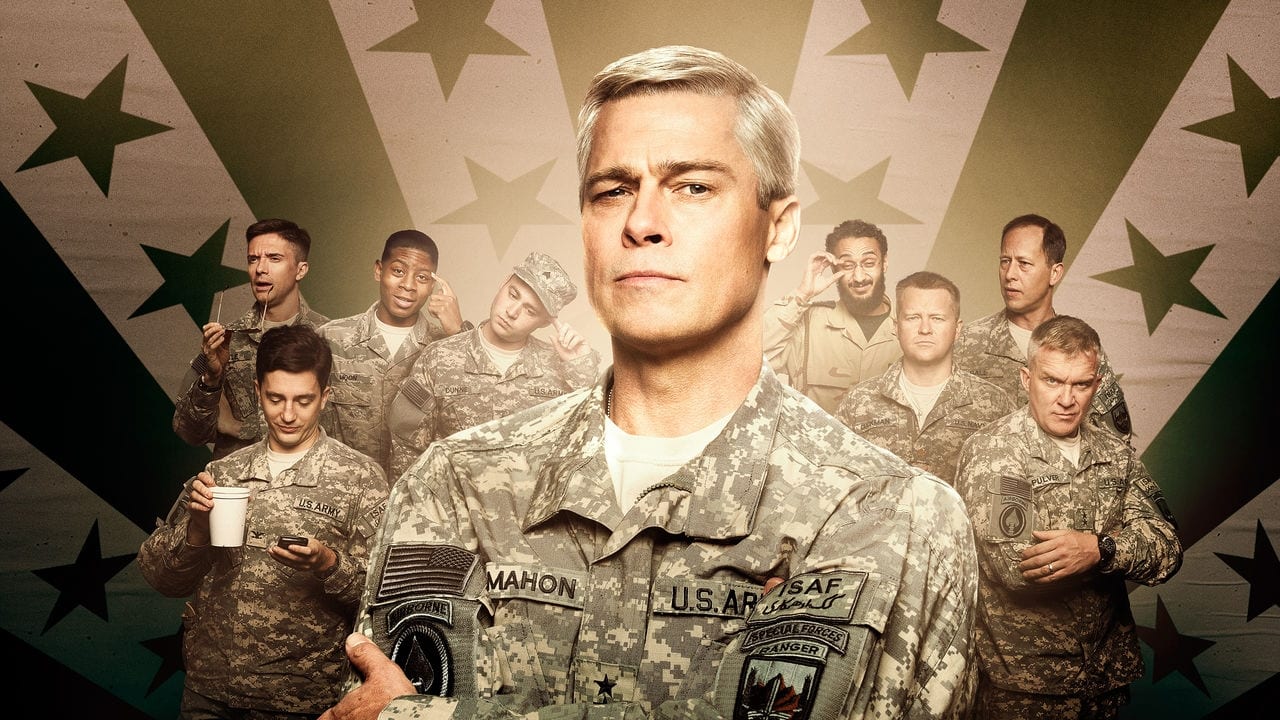

Brad Pitt
Gen. Glen McMahon
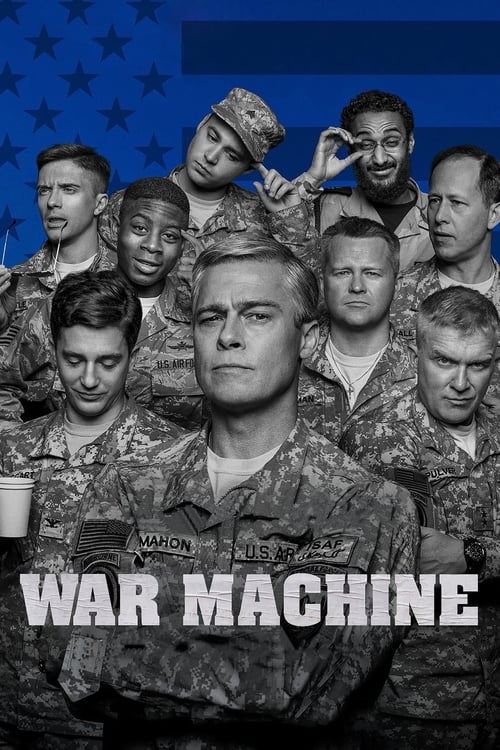
“We're gonna liberate the sh** out of you.”
A rock star general bent on winning the “impossible” war in Afghanistan takes us inside the complex machinery of modern war. Inspired by the true story of General Stanley McChrystal.
I keep thinking about Brad Pitt’s walk. Not the swagger of Fight Club or the weary lope of The Assassination of Jesse James, but this strange, stiff-legged stomp—like a man who’s been told he’s the smartest person in every room and has spent years perfecting the gait to prove it. In War Machine, Pitt plays General Glen McMahon, a fictionalized version of Stanley McChrystal, the real-life U.S. commander whose Afghanistan strategy was undone by a Rolling Stone profile.
The film is a satire, or at least it wants to be. But satire requires a target sharper than a man who moves like he’s afraid his knees might betray him.
That walk is the key to War Machine’s messy genius. It’s not just a performance choice; it’s the film’s entire thesis, rendered in posture. McMahon strides through briefings and battlefields with the same unshakable confidence, whether he’s addressing NATO allies or a room full of skeptical Afghan villagers.
The camera lingers on his squared shoulders, the way he plants his feet like he’s bracing for an argument he’s already won. It’s absurd. It’s also, somehow, exactly right.
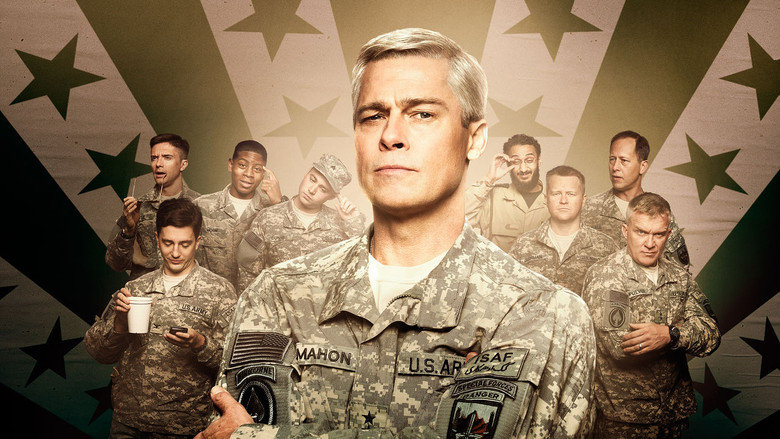
David Michôd, the director, has said he wanted to make a film about the absurdity of modern war, and War Machine certainly delivers on that front—just not in the way you’d expect. This isn’t Dr. Strangelove or Catch-22, where the satire is surgical and the laughs land like punches.
Instead, it’s a film that often feels like it’s tripping over its own feet, lurching between broad comedy and grim realism without ever quite finding its balance. And yet, in that stumble, it captures something true about the way power moves through the world: not with grace, but with the awkward, relentless momentum of a man who refuses to question whether he’s going in the right direction.
The film’s best moments come when it leans into this awkwardness. There’s a scene early on where McMahon addresses a room of NATO officials, his voice a mix of condescension and forced camaraderie. He’s selling them on his plan to win the war in Afghanistan, a plan that involves more troops, more money, and more faith in his own infallibility.
"An uneven but thought‑provoking anti‑war satire, carried by a bold Brad Pitt performance and undercut by muddled tone and sluggish pacing."
Brad Pitt’s heightened, caricatured general and a strong ensemble cast stand out, and the story’s critique of US policy in Afghanistan is praised as sharp, clear, and occasionally cathartic. latestnetflix.com's read is that at the same time, the blend of absurd comedy and bleak drama feels disjointed for many, with jokes that rarely land, stretches that drag, and a structure that can resemble an overlong sketch more than a cohesive film.
Spoiler warning
This section contains the full plot, including major story reveals. Overview above stays spoiler-free.
Brad Pitt wanted to play a general who looks like Stanley McChrystal and talks like a cartoon. This is the 2017 Netflix film, not the later title that borrowed the name. New Regency and RatPac had Michael Hastings' book The Operators. David Michod wanted a comedy, not a heartland war movie. The Hollywood Reporter said the backers wanted the $60 million to $70 million budget cut. Plan B said no. latestnetflix.com's view is that Netflix paid $60 million in June 2015 and took the picture.

Michod later told Inverse the smell test was immediate. "It's all about risk aversion. It's a bold and unusual movie that was never going to be cheap to make. And no one could tell how it was going to play in Middle America. We still don't." They did not ask the U.S. military for help. They knew the answer. The UAE let them use hardware. Some days the schedule moved because that military was busy in Yemen.
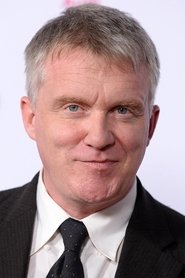
The names changed on purpose. Pitt is General Glen McMahon, not McChrystal. Anthony Michael Hall's intel chief is loosely Mike Flynn. Scoot McNairy's Rolling Stone writer is loosely Hastings, who died in a 2013 car crash after the article that ended McChrystal's command. Michod told Inverse he never approached the real general. "I wanted it to be much larger than one particular guy." The performance, he said, would be "much bigger and wilder than McChrystal is."
That wildness is the fight. Entertainment Tonight posted set photos that made Pitt look, in their headline, like a Ken doll. Foreign Policy's Sarah Chayes, who had been in Kabul with the real team in 2009, wrote that Pitt's out-of-touch caricature "could not be less accurate." War on the Rocks called the clownish rendering "vastly at odds with the thoughtful and charismatic McChrystal." The movie still uses Obama, Hamid Karzai, and a Rolling Stone takedown as plot. Rotten Tomatoes landed at 48 percent.
Tabloid heat followed anyway. Pitt shot silver-haired in London, then Abu Dhabi standing in for Kabul, then Ras al-Khaimah as Pakistani villages. The National noted Angelina Jolie flew into the emirate while he was there. Two years later he flew to Mumbai for a High Street Phoenix screening and a photo with Shah Rukh Khan. Russell Crowe turns up uncredited at Sydney Airport as the replacement general. Nick Cave and Warren Ellis scored it. Netflix dropped the film on May 26, 2017.
The source text is Hastings' 2010 Rolling Stone piece "The Runaway General" and the book that followed. Obama summoned McChrystal the day after the story leaked. The general resigned. The movie spends two hours arguing that the magazine piece was only the last shove. Pitt's warrior-monk insomnia and the run come from the book. The voice is Michod's, and a lot of people who knew the war hated the joke.
Entertainment rumors and trivia aggregated from public reporting. Treat speculation as unverified unless a cited source confirms it.