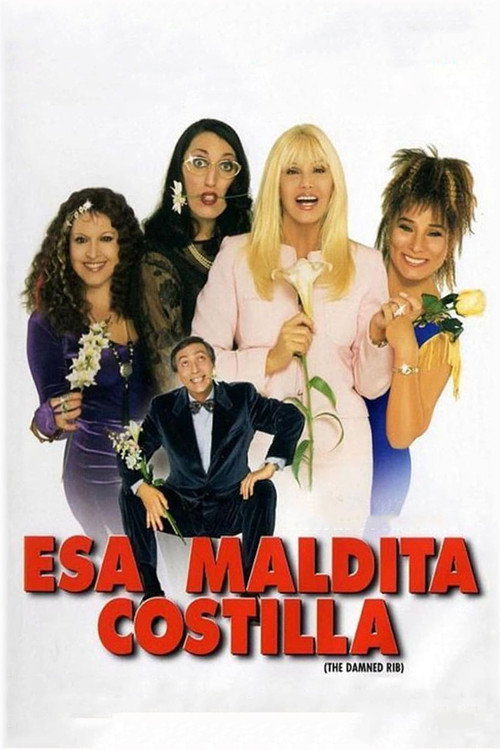

Movie poster for The Damned Rib (1999)

The Damned Rib

“The most hilarious romantic comedy!”

1999
1h 32m

Overview

Four women decide to go together to have fun at a men's strip show. On the trip, the taxi driver pays attention to their conversation where each one tells the others her ideal of a man. Since then, he decides to pass himself off as the ideal man.

Cast

12 people

Reviews

4 min read

The Rib That Got Away

I’ve seen this trick before. Four women, freshly bruised by love, pile into a taxi and start listing their dream men like they’re ordering off a menu. The driver, eavesdropping, decides to play the part—because of course he does.

It’s the kind of premise that promises a fizzy, forgettable night at the movies, the cinematic equivalent of a glass of cheap cava: sweet, bubbly, and gone by morning. But The Damned Rib (Esa maldita costilla) isn’t just a late-’90s Argentine rom-com. It’s a time capsule of a very specific cultural moment, one where the wounds of Susana Giménez’s very public divorce were still fresh, where Almodóvar’s shadow loomed large over every Spanish-language comedy, and where the idea of women “taking back” their desires was both a marketing hook and a half-hearted punchline.

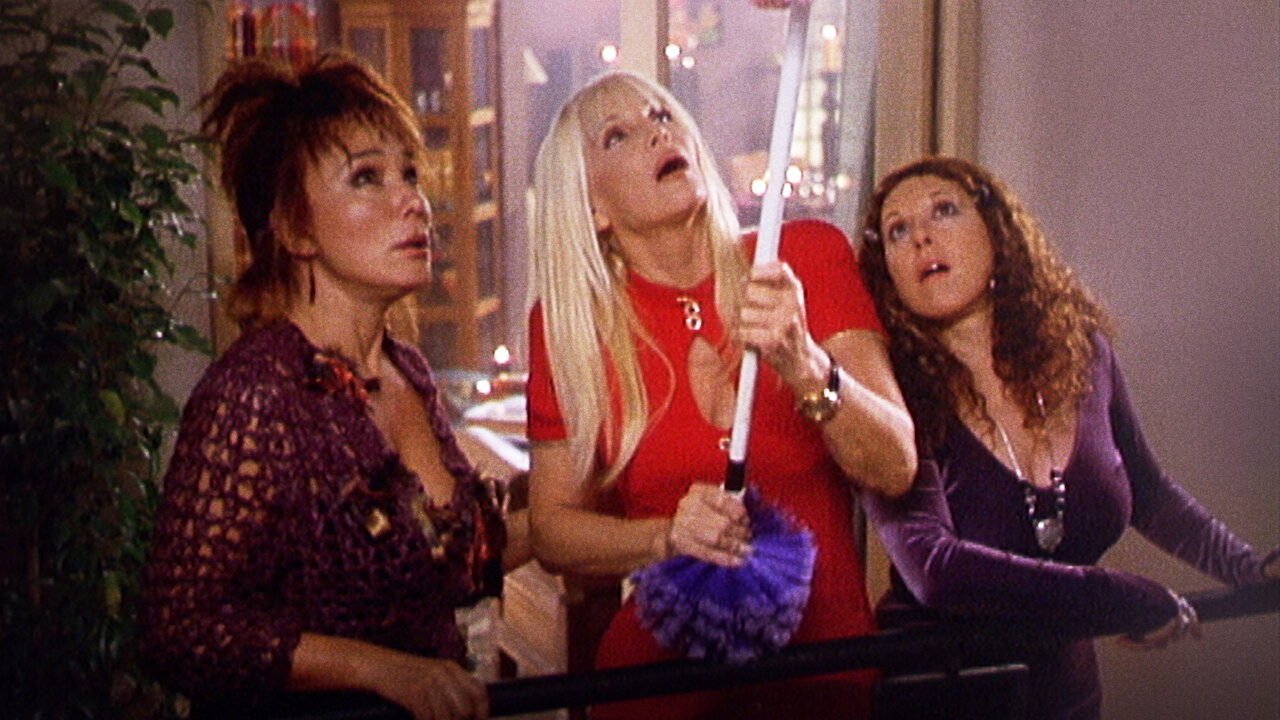
Four women in a taxi, laughing, their faces lit by the glow of the city outside

The film opens with a shot that feels like it was lifted straight from a perfume ad: Susana Giménez, all smoky eyes and perfectly coiffed hair, staring out a rain-streaked window. She’s Azucena, a woman who’s just been left by her husband for a younger model—a detail that hits a little too close to home, given that Giménez was in the middle of one of Argentina’s most infamous divorces at the time.

The gossip rags had a field day with the parallels, and honestly, it’s hard not to see them. There’s something almost defiant in the way Azucena holds her glass of wine, her fingers tightening around the stem just before she delivers a line about how men are all the same. It’s the kind of moment that plays like a private joke between Giménez and the audience, a wink that says, I know what you’re thinking, and yes, this is about me.

Buzz & Rumors

Public reports

“Ashtrays, Almodóvar & A Busted Eye”: The Juicy Real-Life Drama Behind The Damned Rib (1999)

When you cue up The Damned Rib (Esa maldita costilla), you’re not just watching a late‑’90s sex‑and‑love romp—you’re basically mainlining the fallout from one of Argentina’s messiest celebrity divorces, a not‑so‑subtle Almodóvar copycat scheme, and a shoot that literally had to stop because the leading man got hurt. Let’s dig into the dirt.


Scandals & Controversies: The Divorce That Haunts the Script

  • YTYouTube·Susana Gimenez's million-dollar divorce - YouTub…
    https://www.youtube.com/watch?v=cywKZ4FB-Wg
  • The film was shot right after Susana Giménez’s notoriously scandalous divorce from polo player Huberto Roviralta, a split that still gets replayed on TikTok and TV panels as the divorce of the ’90s in Argentina—complete with screaming matches, cheating, and lawyers on speed dial [2].
  • Tabloid and entertainment coverage routinely frame Esa maldita costilla as the movie Susana made “in the shadow” of that breakup. The plot—middle‑aged woman dumped for a younger rival, trying to reclaim her love life—lines up a little too well with Susana’s real life, and gossip coverage leans into that parallel hard [2][3].
  • Roviralta allegedly demanded a huge chunk of Susana’s fortune; coverage of the time refers to it as “the divorce that cost her $10 million”, with the infamous “cenicerazo”—Susana reportedly hurling an ashtray at him—becoming pop‑culture shorthand for diva rage [3]. Clips of that era are still recycled in short-form videos and “farandula” recap content [2][3].
  • While critics and gossip outlets connect the movie’s jilted‑wife storyline to Susana’s real scandal, this remains interpretive and gossipy rather than officially confirmed. But in Argentine pop culture, the association is treated as basically canon [2][3][8].

On-Set Drama: Injuries, Pauses & A Political Leading Man

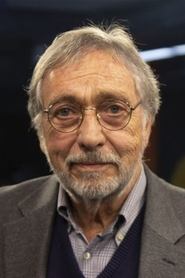
  • The biggest piece of actual on‑set drama: during the shoot, Luis Brandoni reportedly suffered an eye injury that forced production to halt for several days, as recounted in showbiz coverage looking back on his career after his death. The pause became part of the film’s behind‑the‑scenes lore .
  • Brandoni wasn’t just an actor at the time—he was serving as a national deputy (member of Congress) and is quoted in coverage as having taken the film partly to “make some extra pesos”, which is peak 1990s Argentine energy .
  • Susana herself was under intense scheduling pressure. Articles at the time note she delayed her return to her massive TV show until after the seven‑week shoot wrapped, because doing both at once would have been “too much pressure” even for Argentina’s top diva [8].

Casting Feuds & Thespian Shade

  • A delicious bit of casting intrigue: early development of the film reportedly envisioned Susana in the role of Rosa, the sexy 0‑600 hotline operator. But Susana asked to switch roles and instead took Azucena, the freshly separated wife. Rosa went to Betiana Blum [8].
  • Critics at the time gleefully noted that although Susana’s name sold the movie, Betiana Blum was the one “robbing scenes”—stealing focus with her comic timing and fitting perfectly into the ensemble, a dynamic some reviewers described as subtly undermining Susana’s star dominance .
  • One memorable line from the script—“¿De verdad parezco inteligente?” (“Do I really look intelligent?”)—was highlighted in press coverage as coming off with a venomous edge that plays like an in‑joke at Susana’s expense, given her crafted persona as a glamorous, not‑exactly‑bookish TV goddess [6].

Almodóvar Without Almodóvar: The Plagiarismo Whisper-Campaign

  • In what might be the classiest shade ever thrown at a rom‑com, Página 12 ran a piece titled “The day Susana tried to steal a rib from Pedro Almodóvar”, arguing that The Damned Rib is essentially an uncredited, watered‑down riff on Women on the Verge of a Nervous Breakdown [6].
  • The article notes that years earlier Hollywood had floated a legit English‑language remake of Almodóvar’s hit, with names like Jane Fonda or Kathleen Turner in the mix. Instead, Argentina quietly churned out its own lookalike starring Susana, without Almodóvar’s involvement [6].
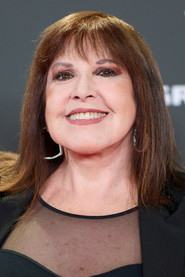
  • For extra Spanish flavor, the producers imported two of Almodóvar’s signature actresses, Rossy de Palma and Loles León, essentially slotting in real “Almodóvar girls” to sell the vibe while doing their own knockoff version [6].
  • Critics also noted a **plot device straight out of Almodóvar’s Átame!: the four women resort to kidnapping the man of their dreams**. According to the coverage, the script flirts with going darker and weirder, then backs off into a safe, moralizing ending typical of Telefé‑backed crowd‑pleasers—a move reviewers saw as a creative cop‑out [6].
  • Another review bluntly titled “Ni pizca de Almodóvar” (“Not a trace of Almodóvar”) accused the film of wanting the Almodóvar brand without the nerve, effectively turning the whole production into a bit of a cinematic cosplay scandal .

Casting Chaos: The Men Who Said “No, Gracias”

  • Before Brandoni signed, the male lead role was shopped around half of Argentina’s comedy royalty. A contemporary review notes that the part was “discussed successively” with Oscar Martínez, Carlos Calvo, Daddy Brieva and Guillermo Francella, but everyone was “very busy,” so none of them did it [4].
  • In what feels like karma, Guillermo Francella still pops up in a cameo as a taxi driver in the final scene—a blink‑and‑you‑miss‑it appearance that fan accounts and TV retrospectives still point out as the “what‑if” of the movie [4].
  • The production also entered into a partnership with Spanish company Alma Ata International Pictures, underlining how hard the team was leaning into that faux‑Almodóvar, pan‑Hispanic vibe [4].

Wild Trivia, Cameos & Long Shadows

  • Guillermo Nimo, a real‑life referee turned TV personality, appears as himself in the film as the love object of Rossy de Palma’s character. At the time he was already known as a “controversial” referee and media figure, and later coverage of his lonely death and inheritance drama makes his sunny cameo in a fluffy rom‑com feel extra surreal in hindsight [6].
  • Art direction gossip: the production design, handled by Margarita Jusid, was praised in criticism for “illustrating and commenting on” the story visually—suggesting a sly, possibly more ironic take on the material than the script itself managed [4].
  • The film was produced with a hefty budget of about $3 million, a big spend for Argentine cinema in 1999, and shot over 42 days in studios in Martínez, with Telefé and Spanish partners treating it as a cross‑market event picture [8].
  • In later interviews and coverage about Susana’s career, Esa maldita costilla is repeatedly mentioned as her last proper film shoot for almost 25 years, making it a kind of glittery, chaotic time capsule of late‑’90s Susana at peak tabloid power .

Paparazzi Epilogue: Brandoni’s Goodbye & Susana’s Nostalgia

  • When Luis Brandoni died, entertainment sites and social clips resurfaced **scenes from *Esa maldita costilla*** and Susana’s emotional farewell. She spoke of having shared “a bond inside and outside the screen” with him, and coverage revisited their chemistry, the eye injury incident, and how the film now feels like a bittersweet relic of both of their primes [5].
  • Gossip‑heavy retrospectives about Susana’s love life still love to list Esa maldita costilla in the same breath as her great scandals, romances and courtroom wars, treating the movie as an unofficial chapter in the saga of “Susana vs. the cheating men of her life” [2][3][8].

Entertainment rumors and trivia aggregated from public reporting. Treat speculation as unverified unless a cited source confirms it.

Movies

Similar Movies

Related titles ranked by rating and popularity.

No similar movies found

Check back later for new content