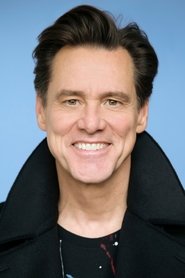
Jim Carrey
Truman Burbank
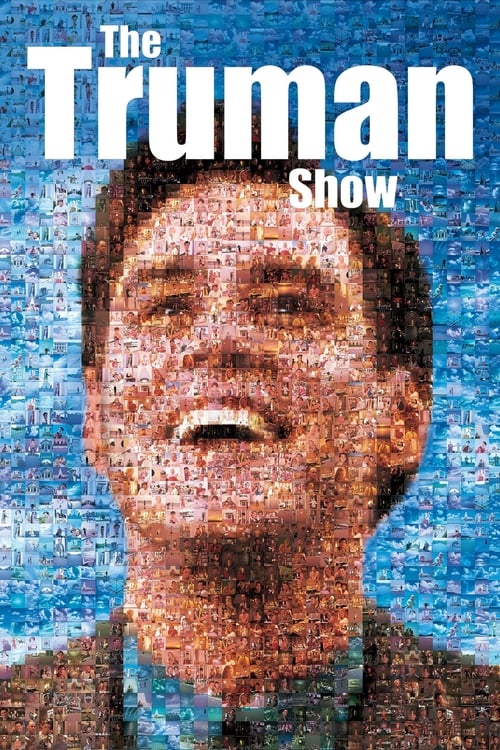
In a picture-perfect seaside town, an insurance salesman begins to realize that his entire existence may be staged and observed by a vast unseen audience as part of a long-running real-time reality TV show.
I remember the first time I saw The Truman Show. It was 1998, and I was in a multiplex in suburban Ohio, the kind of place where the popcorn smelled like butter-flavored regret and the seats stuck to your thighs. I went in expecting a Jim Carrey comedy—all rubber faces and manic energy—and came out feeling like I’d been handed a live grenade.
The movie wasn’t just funny. It was uncomfortable. It made me look at the ceiling of my own life and wonder who was watching.
That’s the trick of Peter Weir’s film: it starts as a satire of reality TV, but by the end, it’s something far more personal. It’s not about the audience. It’s about Truman Burbank, the man who doesn’t know he’s the star of the longest-running show in history.
And it’s about us, the people who do know—and keep watching anyway.

Weir has always been a director who burrows into the uncanny. In Picnic at Hanging Rock, he made the Australian bush feel like a dream you couldn’t wake from. In Witness, he turned an Amish farm into a place of quiet, almost alien serenity.
With The Truman Show, he does something even stranger: he makes the ordinary feel constructed. Seahaven isn’t just a town. It’s a set.
The sun isn’t a star—it’s a stage light. The people aren’t neighbors. They’re actors.
And Truman? Truman is the only real thing in a world of props.
The genius of the film is how slowly it lets you see that. At first, Seahaven is just a little too perfect. The streets are always clean.
The weather is always pleasant. The neighbors wave with the same practiced enthusiasm. It’s like a Norman Rockwell painting come to life, if Norman Rockwell had been secretly working for a television network.
Then the cracks start to show: a stage light falls from the sky. A radio broadcast describes Truman’s movements in real time. His wife casually plugs a kitchen product mid-conversation.
"A hauntingly prescient media satire whose ingenious concept, meticulous world-building, and unexpectedly tender Jim Carrey performance leave a lasting emotional punch."
The story and world design draw strong praise for how cleverly they expose a manufactured reality, from the too-perfect town to constant product plugs and subtle glitches that hint something is wrong. Carrey’s earnest, gradually cracking portrayal and the emotionally charged final escape are widely cited as unforgettable, and the film’s parallels to influencer culture, surveillance, and life-as-content now feel eerily accurate. A smaller contingent finds the first stretch a bit slow, the overall impact slightly overhyped, or wishes for a more explicit post-show resolution, but even detractors usually concede the premise and execution are memorable.
Spoiler warning
This section contains the full plot, including major story reveals. Overview above stays spoiler-free.
In case you didn’t know, The Truman Show didn’t just predict reality TV — it spawned lawsuits, last‑minute firings, psychological syndromes, and a casting switch so dramatic it could’ve been an episode of the show itself. Pull up a lawn chair on your perfect Seahaven porch: it’s time for the real‑world drama.
Before Ed Harris coolly donned that black turtleneck as Christof, the role actually belonged to Dennis Hopper — for about two days. Hopper either quit or was pushed out over “creative differences” after just one or two days on set, with later reports saying director Peter Weir and producer Scott Rudin were not happy with what they were seeing  . He was replaced at lightning speed by Harris, who was hired on a Thursday and started work the following Tuesday [2]. That’s not a reshoot, that’s an emergency recast.
In a twist worthy of Truman himself, Jim Carrey and Ed Harris — the emotional axis of the whole movie — never actually met during production. Carrey finished his scenes before Harris was brought in to replace Hopper, so all that intense “god vs creation” energy is pure editing and imagination [2].
Screenwriter Andrew Niccol didn’t just tweak his script; he went through around 14–16 drafts, plus a 10‑page backstory document about the in‑universe TV show, as the project evolved from a dark Manhattan thriller called The Malcolm Show into the pastel nightmare of Seahaven [2]. That’s not development hell, that’s development purgatory.
Right as audiences were falling in love with Truman, New York playwright Mark Dunn filed a lawsuit claiming The Truman Show ripped off his 1992 Off‑Broadway play Frank’s Life. He alleged 108 separate similarities between his play and the film and went after Paramount, producer Scott Rudin, and others for more than $200–300 million  . Dunn said this wasn’t just a shared idea — he accused them of lifting specific literary elements like structure, characters, and plot [3].
Independent filmmaker Craig Mowry also sued, insisting the movie was “knowingly and deliberately stolen” from his earlier screenplay . The case dragged on long enough to get a detailed appellate write‑up — and then the court tossed it. Judges found no substantial similarity between his script and the finished film and granted summary judgment to the studio [4][5].
So yes, while Truman was escaping a fake show, the real show was in federal court.
Niccol’s early drafts were way nastier:
 .
.The original closing zinger was reportedly, “You never had a camera in my head,” a cold jab at Christof’s control [1]. It was ultimately dropped in favor of Jim Carrey’s now‑iconic, improvised farewell: “In case I don’t see ya, good afternoon, good evening, and good night” [1][2]. Sometimes the best script doctor is a comedian off‑leash.
Later reporting revealed Niccol toyed with an even more meta ending — the kind of twist that would’ve broken late‑’90s audiences — before Weir steered the film toward a more hopeful escape narrative [10]. It stayed in the drafts, living rent‑free in fans’ heads instead.
Screen Rant pulled together a fan theory that’s practically fandom canon now: a secret group of insiders on the show deliberately sabotaged Christof’s production to help Truman wake up [9]. According to the theory:
It’s unconfirmed, pure fan speculation — but the receipts from Reddit threads and theory videos made enough noise to earn a full breakdown in an industry outlet [9].
Carrey took a pay cut from his usual $20 million down to about $12 million to play Truman, all so he could be taken seriously as a dramatic actor [2]. That’s one expensive reputation rehab, but the Golden Globe win suggests it worked.
The production shot so much in‑universe “talk show” material that it spawned an actual Nick at Nite special framed as an episode of the fictional Tru Talk, hosted by Harry Shearer’s TV pundit character [2]. Imagine watching The Truman Show and then flipping channels to find his press tour… within the movie’s own universe.
Years after release, psychiatrists coined “Truman Show Delusion” for patients convinced their lives are a secretly filmed show, including one man who traveled to New York and climbed the Statue of Liberty believing it was part of the set [2][8]. When your movie literally rewires people’s paranoia, that’s beyond cult classic — that’s cultural hazard.
The creator of Big Brother has been quoted saying that after seeing The Truman Show, he realised he needed to “get a move on” with his own voyeuristic TV experiment [8]. So if you’ve ever hate‑watched a house full of strangers arguing over cereal, you might have Truman Burbank to thank.
Entertainment rumors and trivia aggregated from public reporting. Treat speculation as unverified unless a cited source confirms it.
Movies
Related titles ranked by rating and popularity.