
Your Name. backdrop
Your Name. poster

Your Name.

“Separated by distance, connected by fate.”

8.5
2016
1h 46m
AnimationRomanceDrama
Director: Makoto Shinkai

Overview

High schoolers Mitsuha and Taki are complete strangers living separate lives. But one night, they suddenly switch places. Mitsuha wakes up in Taki’s body, and he in hers. This bizarre occurrence continues to happen randomly, and the two must adjust their lives around each other.

Sponsored

Trailer

Trailer (Dubbed) Official

Cast

Reviews

AI-generated review
The Gravity of Forgetting

I did not expect a body-swap rom-com to hit with the force of national grief. When Makoto Shinkai's *Your Name* showed up in 2016, it was easy to file it under polished teen romance and move on. For a while, that's more or less what it looks like: Mitsuha, bored in the countryside, and Taki, overloaded in Tokyo, waking up in each other's bodies and stumbling through the comic chaos. Shinkai, though, was after something heavier than cute confusion. The shadow hanging over the film is the 2011 Tohoku earthquake and tsunami. That catastrophe didn't only wreck towns and infrastructure. It shook everyday life with the feeling that it could vanish without warning.

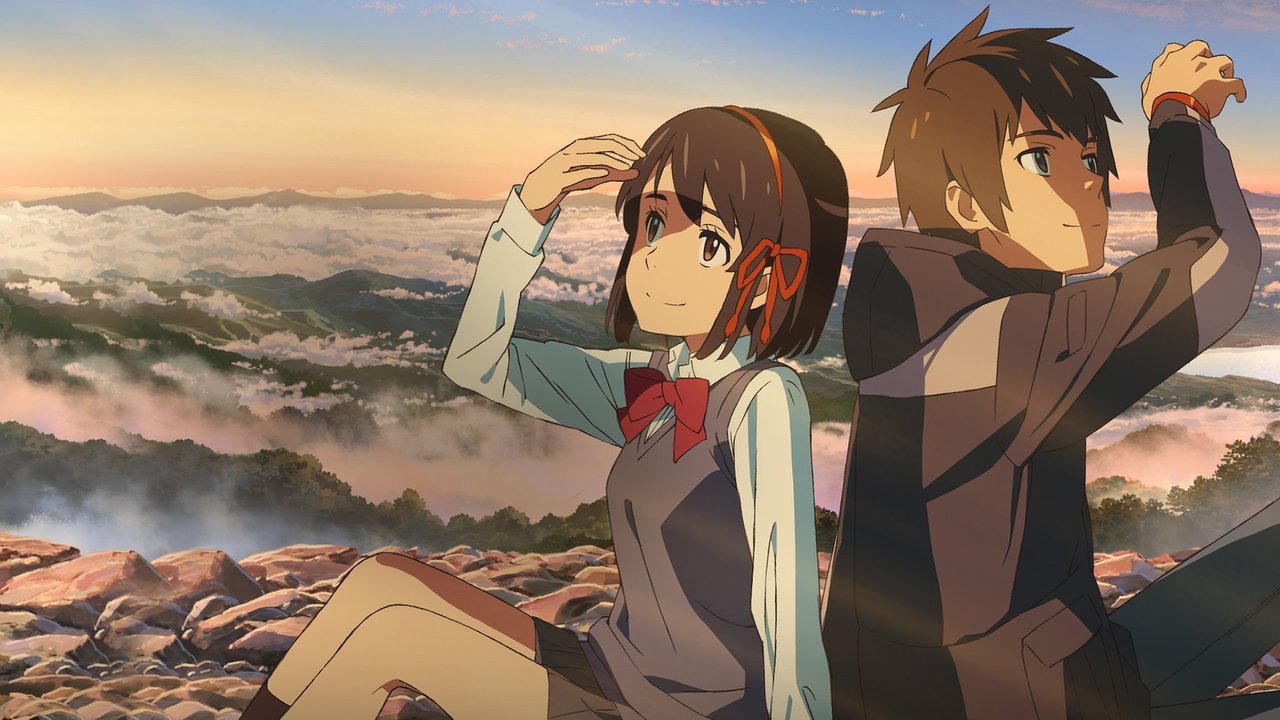
Mitsuha and Taki looking at the sky

Shinkai turns that dread into images by obsessing over things that are beautiful precisely because they don't last. I'm always stunned by the way light behaves in this movie. Dust floating through a Tokyo train car. The thick, bruised purples of evening over Itomori. The animation isn't there just to flex craftsmanship. It's making you aware of how breakable the ordinary world is. Writing for Sight & Sound, Kate Stables rightly noted that the film "elegantly expresses not only teen confusion but also the tensions between old and new Japan." It does that, sure. It also asks what it means when the old world can disappear completely.

The comet splitting in the night sky

The sequence that wrecks me is the trip to the shrine. Taki, living in Mitsuha's body, helps her grandmother up the mountain to the family sanctuary. Not much happens in plot terms. They walk. They breathe. The grandmother talks about *musubi*—the Shinto idea of tied threads, human connection, and time moving through everything. Shinkai doesn't rush it. He lets the hike feel tiring, lets the borrowed body feel heavy. Ryunosuke Kamiki's work as Taki matters enormously here. The frantic comic irritation from the early sections falls away and something calmer, almost reverent, replaces it. Kamiki and Mone Kamishiraishi have to play two people and each other's impressions of those people, which sounds like a gimmick until you see how precisely they chart the shift from teenage embarrassment to real empathy.

The beautiful rural town of Itomori

I still don't know that the film's clockwork time-travel logic survives close inspection. Pull too hard on the timeline and the whole thing starts to wobble. But grief and memory aren't tidy systems either, so maybe that slipperiness is part of the design. The part that matters is the emotional logic: the panic of waking up and feeling someone's name slipping out of reach. *Your Name* takes a high-concept sci-fi setup and reduces it to something painfully simple—the urge to reach across distance, seize someone by the hand, and get them out before it's too late. Very few films do that with this much ache.

Featurettes (1)

How to be an anime voice actor, with Your Name stars Stephanie Sheh and Michael Sinterniklaas | BFI

Behind the Scenes (1)

Making of "Your Name" - Makoto Shinkai