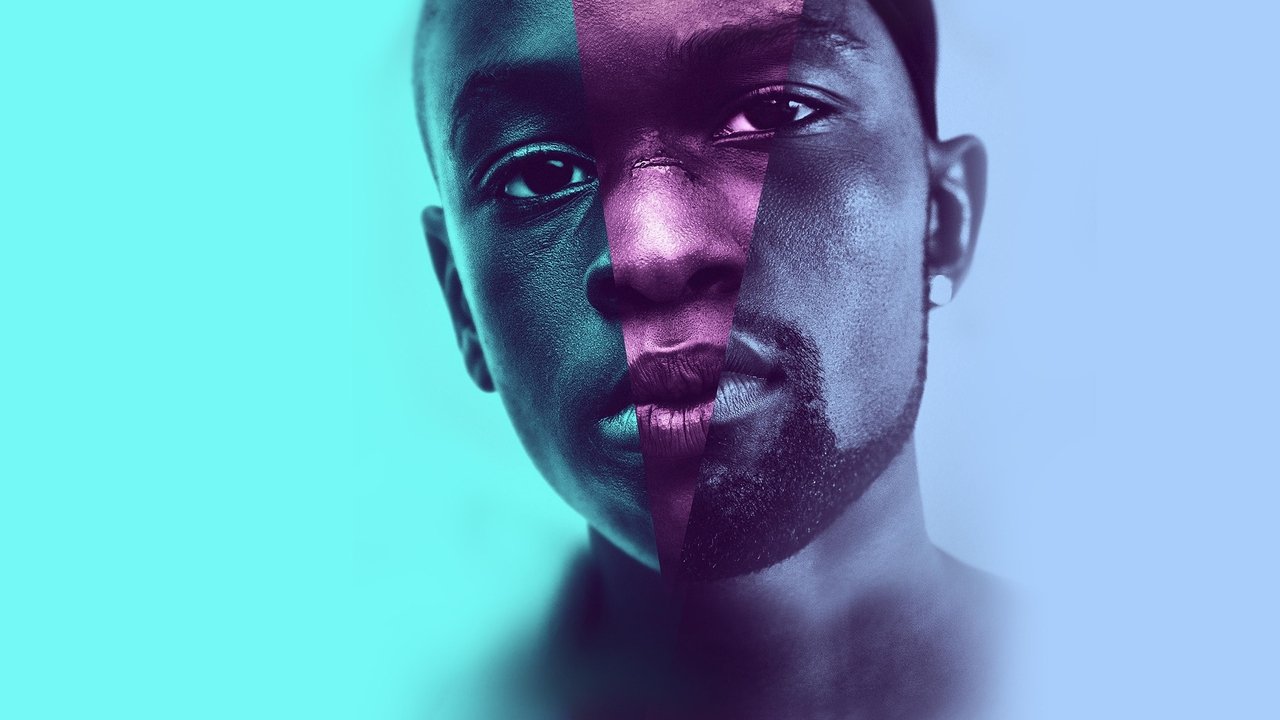
Moonlight backdrop
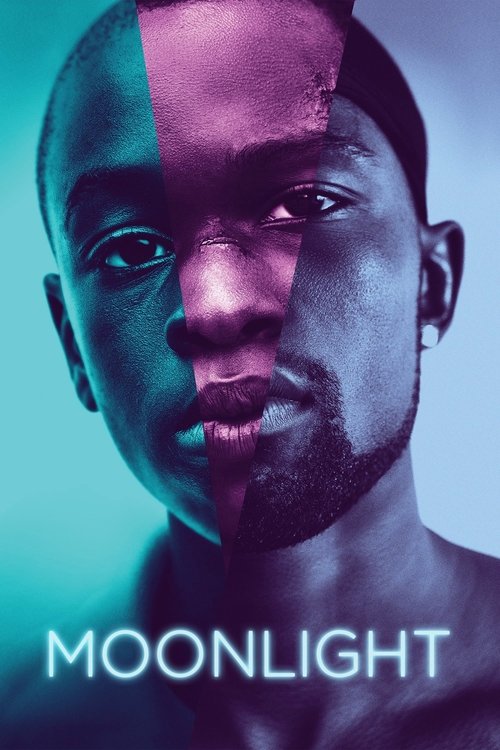
Moonlight poster

Moonlight

“This is the story of a lifetime”

7.4
2016
1h 51m
Drama
Director: Barry Jenkins

Overview

The tender, heartbreaking story of a young man’s struggle to find himself, told across three defining chapters in his life as he experiences the ecstasy, pain, and beauty of falling in love, while grappling with his own sexuality.

Sponsored

Trailer

Official Trailer Official

Cast

Reviews

AI-generated review
The Color of the Interior Life

There is a specific frequency of blue that Barry Jenkins finds in Miami—not the tourist-brochure turquoise, but a deep, bruised indigo that seems to seep into the pores of his characters. *Moonlight* doesn't shout its intentions. It doesn't use the melodramatic apparatus of the typical coming-of-age story to demand your tears. Instead, it operates with the hushed, terrifying intimacy of a secret whispered in the dark. I watched it when it first came out in 2016, and I’m still haunted by the silence. It’s a quiet film, but its internal volume is deafening.

The beach scene where Juan teaches Little to swim

The structure is simple enough: a triptych of a life. We meet the boy, then the teenager, then the man—Little, Chiron, and Black. But to talk about it as a progression is to miss the point. It’s a study in erosion and reconstruction. Take the character of Juan, played by Mahershala Ali with such startling gentleness that I found myself forgetting, moment to moment, that he was a drug dealer. In the hands of a lesser director, Juan would be the "wise thug" cliché, a plot device designed to hand out wisdom like candy. Here, he’s a man who recognizes a kindred spirit in a terrified child because he, too, knows what it feels like to be hunted. Watch the way Ali’s hands move in that scene on the beach—he’s holding the boy’s head above the water, but his touch is so fragile, as if he’s afraid that any sudden pressure might shatter the kid entirely. It’s not about instruction; it’s about safety.

*Moonlight* is, in many ways, an antidote to the way we usually film black masculinity. We are accustomed to seeing it in conflict, in motion, in states of aggression or defensive posture. Jenkins does something radical by simply letting his camera rest. He allows the face to become the landscape.

Chiron looking into the camera

When the film shifts to the second act, Ashton Sanders takes over as the teenage Chiron, and the physicality of the film changes. He isn’t the shrinking, wide-eyed boy anymore. He’s taut, coiled like a spring that’s been wound too tight for too long. There’s a scene where he’s bullied, and the camera lingers on his face—not on the violence being done to him, but on the terrifying, empty space where a reaction should be. It’s a defensive wall made of muscle and indifference. A.O. Scott wrote in *The New York Times* that the film "is, in the end, a film about the way people are shaped by the absence of love, and the way they are finally, tentatively, restored by the presence of it." That restoration is what makes the final chapter so grueling. When Trevante Rhodes appears as the adult 'Black,' he’s a mountain of a man—gold teeth, heavy physique, the armor fully built. But the eyes remain. They are still that same, scared little boy’s eyes.

The tragedy of the film isn't that Chiron doesn't get what he wants; it’s that he’s built a fortress so thick he’s forgotten he’s trapped inside it. When he reconnects with Kevin, his childhood friend, in that neon-soaked diner, the editing rhythm slows to a near-halt. We watch them eat, we watch the clinking of silverware, and we wait for the barrier to crack.

The diner scene where Chiron and Kevin reconnect

The tension in that diner isn't sexual, at least not at first. It’s the unbearable weight of recognition. Kevin sees through the grill, through the muscles, through the drug-dealer facade, and looks right at the ghost of the boy he once knew. Rhodes plays this with a kind of physical agony that I haven't seen in a long time—his shoulders, usually square and immovable, seem to sag under the sheer effort of simply being present. He can’t speak, and he doesn’t have to. The camera does the heavy lifting, hovering close, intimate, unforgiving.

I don’t know if *Moonlight* provides a "happy ending" in the conventional sense. Maybe that’s not the right question to ask. It provides a moment of clarity. It captures that singular, terrifying realization that the only person who can truly unlock the door is yourself, and that the cost of entry is total, terrifying honesty. I left the theater feeling like I’d been holding my breath for two hours. It’s a film that stays in your bloodstream, a quiet, insistent reminder of the cost of surviving a world that demands you become something other than yourself.

Clips (7)

Chiron's eerste gay kus | Moonlight | Amazon Prime Video NL

Moonlight | Swimming Clip | Netflix

Middle of The World

Decide for Yourself

All Love All Pride

Classic Man

Back Home

Featurettes (29)

How Black Cinema Shaped Barry Jenkins' MOONLIGHT

Most Intimate Moments | Moonlight | Prime Video

Barry Jenkins the swimming scene in MOONLIGHT

"Moonlight" wins Best Picture | 89th Oscars (2017)

"Moonlight" wins Best Adapted Screenplay | 89th Oscars (2017)

Mahershala Ali wins Best Supporting Actor | 89th Oscars (2017)

MOONLIGHT wins Best Editing at the 2017 Film Independent Spirit Awards

MOONLIGHT wins Best Feature at the 2017 Film Independent Spirit Awards

Barry Jenkins wins Best Director at the 2017 Film Independent Spirit Awards

MOONLIGHT wins Best Screenplay at the 2017 Film Independent Spirit Awards

MOONLIGHT wins the Robert Altman Award at the 2017 Film Independent Spirit Awards

MOONLIGHT wins Best Cinematography at the 2017 Film Independent Spirit Awards

Mahershala Ali and Naomie Harris | The Chameleons

Barry Jenkins | The Realist

Moonlight director Barry Jenkins: ‘I wondered if a straight person could tell this story’

Live Orchestra

Barry Jenkins Red Carpet Interview | BAFTA Film Awards 2017

'Moonlight' Q&A with Barry Jenkins

Is Moonlight a masterpiece? | Our panel discuss the BAFTA Best Film nominations 2017

NYFF Live: Making 'Moonlight' | NYFF54

Who Is You, Chiron?

Academy Conversations: Moonlight

We Are Family

MOONLIGHT: A Conversation with Barry Jenkins and the Film's Cast

Music of Moonlight

BARRY JENKINS — With the team that made Moonlight | TIFF 2016

'Moonlight' Q&A | Barry Jenkins | NYFF54

Moonlight Q&A with stars Naomie Harris, Janelle Monáe and director Barry Jenkins

TARELL McCRANEY Origins of Moonlight | TIFF 2016

Behind the Scenes (2)

The Score

Magic In the Making